The 8 ideas run from the flapper outfit at the start to the long striped sequin gown at the end, with wide-leg trousers and suspenders sitting among them.
Where you will stand and sit decides the choice: a seated dinner or formal evening calls for the beaded sheath or the sequin gown, while a dance floor calls for fringe.
The long striped sequin gown carries a lot of weight and catches the light on every movement, so I would save it for a party where you mostly stay put.
1. Flapper Outfit
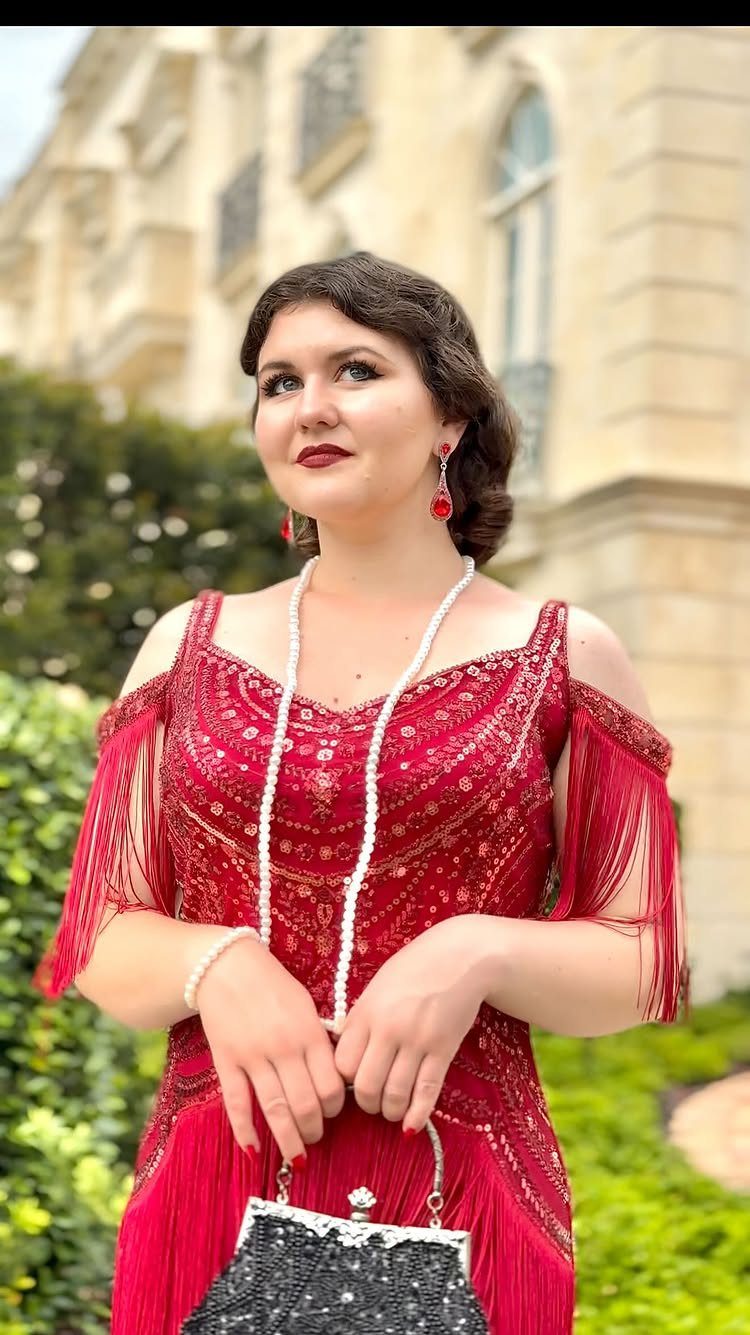
A flapper dress is a short, loose beaded dress with fringe that swings when you move. This red version puts the fringe at the shoulders, so every turn of the arm sends it swinging.
The pearls do most of the work. A long strand over a beaded dress reads as 1920s without any costume trickery, and a black sequined clutch keeps the look dressy without competing with the beading.
Finger waves are the hair detail that makes it all hang together, so if your hair is long enough, set it before you leave the house and give yourself the extra time.
If you plan to dance, check that the shoulder fringe is stitched firmly to the dress and look it over after the first song.
2. Drop-Waist Dresses
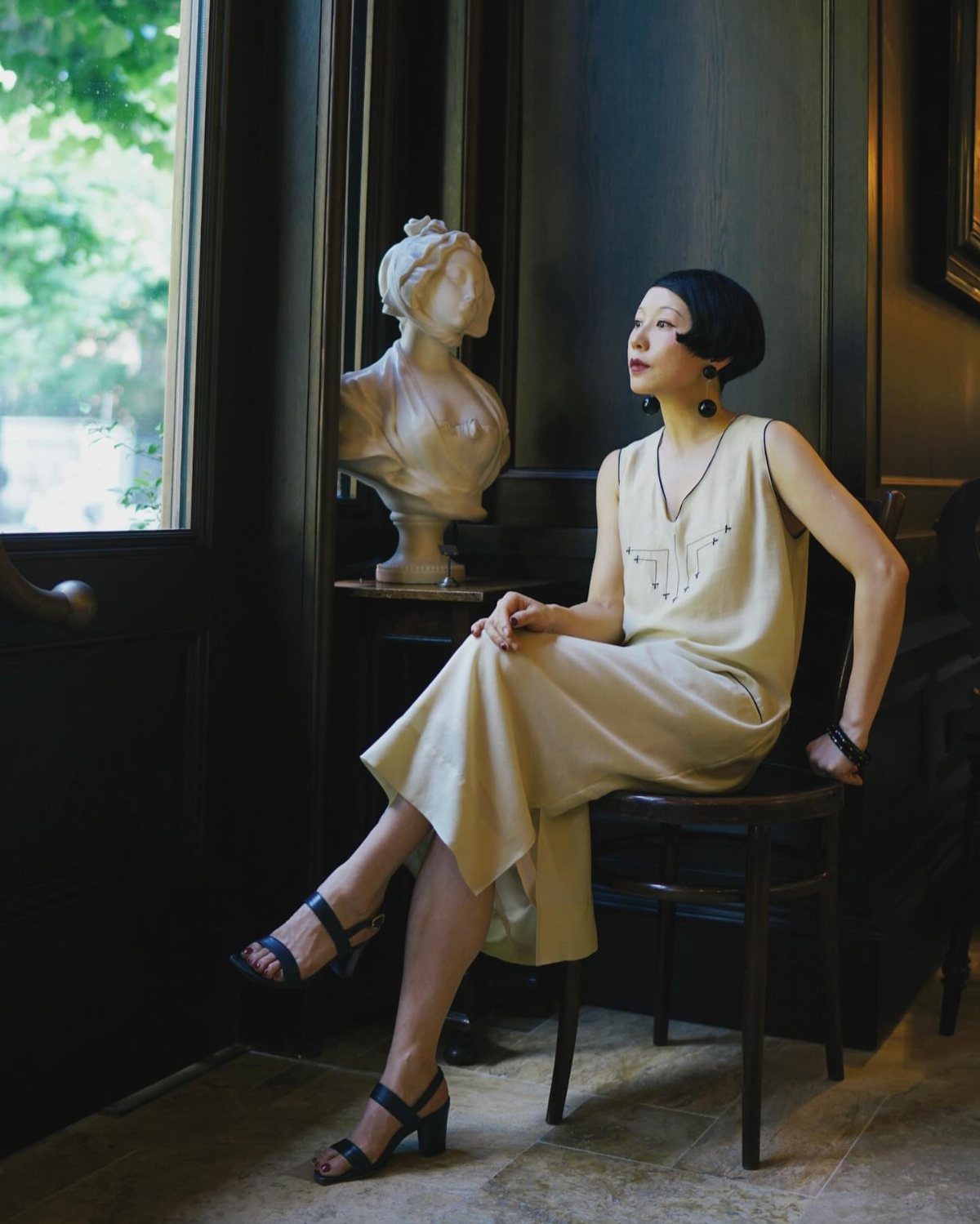
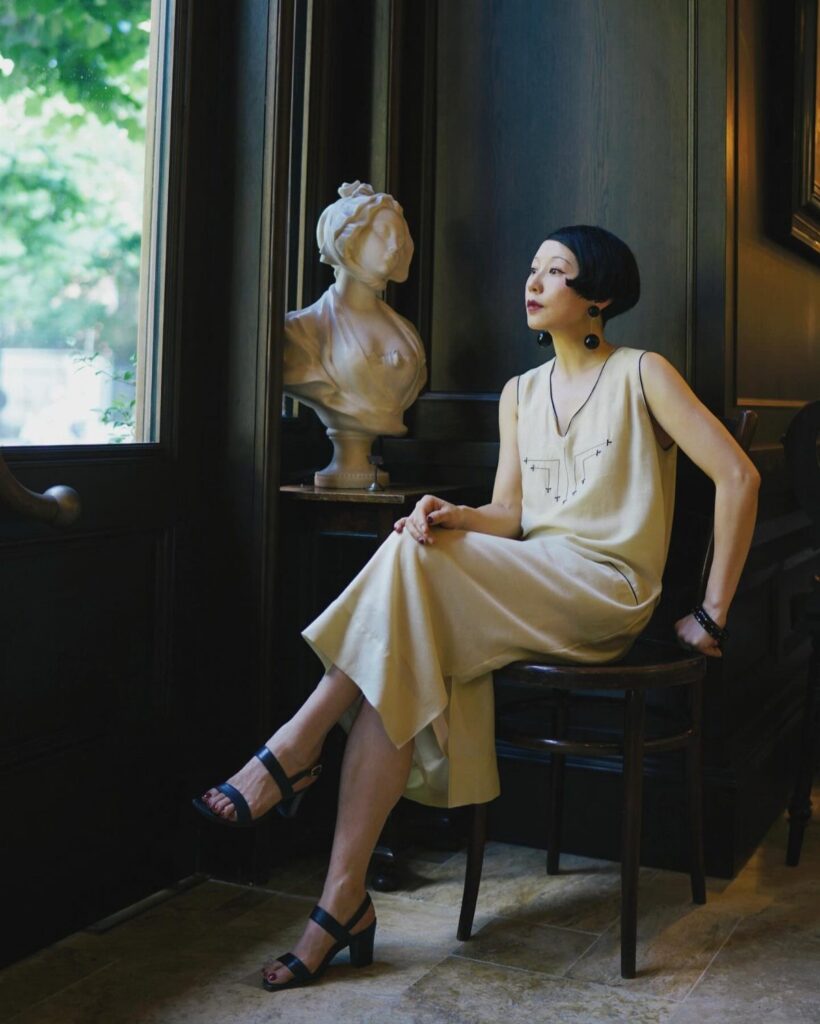
A drop-waist dress sets its seam at the hip rather than the natural waist, so the top of the dress hangs straight from the shoulders and the torso reads long and narrow.
A sleeveless drop-waist dress keeps the silhouette light, which makes it the better pick for a warm ballroom or a summer garden party.
Black block-heeled sandals suit it better than a pointed toe, since the heel and the strap echo the dress’s clean lines without fighting them.
The drop waist is forgiving on a wide range of body types because it skims rather than cinches. The bob is the finishing touch, but the dress carries the look on its own if your hair is shorter or longer.
3. Fringe Dresses
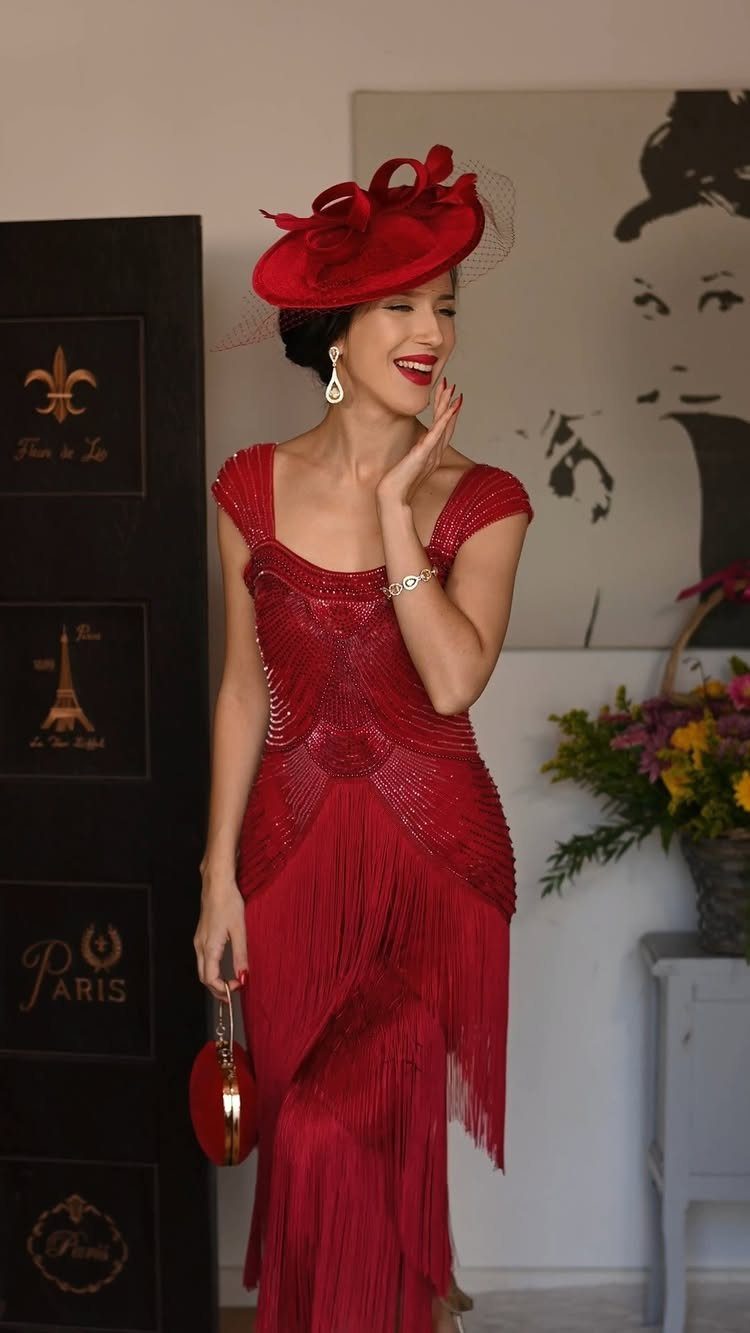
Long fringe is the one part of a 1920s dress that moves on its own, and it does most of the visual work in this look.
The red beading and red fascinator hat match exactly, which keeps the eye on one color and makes the outfit look planned rather than assembled.
A small clutch in a contrasting finish is enough to carry the rest of the accessories.
Fringe dresses look best when the hem is long enough to swing above the knee and below it. If you are going somewhere crowded, a shorter fringe will catch less on chairs and other guests.
4. Beaded Sheath Dresses
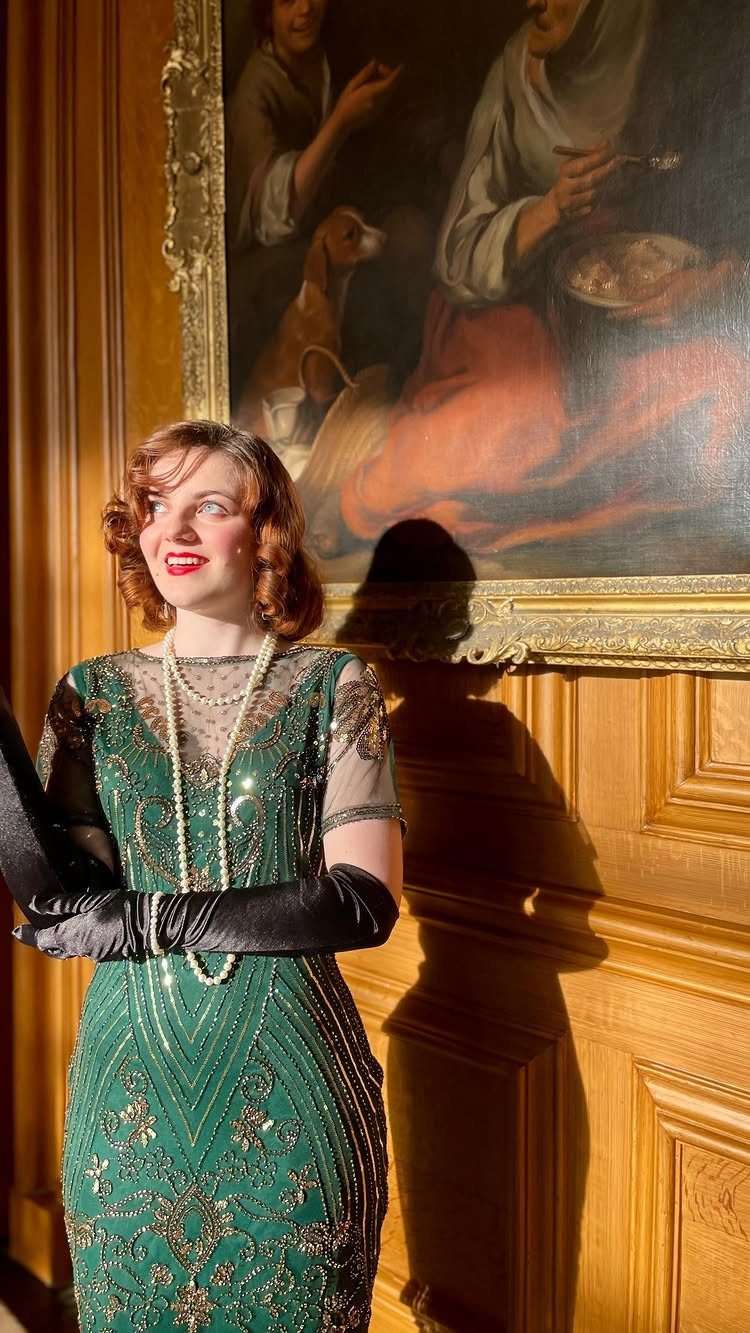
A beaded sheath is the streamlined choice in the 1920s dress family. It follows the body straight down, with beads doing the work that fringe would otherwise do.
The emerald green here is a rich jewel tone that the beading picks up in the light.
Black opera gloves and a pearl necklace are the 2 accessories that keep it elegant, and red lipstick ties the whole look together without needing anything else.
Because the beading adds weight, a sheath feels heavier than a fringe dress and moves less. I would pick it for a seated dinner or a formal evening, and save the fringe for dancing.
5. Lace and Embroidered Styles
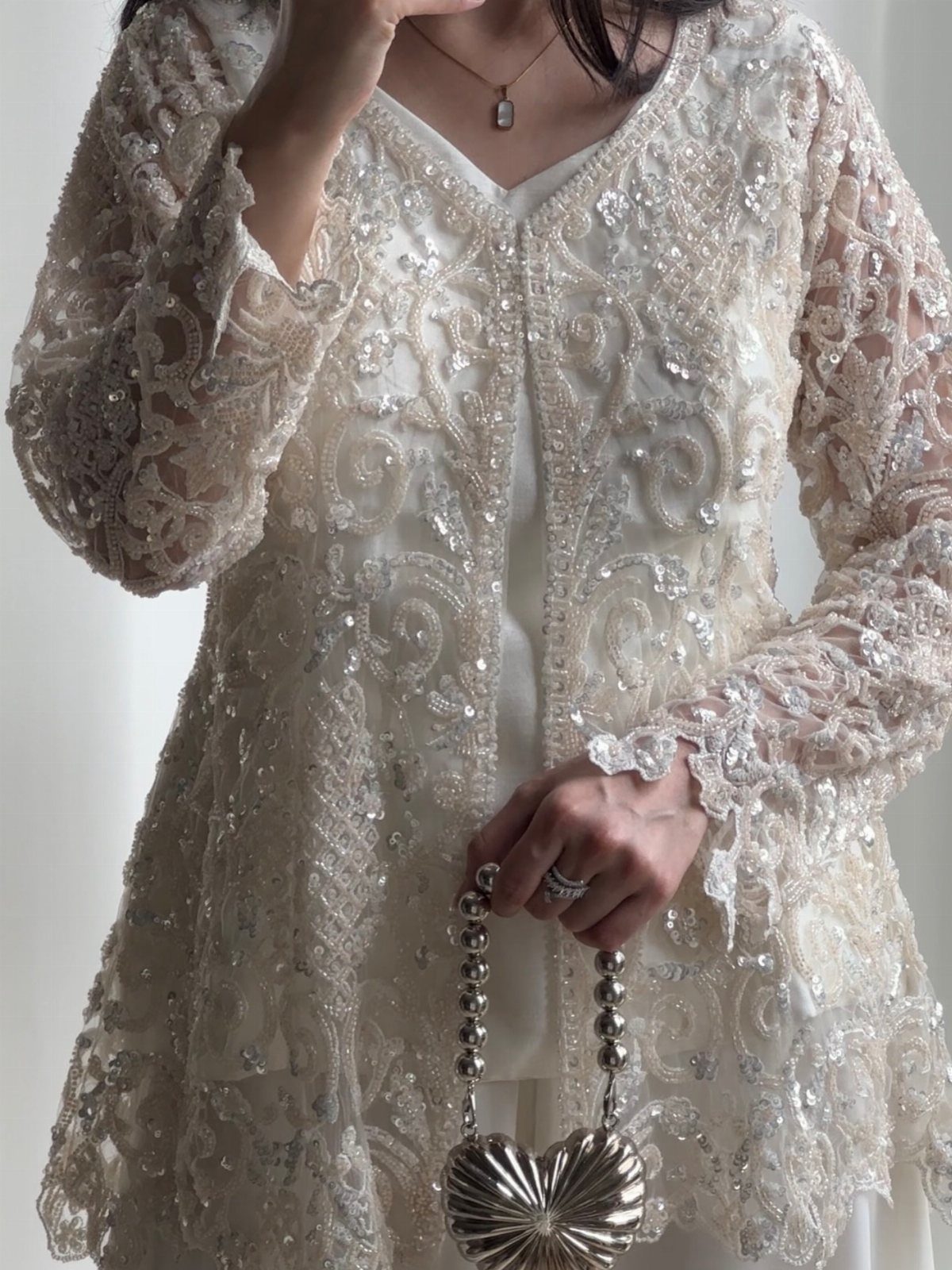
Lace and embroidery give the 1920s look a softer edge. The effect comes from texture rather than movement.
When the jacket is heavily sequined, beaded or embroidered, it does most of the work, so keep the dress underneath plain and simple.
Wear it open over a plain white layer so the embroidery stays the focus instead of competing with a busy print.
A silver metallic beaded bag echoes the beading on a jacket like this, so the two read as one set. It keeps the piece looking evening and stops the cream tones from reading as bridal.
Although simple lines and minimal adornment reigned on the runways, the 1920s were not free of luxury. Expensive fabrics, including silk, velvet, and satin were favored by high-end designers, while department stores carried less expensive variations on those designs made of newly available synthetic fabrics.
6. Wide-Leg Trousers and Suspenders
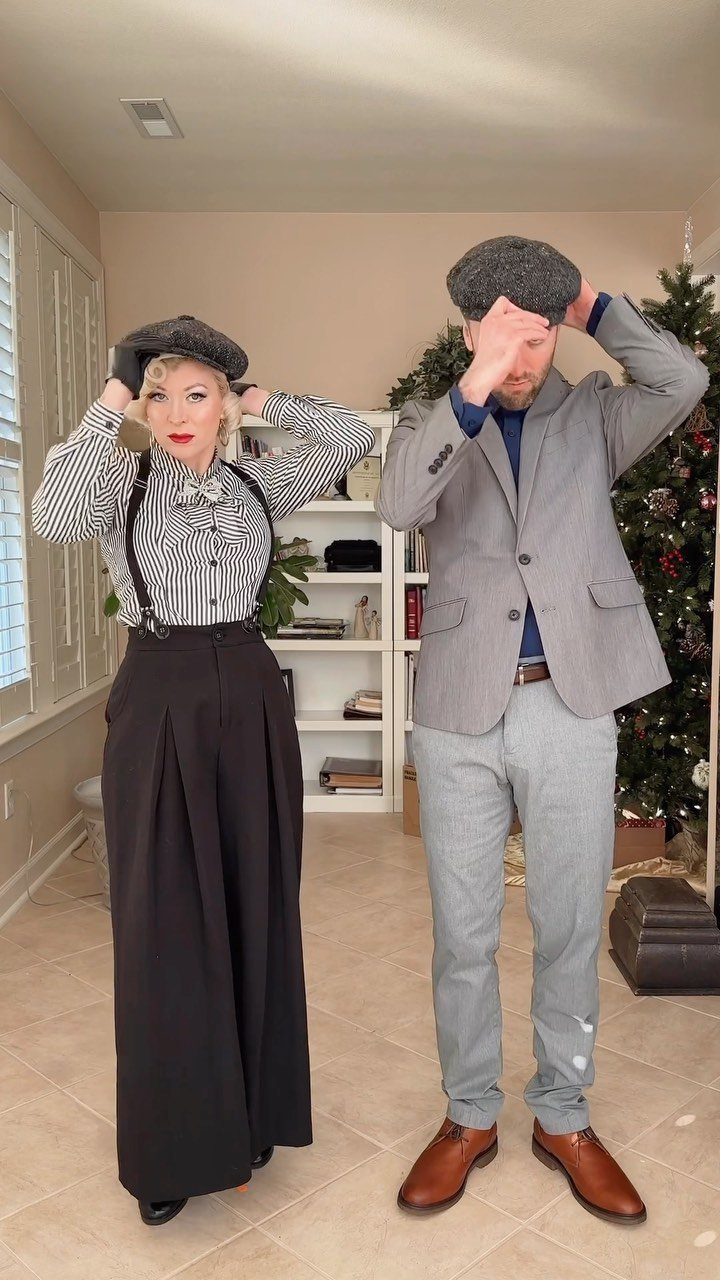
High waist does most of the work in this version. Wide-leg trousers with a high waistband give the same long line as a 1920s dress, and they are easier to wear for a whole day.
Black wide-leg trousers with suspenders are the core of the look.
The suspenders clip to the waistband at the front and back, so they hold the trousers at the natural waist and give the outfit its shape. A beret adds the period touch without needing a full hat.
Choose trousers with a fabric that drapes rather than stiffens. Stiff fabric will flare awkwardly instead of falling straight from the hip.
7. Vintage Slip Dress with Lace Headpiece
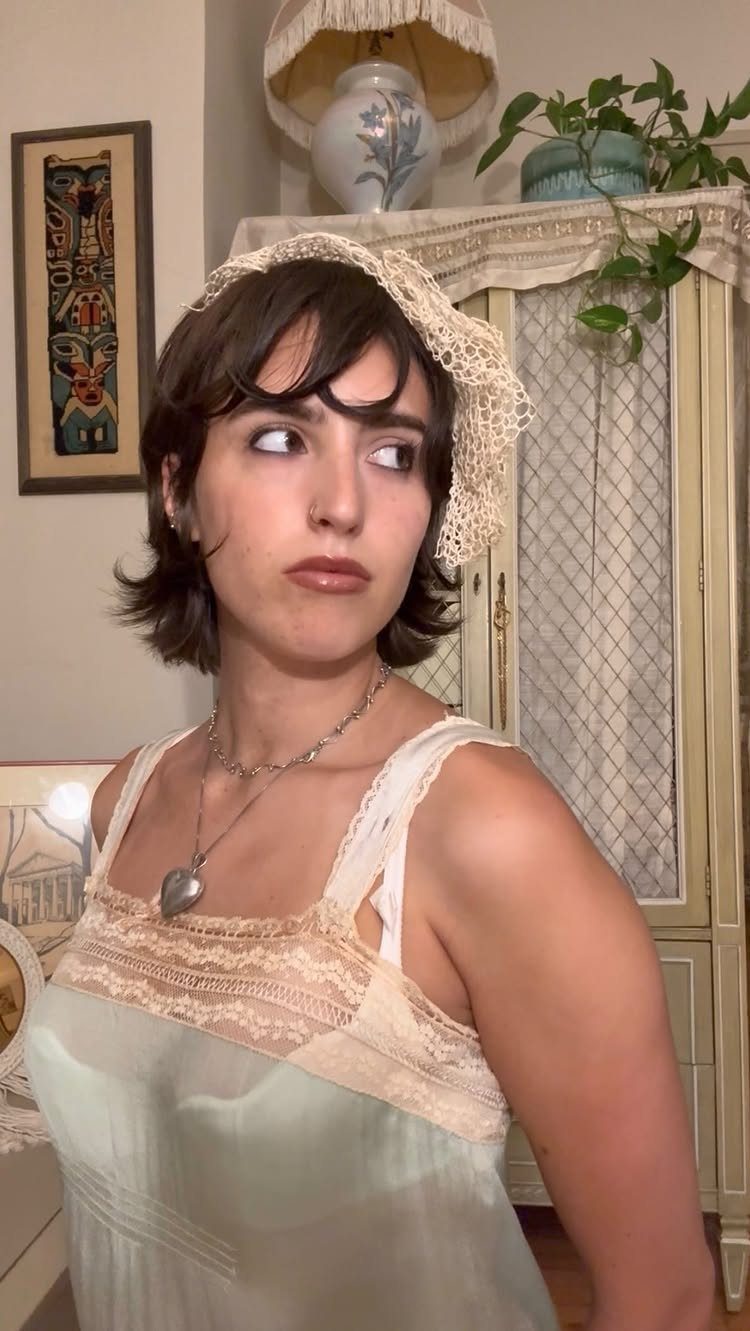
Pale green lace on a slip dress gives the 1920s look without any beading or fringe, so it suits a daytime tea or a garden party better than a late night out.
The silver layers do the work the pearls do in the flapper look. Wear the necklaces at different lengths so the heart pendant sits on its own and the chains don’t tangle.
The netted lace headpiece is the one piece to place with care.
Set it low on the forehead or just above the brow. Pushed far back, it starts to look bridal.
8. Long Striped Sequin Gown
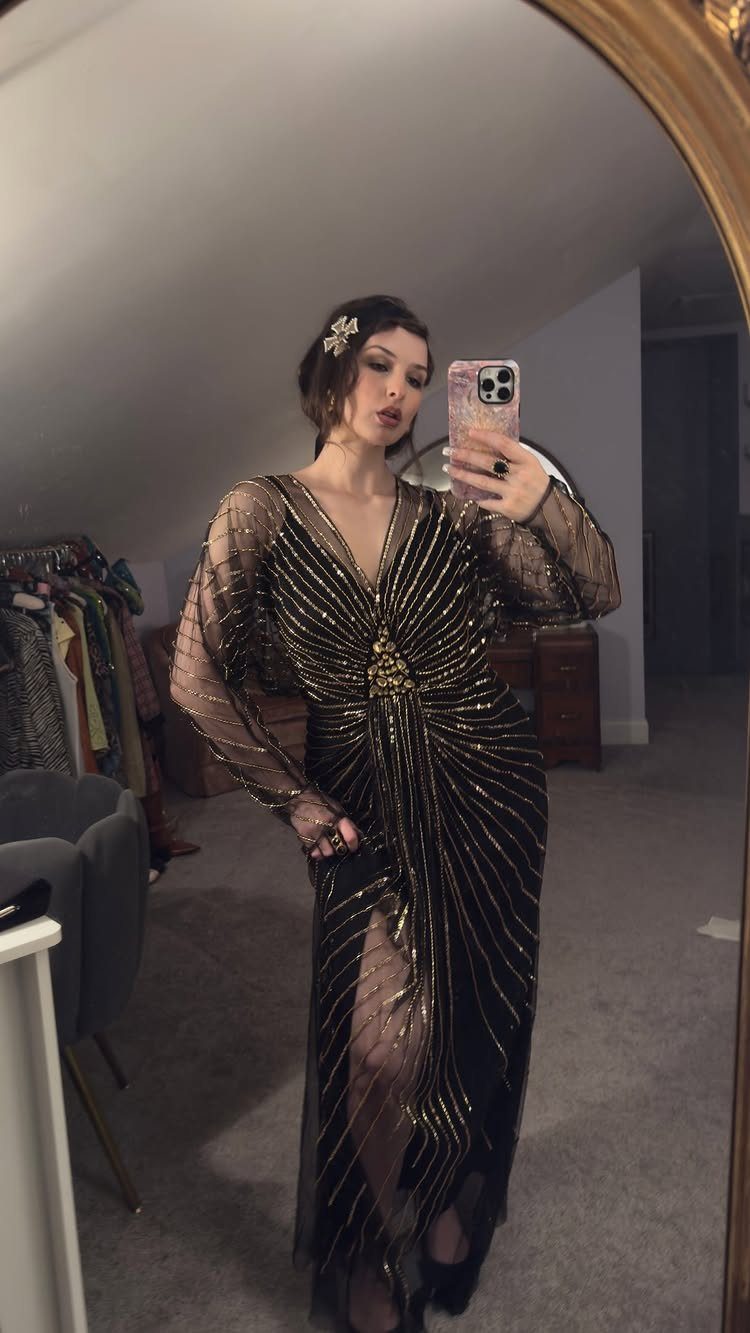
Stripes of sequin running from neckline to hem make a long black and gold gown look taller and slimmer, and the sequins catch light as you move.
The plunging neckline needs support. Use fabric tape or a bra with a firm, low back before you wear it for the first time, since sequins lose their hold if they rub against skin for hours.
Pair it with retro hair, set in waves or pinned close to the head, so the neckline stays the focus. Dark lipstick suits the gold without adding more shine.
Sequins are heavy and show every movement, so this gown is better for a seated dinner or a party where you stand still than for a long night of dancing.
Check that the sequins are sewn on firmly before you go.
Popular Colors
Black and white is the pairing to reach for when you want the strongest 1920s read from color alone.
The contrast does the work that embroidery would otherwise do, so a plain black dress with a white geometric panel looks period without much extra detail.
Let one of the two dominate. Equal halves can look more like a checkerboard than a dress.
Jade green, rust orange, teal, and deep red were also tied to Art Deco fashion, and they suit daytime events better than the black and ivory standards.
A rust or teal knit dress with chevron stripes or color-blocked panels gives you the period shape in a color that does not read as costume.
Gold or bronze accents on a belt or buckle can tie those pieces to the evening side.
Chunky geometric jewelry finishes any Art Deco pattern.
Keep the palette tight, with two colors and one metallic, so the pattern stays the focus. Color blocking in knitwear is often read as mod, so check the cut before you call it 1920s.
What Not to Wear
Bodycon is the fastest way to pull a 1920s outfit into the 2020s.
The decade’s silhouette ran straight and loose, so a fitted dress with fringe attached reads as modern whatever its length. Look for a cut that hangs from the shoulders and skims the body.
Wide shoulders belong to the 1940s zoot suit, not the 1920s. A suit-style jacket works best when it runs long or is cut slim, with a waistcoat and cap doing the rest of the styling.
Sneakers are the shoe most likely to undo a flapper dress.
A dress that is right for one decade can be wrong for the other, and it is much easier to settle that before the purchase than after.
Frequently Asked Questions
What defines a 1920s-inspired dress style?
A 1920s-inspired dress is defined by a loose, straight shape and detail that moves.
Surface detail does the work here. Beads, sequins, fringe, and embroidery throw light back as you move, which matters most on the dance floor.
Can you wear a 1920s-inspired dress to a modern event?
Yes, as long as you tone down the costume details.
Choose a piece with light beading or only a little fringe, then ground it with streamlined heels, a bag with a firm shape, and jewelry that looks current rather than antique.
A fitted blazer or cropped jacket over the dress, plus loose, soft waves instead of set finger waves, pulls the look into the present day.