The dresses below run from a straight mid-decade column to a beaded gown with a train, and how much you plan to move decides the pick: dancing favors a shorter, lighter dress, while a long hem or trailing train suits a sit-down dinner or formal event.
1. Mid-1920s Evening Dresses
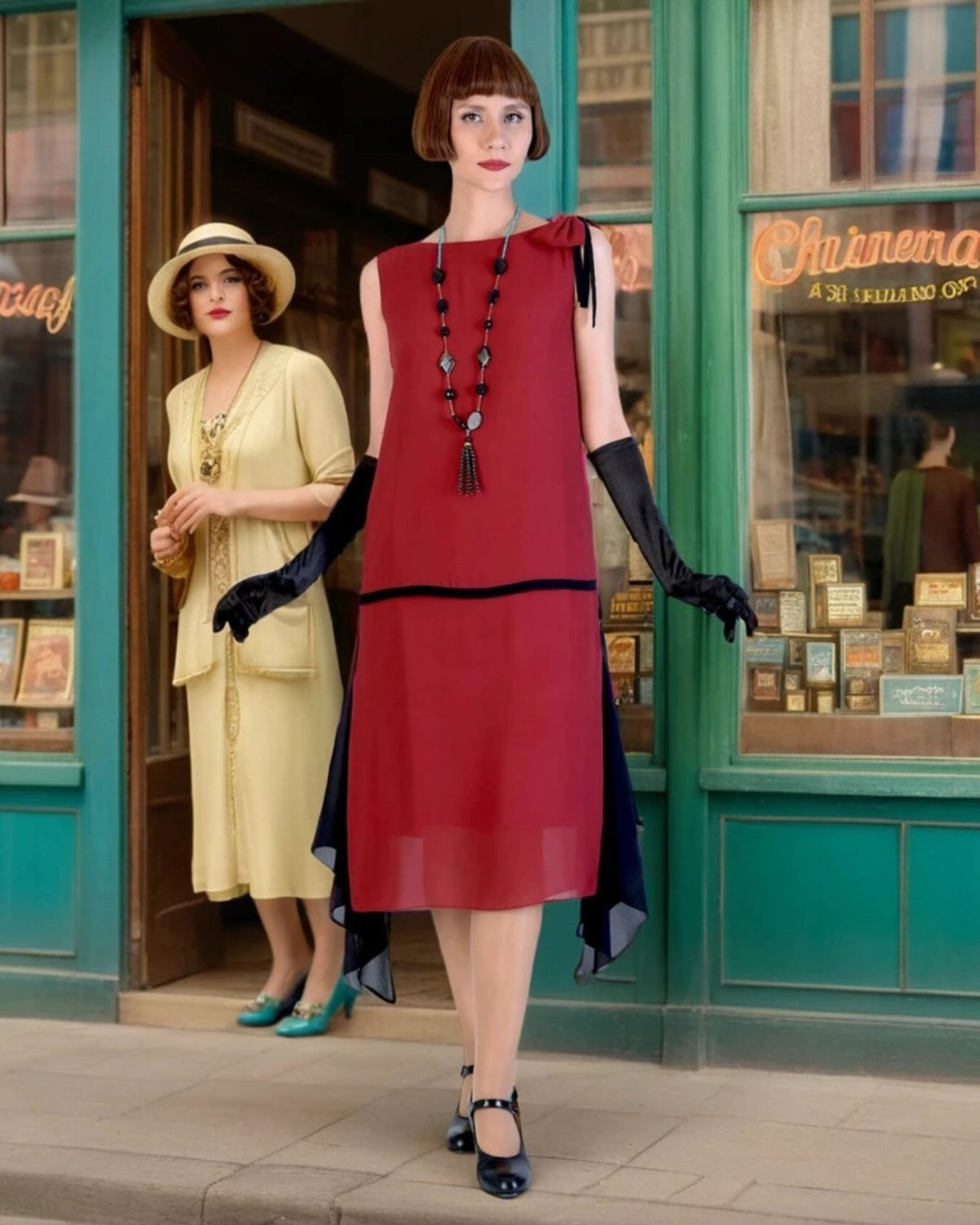
Shorter and straighter is the whole shift here: a column of fabric with a dropped waist, hanging from the shoulders instead of cinching anywhere. That makes it forgiving on days when a fitted bodice feels like work.
Before buying, check where the waistline lands on you. A drop-waist should sit at the hip, so a dress cut for a taller frame can push that line too low.
Hem length is the other check, since the shorter cut means you will see more leg and shoe than a floor-length gown allows.
Red like the one here asks for restraint elsewhere. Long gloves and a bob-style hairdo are enough; I would skip a heavy necklace.
2. Dance Dress
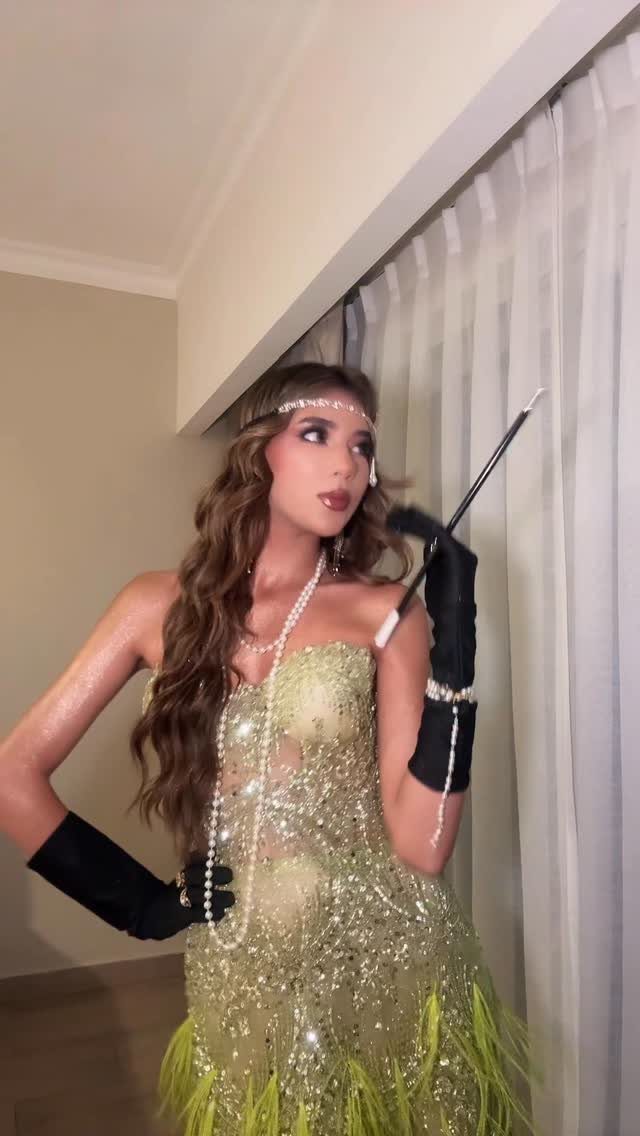
Lighter fabric is what makes a dance dress a dance dress.
Sequins and feather trim, as on this lime green version, add sparkle, but the real test is whether you can lift your arms and take a wide step without the hem or neckline fighting you.
Try it before the party: do a few Charleston kicks in front of a mirror. If the skirt rides up or the shoulders slip, a different size or a simple stitch at the straps is cheaper than finding out mid-song.
Black opera gloves keep a bright color from looking costumey, and I would choose them over extra necklaces that swing while you move.
3. Evening Dress Accessories
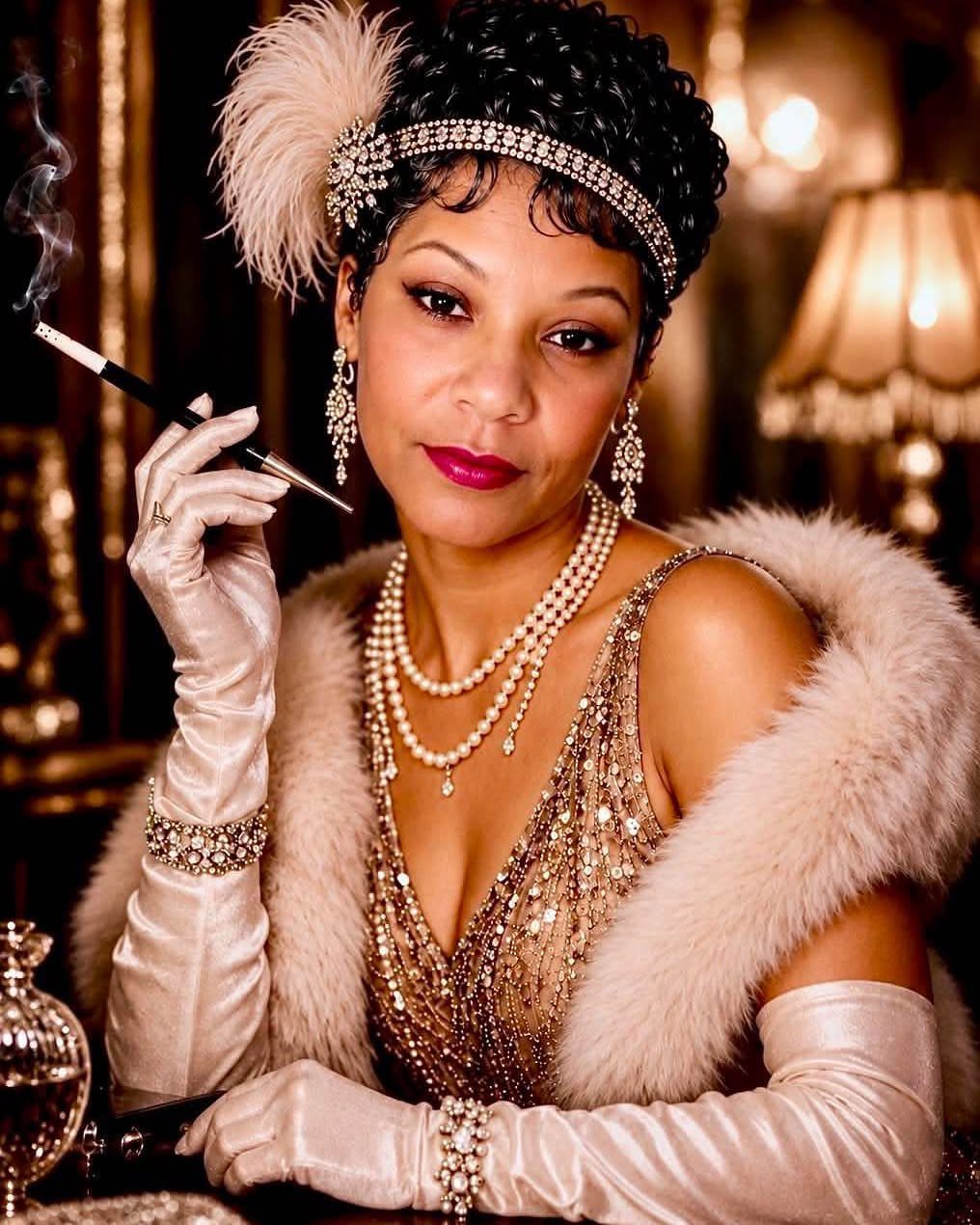
Accessories do most of the work in a 1920s evening look, and a plain dress gains the most from them.
Layered pearl necklaces, a feathered headband, long satin gloves and a fur stole are all in play here, with a cigarette holder as the prop.
Pick one focal point and let the rest support it.
If the headband carries feathers, keep the pearls simple. Long gloves already take care of the arms, so skip bracelets.
A stole is the piece I would buy first, because it also covers bare shoulders at a cooler venue. The cigarette holder works best as a prop you carry without lighting anything.
4. Flapper Dress
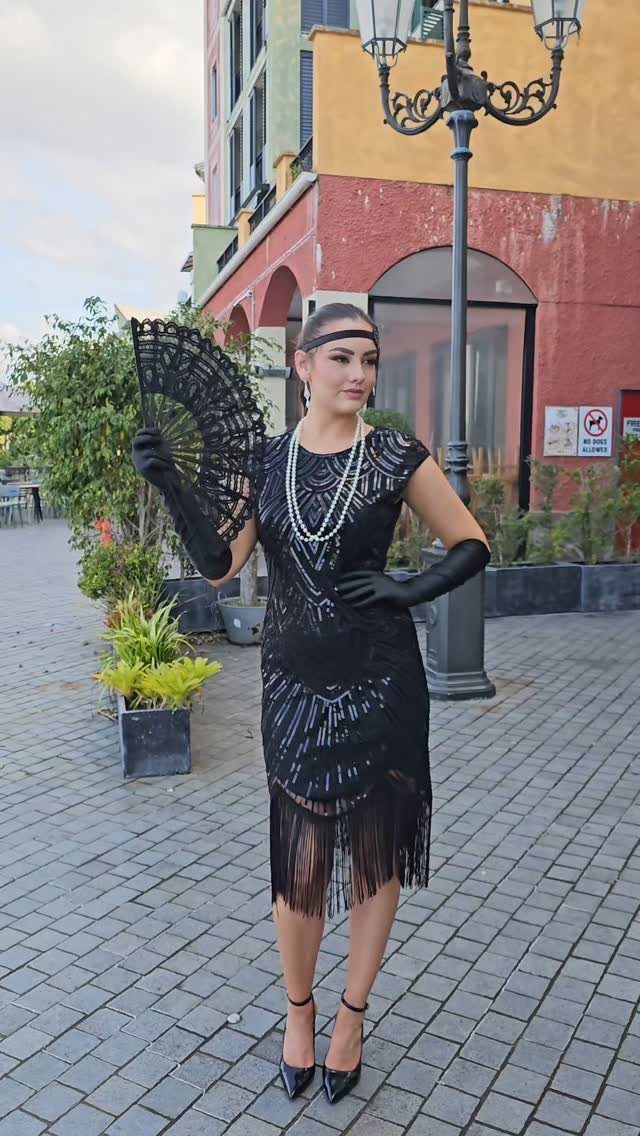
Black beaded fringe is the version of the flapper dress I would choose for a true evening event. It reads as formal where a bright, feathery one reads as playful, and the fringe moves with every step.
Check the dress for how heavily it is beaded; weight changes how it hangs and how it feels after a few hours. Look at the fringe length against your hem too, since long strands can tangle if you sit.
For a flapper evening dress, I would add 3 things: opera-length gloves that reach past the elbow, a beaded or feathered headband worn low across the forehead, and a small fan in lace or ostrich feather.
The fan gives your hands something to do, which helps at a standing party.
5. Tiered Dresses
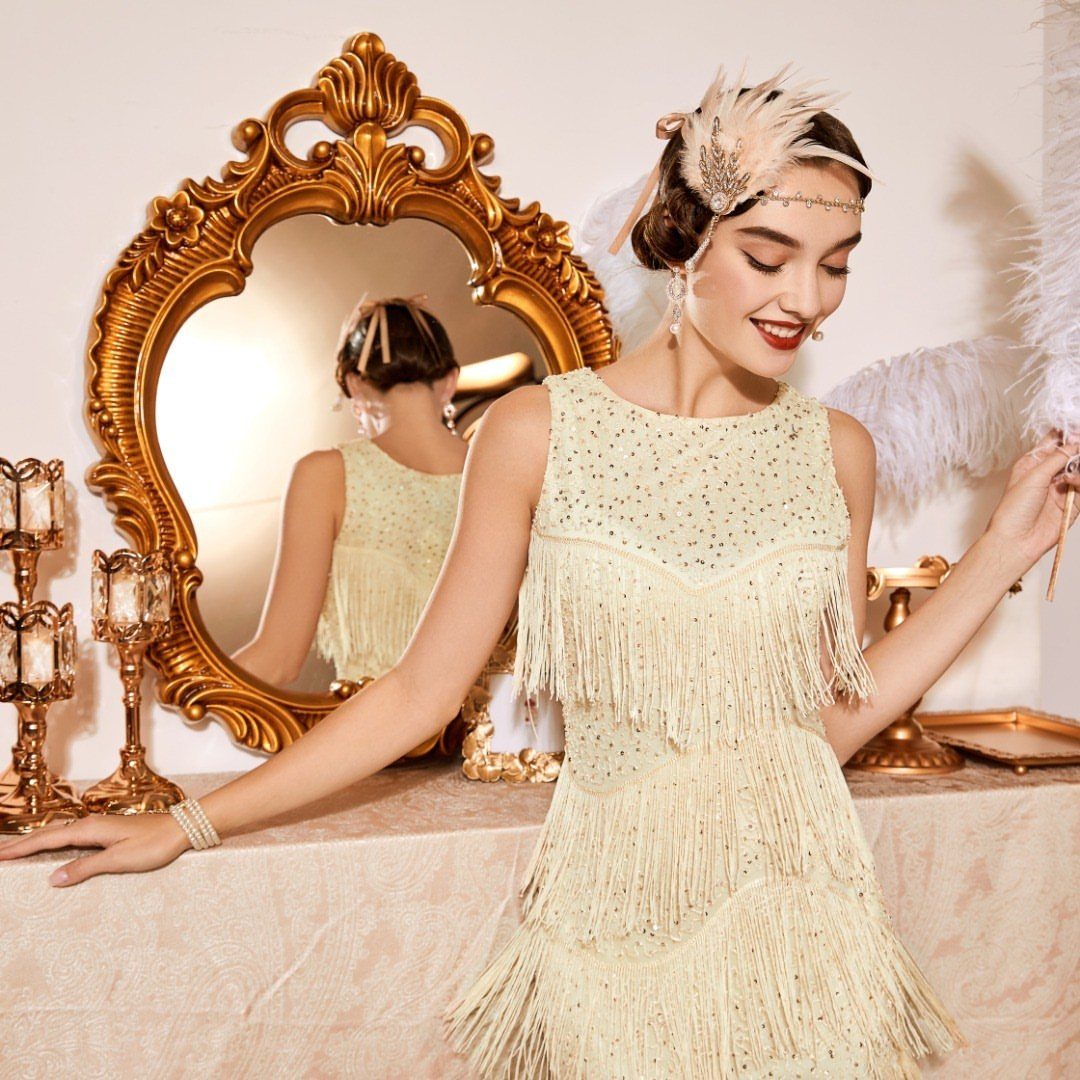
Layers of fringe stacked down the skirt give a tiered dress its feminine look, and a pale shade like this cream and yellow keeps it soft instead of showy. Sequins add shine without needing much else.
When choosing, look at where each tier starts. Tiers that begin high can add bulk across the hips, so if that concerns you, find one where the layers begin at a drop waist and fall straight.
A feathered headband is enough on top. With this much texture in the skirt, I would leave out heavy jewelry and let the tiers be the statement.
6. Handkerchief Hem Evening Dress
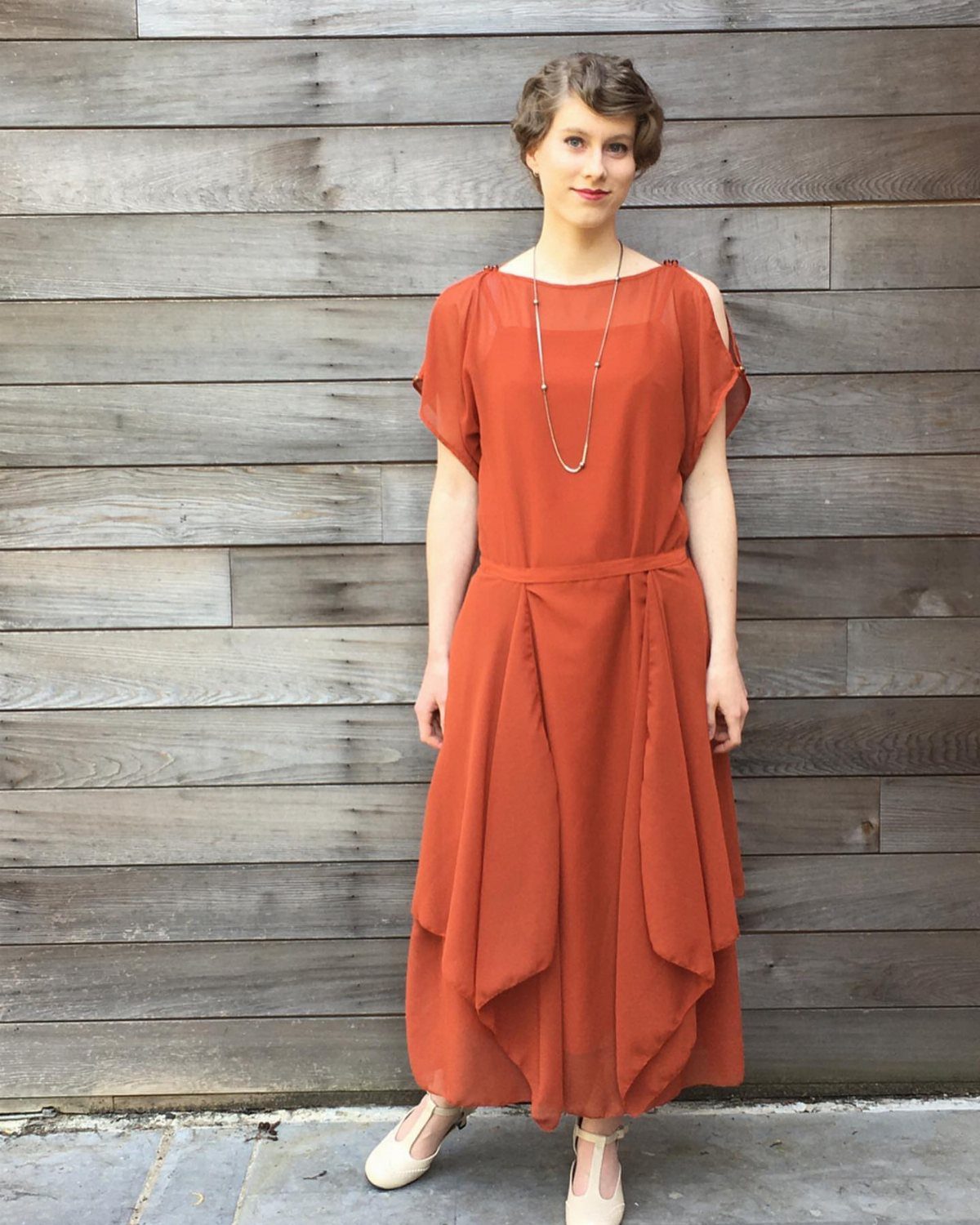
An uneven, pointed hem is the detail that sets this dress apart: the fabric dips into points and shows more leg as you move. In chiffon, like this burnt orange drop-waist, it floats instead of hanging flat.
Check how long the longest point falls, because that is the length you will manage on stairs and in a crowd. Chiffon is sheer, so confirm there is a lining or plan on a slip underneath.
T-strap heels suit it well, drawing the eye to the movement of the hem. I would pick a warm, earthy color like this over black, which hides the shape of the points.
7. Evening Dress with Matching Cape
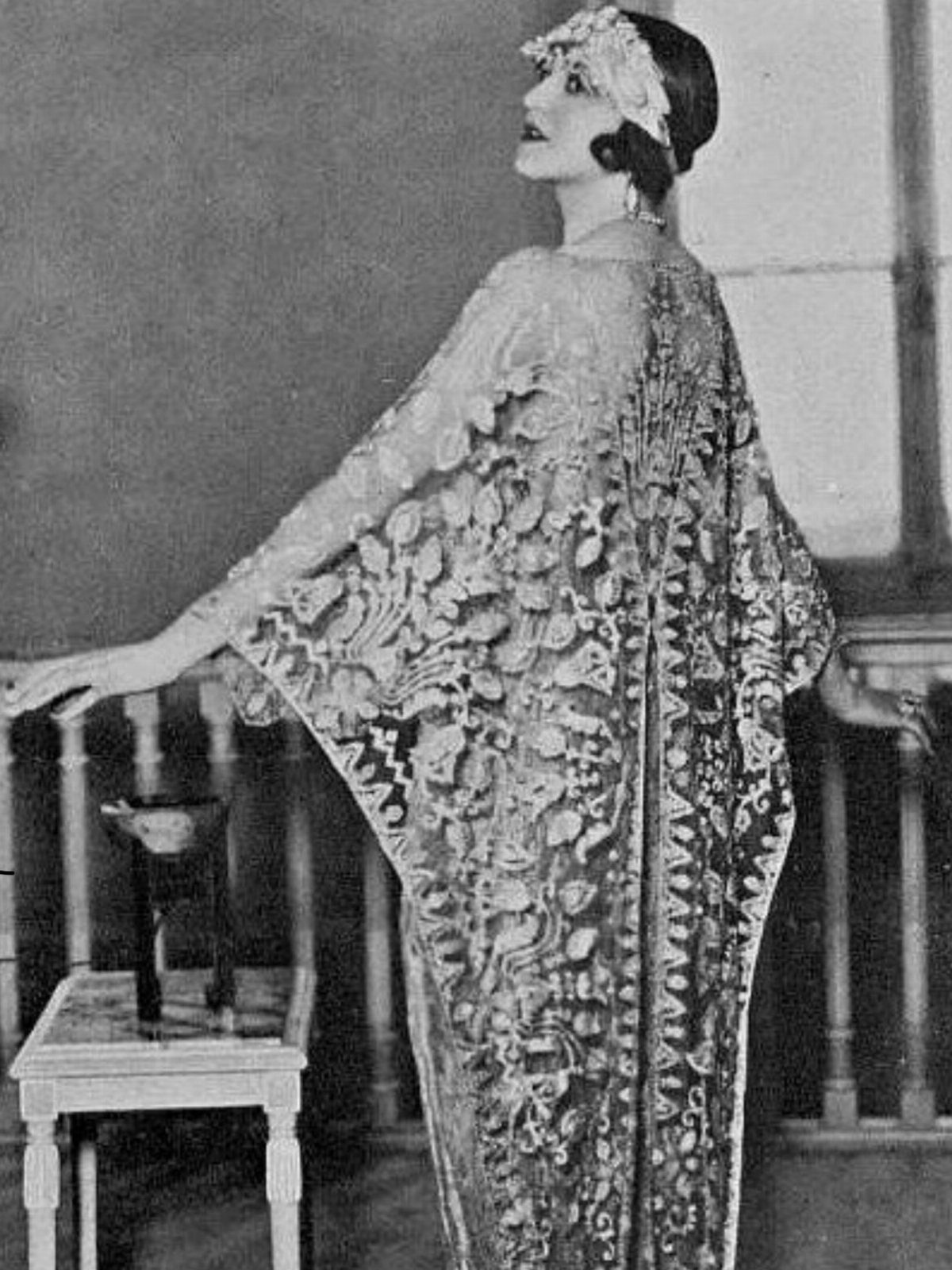
A cape worn over a 1920s evening dress works as part of the outfit, not as a coat on top of it.
In a patterned fabric like this one, the overlay and the dress read as a single matched piece, with a decorative headband tying the look together.
Decide first whether the pattern is busy enough to stand alone. If it is, I would keep the headband the only other ornament and skip necklaces, since the cape already fills the neckline and shoulders.
Check how the cape sits when you move. A cape-like overlay that slides back or bunches at the arms will bother you all night, so try sitting and reaching for a glass before you commit.
8. Feathery Texture Evening Dress
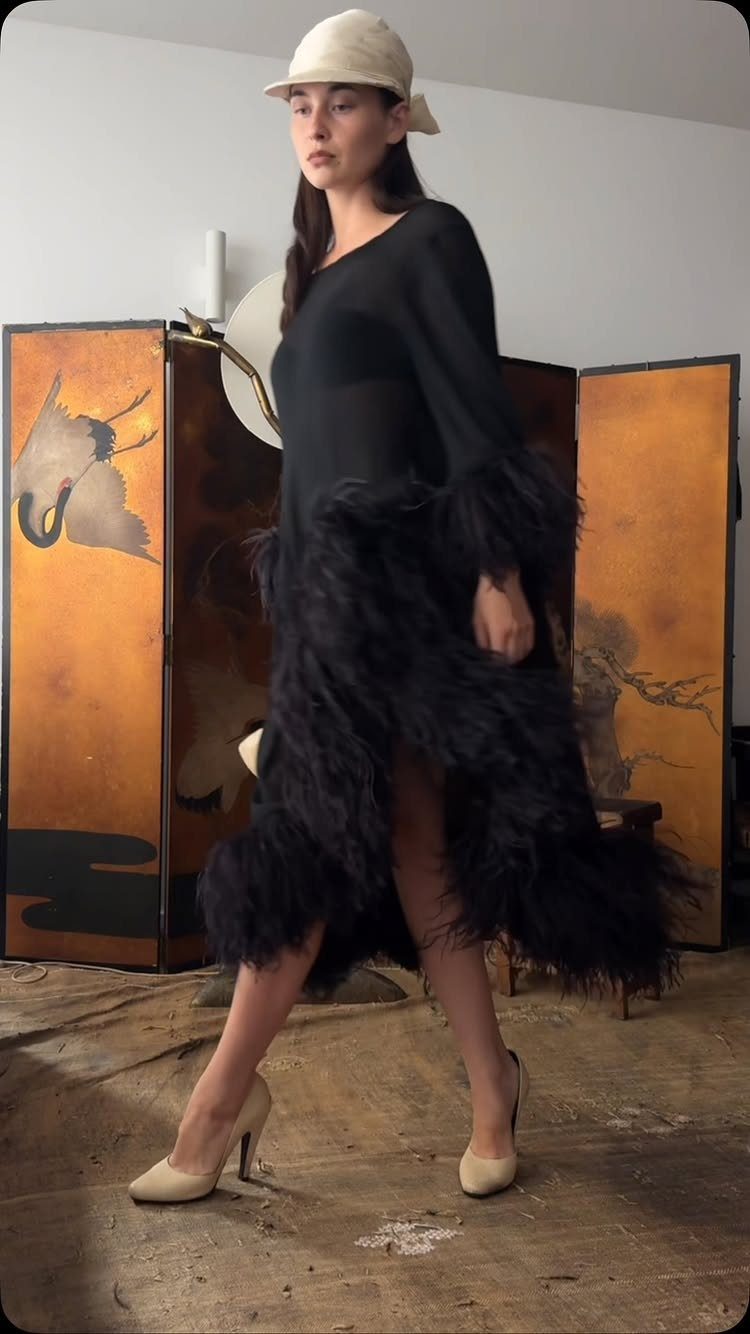
Black feathers worked across a long-sleeved dress give this gown its texture, and the long sleeves keep it sleek rather than fussy. A cream cloche hat against all that black is the contrast I like best here.
Before buying, look at how the feathers are attached.
Heavy trim along the sleeves can shed or catch on things, so I would give the dress a gentle shake in person, or read reviews for mentions of shedding if you order online.
With this much trim, keep the rest plain. High heels and the hat are enough; a bold necklace would compete with the feathers.
9. Beaded Evening Gown with Train
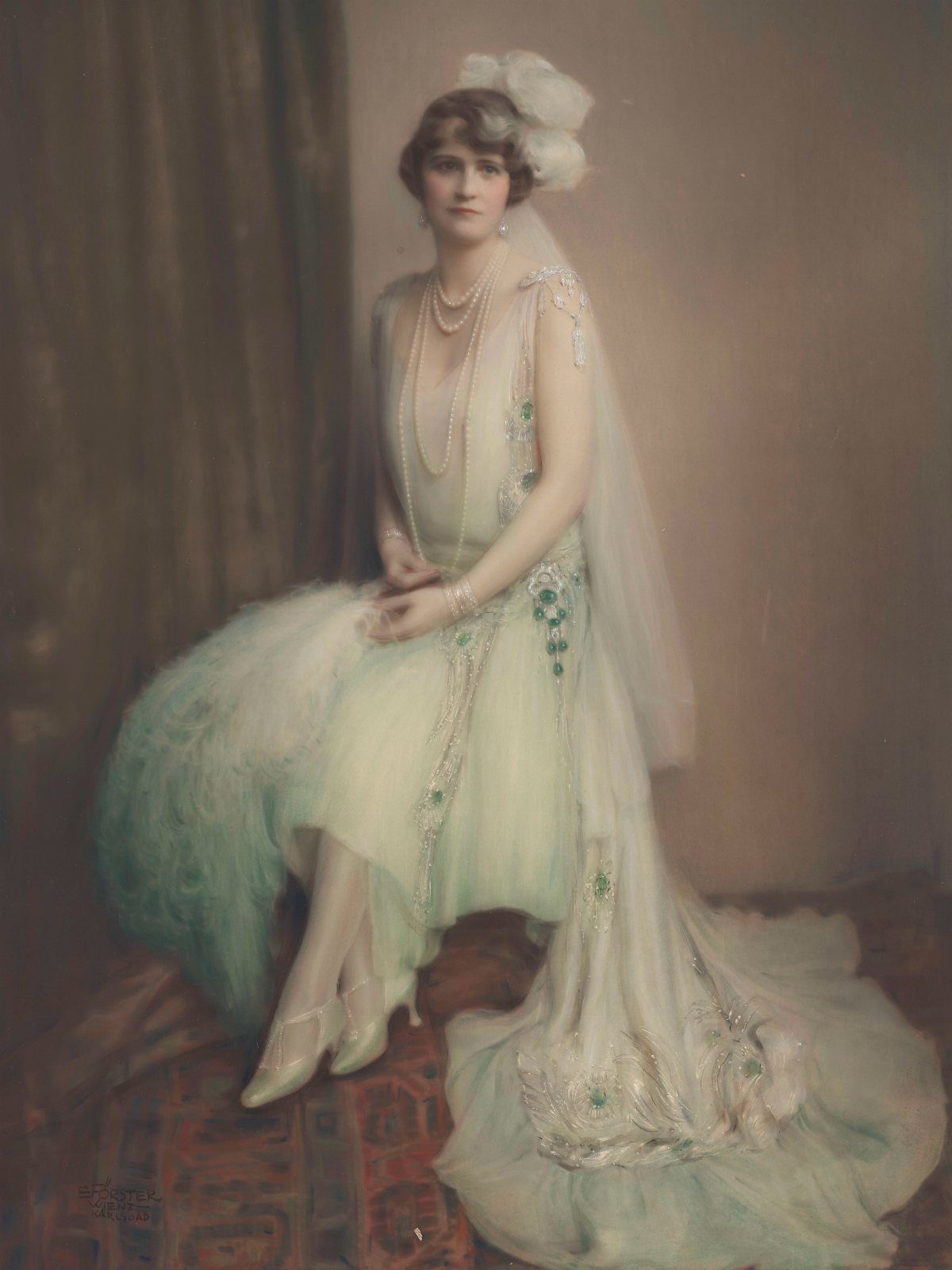
Pale green beading with a long train attached is the most dramatic silhouette among 1920s evening dresses, and it belongs at a formal event more than a crowded party.
Pearl necklaces, a feather headpiece and a veil all sit comfortably with it, though I would pick two of the three.
Check the train first.
Decide whether it is attached or detachable, and how you will carry it when dancing or sitting. A long train in a tight room is a real limit.
Beading adds weight, so judge how the dress hangs on your shoulders before wearing it for hours. If it feels heavy, a simpler headpiece is the easiest place to save.
10. Flowing Sleeve Embellished Gown
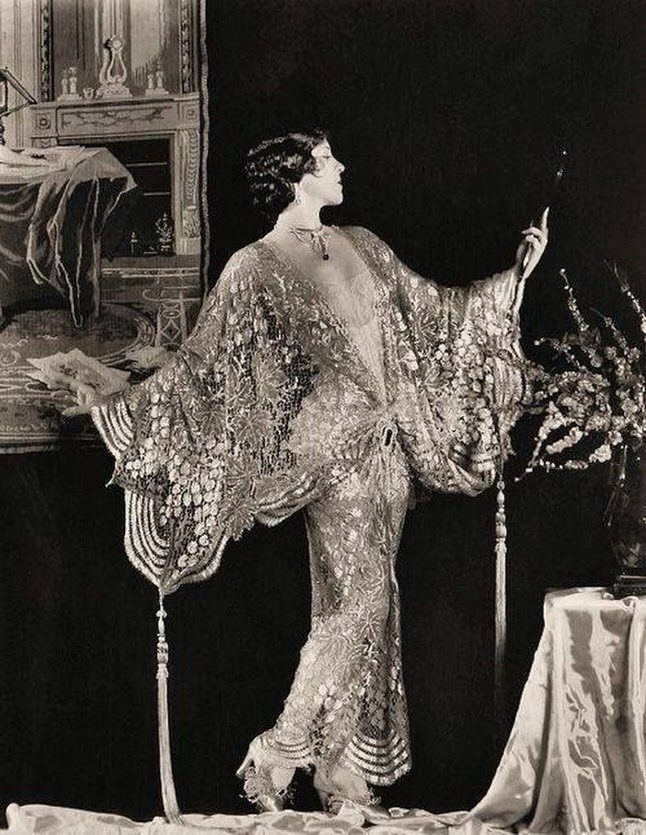
Wide, flowing cape sleeves are what make this gown, and the shimmer and tassel accents across the body mean the sleeves move with you.
A feather or lace fan gives the arms a graceful place to rest, and it keeps the long flowing sleeves from looking like an afterthought.
Check sleeve width before choosing. Wide sleeves can drag through food, drinks and doorways, so I would test reaching and sitting while wearing them.
Heavy embellishment already supplies the sparkle, so I would keep jewelry minimal and let the sleeves and tassels do the talking. Dark, dim venues suit this dress best, since the shimmer catches whatever light is there.
Evening Dress Styles
"Evening dress" covered more than one level of formality in the 1920s, and that is useful when you shop. A dinner dress sat between daytime clothes and a full gown: refined, but less elaborate.
Lower necklines, bare arms, finer fabrics and decoration are what separated any of these from a daytime dress. For a modest dinner look, I would pick a simple shape in a richer silk and let the neckline do the work.
Drapery that gathered at one hip and fell in a soft swag showed up on gowns all through the 1920s, which makes it one of the easiest period details to copy.
Fabric falling from one or both sides of the skirt moves as you walk, so it is a good choice if you want motion without adding beads.
Fashion Influences
The silhouette changed fast in the early years.
Between 1920 and 1923, the waist slid lower and hemlines rose a little, yet plenty of evening dresses still fell well past the knee, sometimes nearly to the ankle. If you want an early-decade look, a longer hem is the accurate one.
Paris houses set the direction. Jeanne Lanvin made the robe de style her signature: a full, decorated skirt on a fitted bodice, and it is the silhouette I would pick if a straight column feels unflattering on you.
Poiret worked with loose draped shapes, Vionnet with bias cutting, and Patou with simpler, more modern lines.
Borrowing one of those ideas, such as a floating panel or a bias-cut drape, gives you a clear reference point.
Occasions for Evening Wear
Match the dress to the night.
For dancing, a shorter frock gives your legs more freedom, and taffeta was a fashionable pick for its crisp feel. If nobody was going to dance, a longer hem or a trailing train read as the dressier option.
For restaurants and speakeasies, I would lean toward beaded and decorated dresses, since they show up better under indoor lighting and hold up while you dance.
Frequently Asked Questions
Where can I find a 1920s dress?
Online has the widest selection, but thrift stores, vintage and antique shops, and general clothing stores also carry 1920s-style dresses, and your own closet may already hold a plain shape you can dress up.
Most of what turns up leans toward party and formal styles, which are the easiest to find in this look. Daytime versions are harder to find, so be willing to add decoration yourself.
What was the style of dress in the 20s?
By the middle of the decade, the typical dress was a short, straight column with a dropped waist that sat at the hip and hung from the shoulders.
Evening versions added beading, sequins, fringe or feathers, plus lower necklines, bare arms and finer fabrics. In the early years, 1920 to 1923, waistlines dropped but hems barely climbed, so plenty of evening dresses still skimmed the calf or went longer.
Were all 1920s evening dresses flapper dresses?
No. Flapper was a label for a modern young woman and the way she lived, not a dress category; the outfit people link to her is the straight, low-waisted, shorter frock covered in beads, sequins or fringe.
A knee-length beaded dress made for dancing matches the flapper image most people have in mind, but a lot of what women wore after dark looked nothing like it.