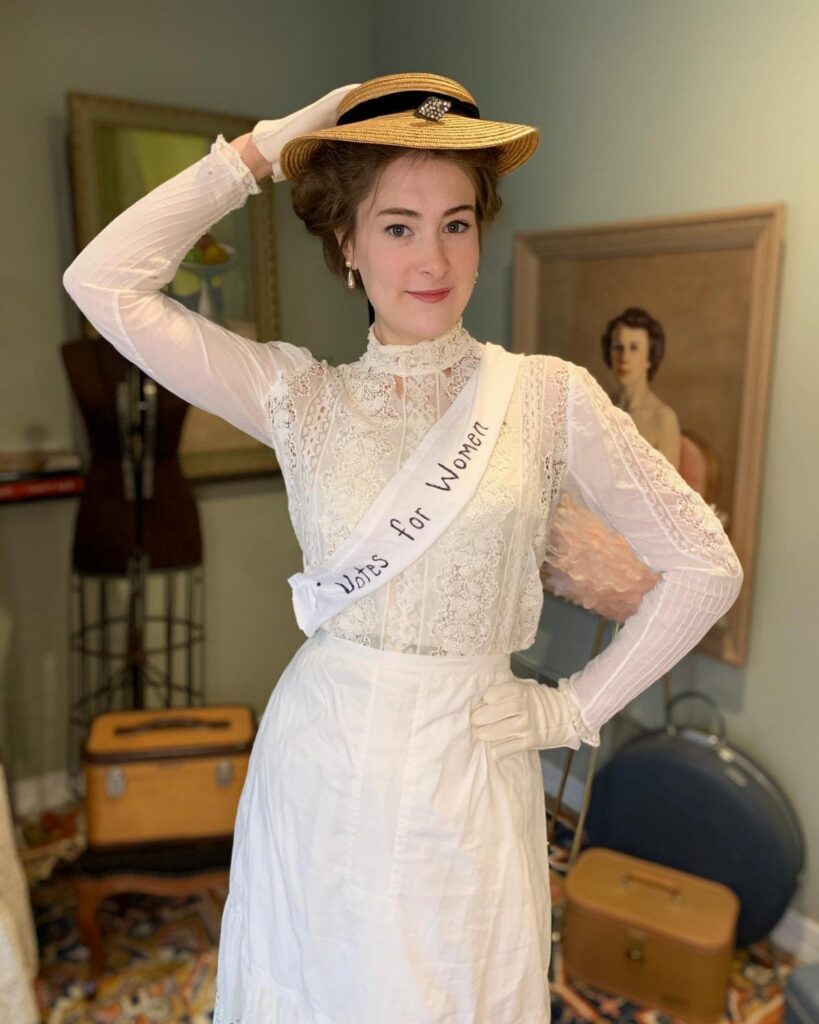
The ideas here run from a pearl strand and headband over a top you already own to a full beaded flapper dress, a suffragette look, a couple pairing, or a tie outfit built from closet staples.
1. Flapper Dress
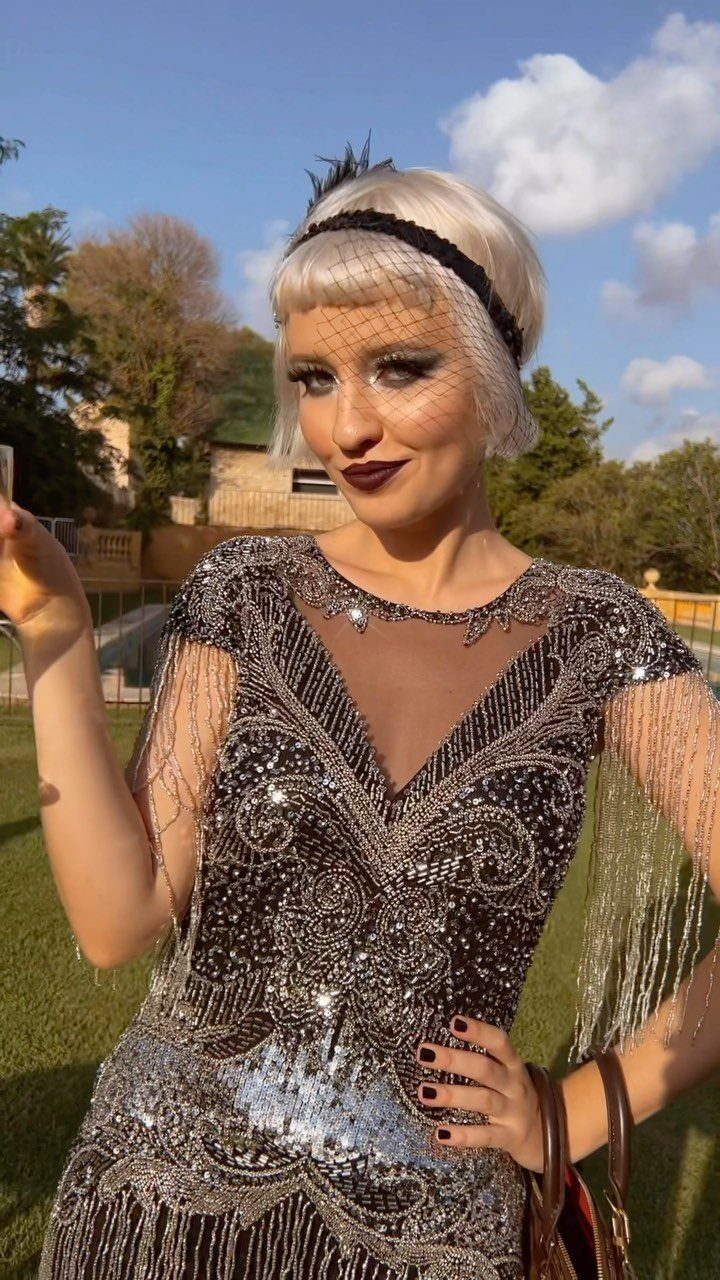
A loose, straight-cut dress covered in fringe or beading is the piece most people picture first, and it carries the whole outfit by itself.
Before buying, check how heavy the beading looks and whether the lining is smooth, since a scratchy lining gets old by the second hour of a party.
Black and silver is an easy palette for a flapper dress, and it pairs well with a feathered headband you may already own.
If the dress is short, wear it with opaque tights or a slip underneath. Fit matters less than length and comfort, because the shape is meant to hang.
2. Suffragette Costume
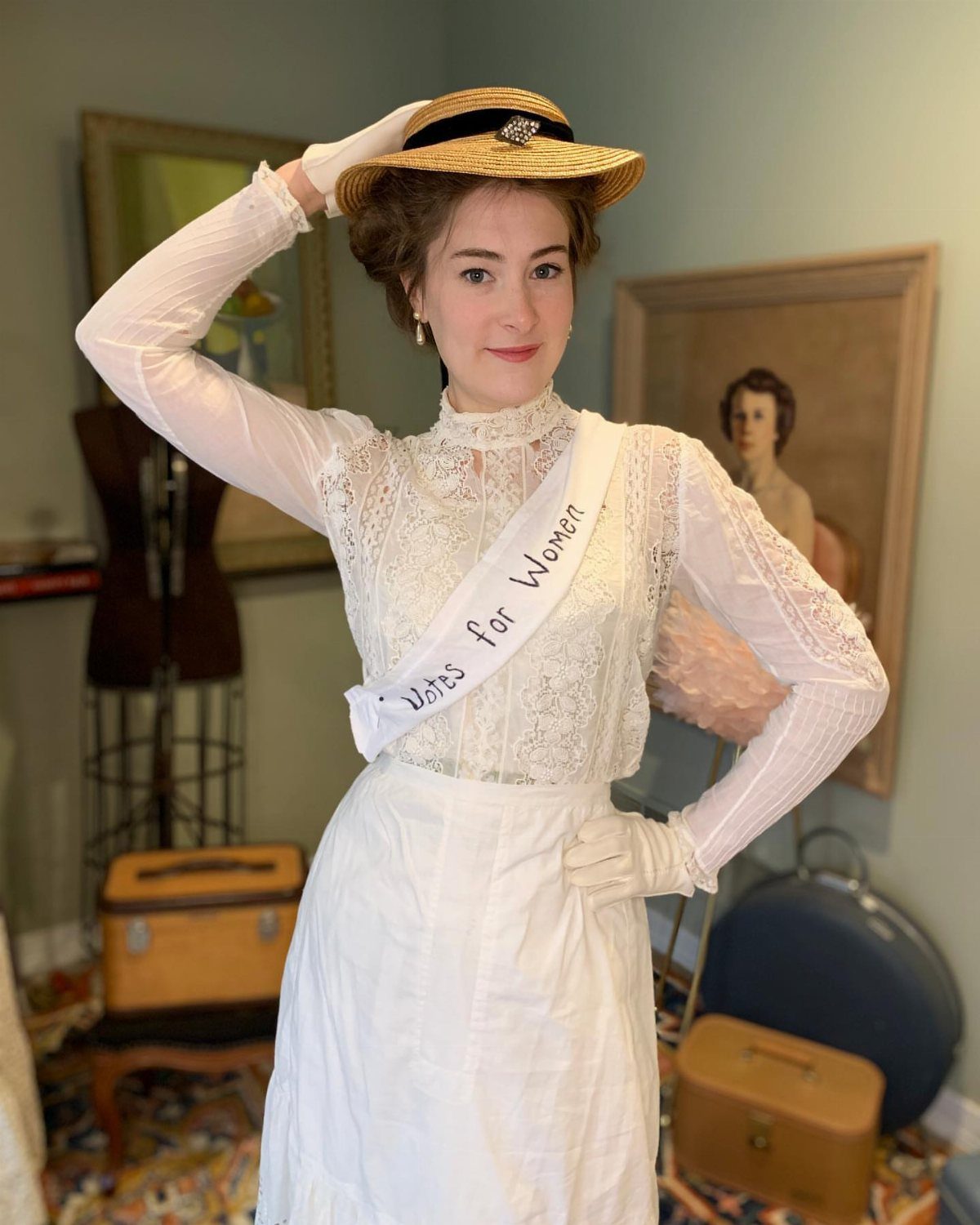
Votes for Women lettered across a sash is what turns a white blouse and skirt into a suffragette costume. Without it, the outfit reads as a tea party look, so the sash is the one piece I would not skip.
White pieces are easy to find secondhand: a lace blouse, a plain skirt, gloves.
A straw hat finishes the look. Check that the sash lettering is legible from across a room, and that the sash sits flat over the blouse instead of bunching.
This is a good pick if you want something with a message and a modest budget.
3. Black Feathered Headpiece Look
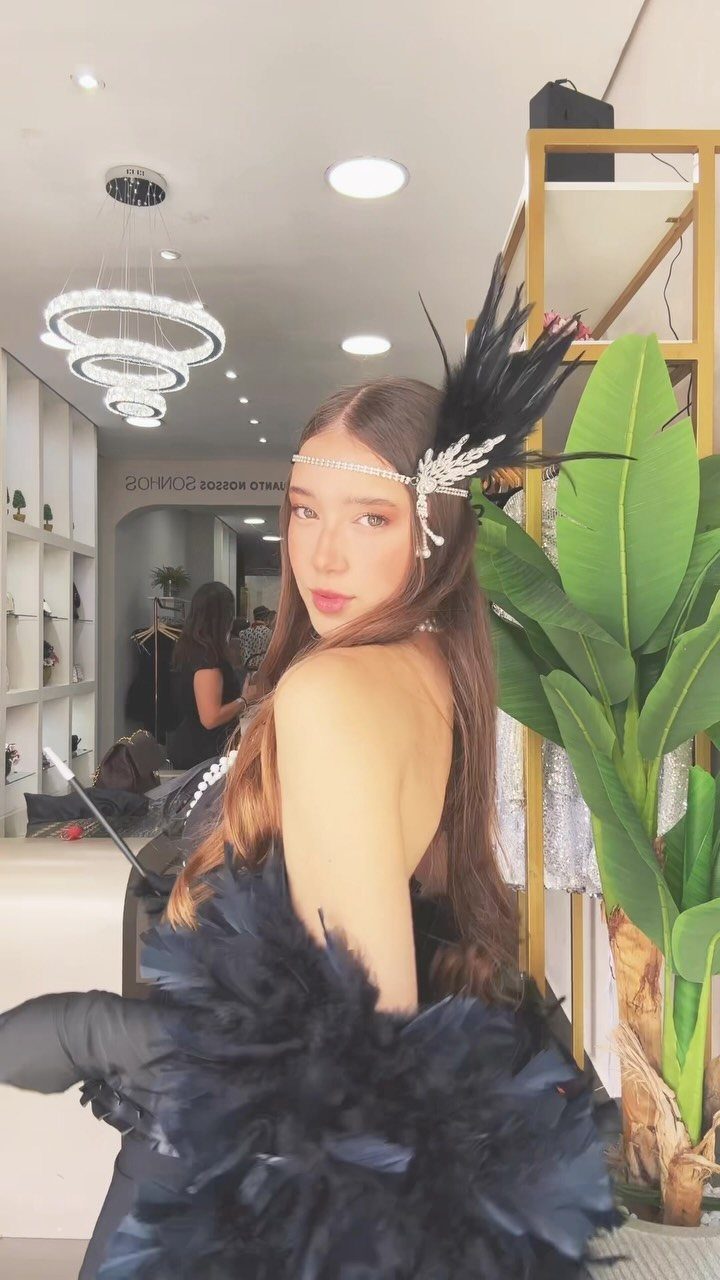
Black feathers pull the eye upward, so a jeweled headpiece does most of the styling work here. Keep everything else simple and let the headpiece lead: a feather boa and black gloves match it without competing.
My advice is to pick one feathered item to be the star and keep the others quieter.
A headpiece and a boa of equal volume compete. Try the headpiece on before the party and shake the boa gently, because feathers shed, and black shedding onto a light dress is hard to hide.
4. 1920s Couple Outfit
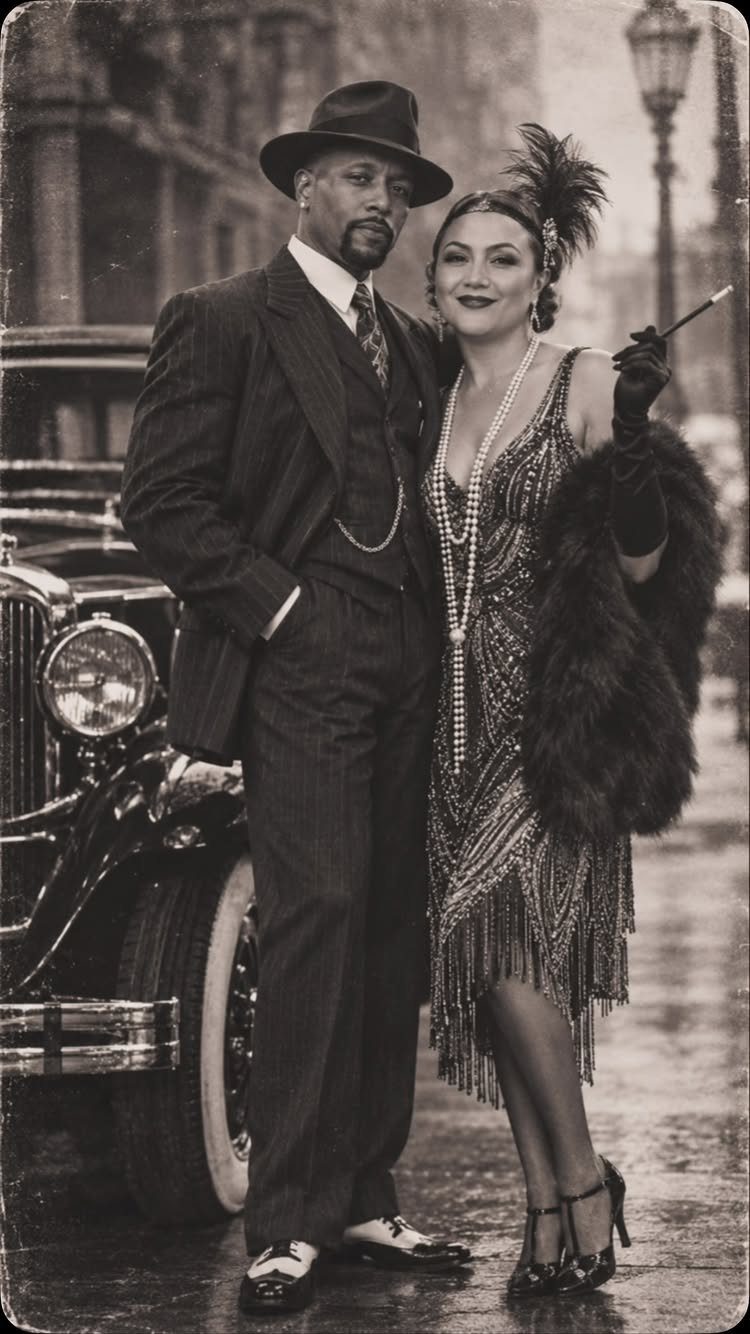
A pinstripe suit and fedora for him, a beaded flapper dress and feather headband for her: the pairing reads as one era.
Matching the era matters more than matching colors, so the pair works even when each piece is bought separately.
Decide the palette first.
A dark pinstripe suit lets her dress be the brighter half. Check the fedora size before the event, since a hat that slips looks sloppy in photos.
A vintage car is a bonus, but not required. Any doorway or staircase gives you a good backdrop.
5. Pearl Strands and Headband Look
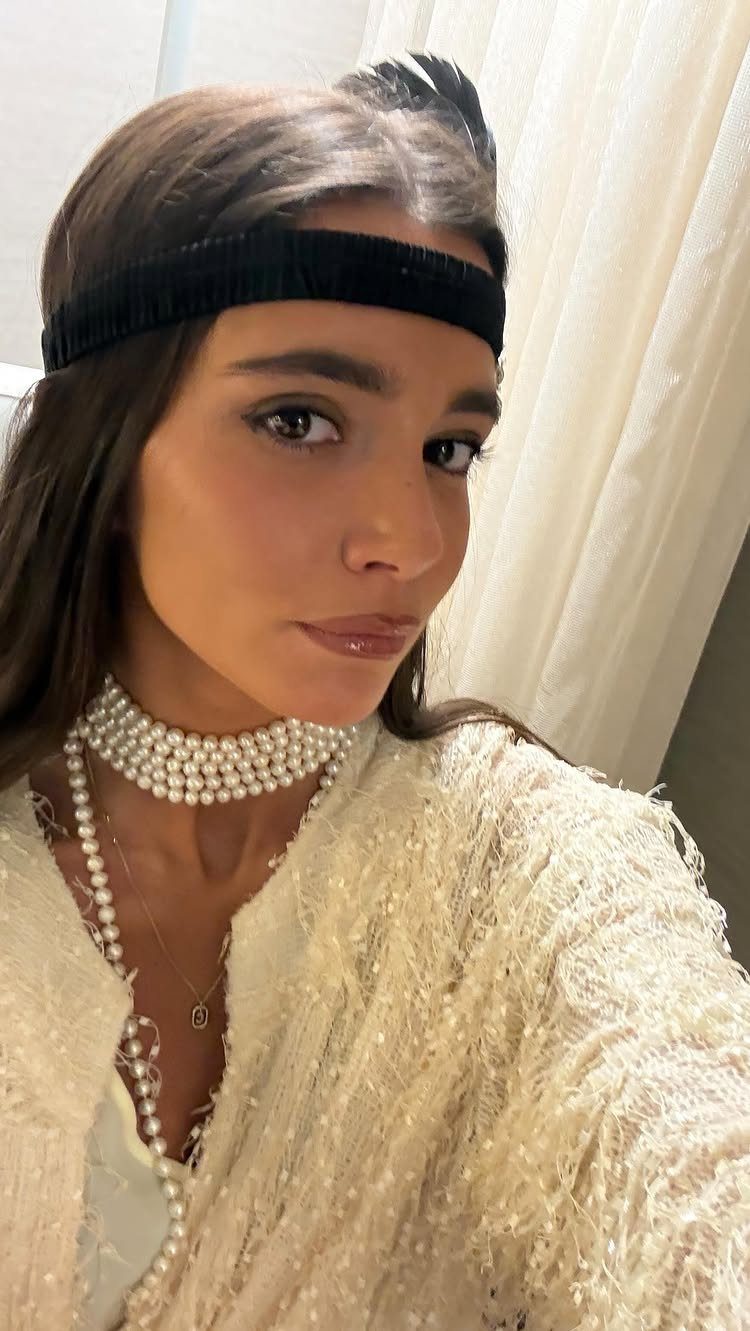
Layered pearls and a black headband can turn a plain shimmering top into a full 1920s look, and this is the cheapest route to one in the list.
A textured, fringed top in cream gives pearls something soft to rest against, and the strands stand out instead of disappearing.
Mix strand lengths: a wide choker plus longer ropes fills the neckline.
Wear the headband low across the forehead, with the feathers at the front. If you already own pearls, you may only need the headband.
6. 1920s Ties Outfit
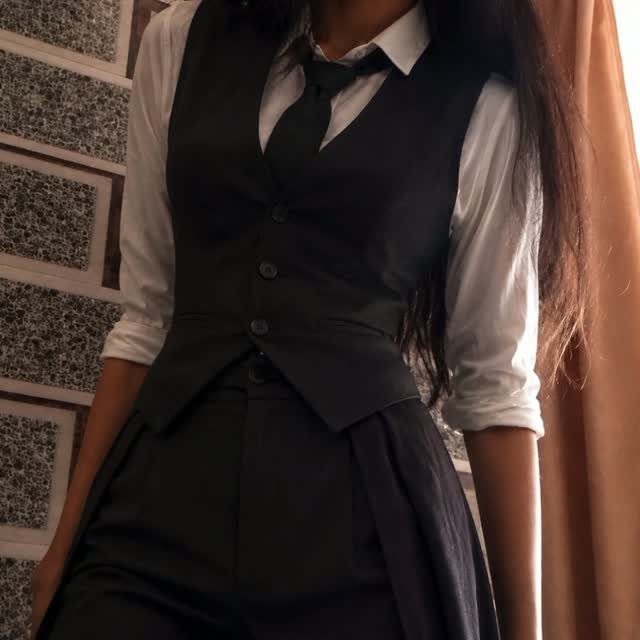
A tie is the detail that makes this outfit work for anyone who would rather skip the dress.
A black tie over a collared white shirt, under a fitted waistcoat with dark trousers, reads sharp and period without any costume-shop pieces.
Check the tie’s width and knot first; a neat, snug knot looks right, a loose one looks like office wear.
Most of this probably hangs in a closet already. If you buy one thing, make it the waistcoat, because it gives the outfit its shape.
Accessories for 1920s Outfits
Pick accessories to match the character you’re dressing as, not the decade in general. For a flapper, I would reach for a feather boa, ideally one that is 6 feet or longer so it can drape and swing when you dance.
A gangster look needs a prop, and a toy gun in the pocket or tucked into a holster does the job; just check the venue’s rules first.
The prop keeps the costume consistent, and guests read it faster than any detail on the dress.
Long pearl necklaces, headbands, and gloves all belong in the same family, so choose two or three and stop. Gold jewelry fits the sophisticated, polished side of the era.
For shoes, T-bar heels suit a drop-waist dress, and a net fascinator is a lighter alternative to a full headband.
A toy gun is a prop, so check the venue’s rules before you carry one.
Historical Context of 1920s Fashion
Knowing a little about how the decade changed helps you choose between looks that seem similar.
The classic flapper shape was a straight chemise with a flattened bust, and because the fabric hangs instead of clinging, I find it forgiving on nearly every body type.
Early in the decade hems stopped at the knee, and over the following years they crept down until some skirts nearly brushed the floor. A knee-length dress and a long evening dress are both correct.
The robe de style is the exception. Choose it if you want fullness instead of a straight line.
After that, simpler, sleeker lines took over. For a quieter outfit, go streamlined.
Gone were the constrictive corsets, excessive petticoats, and long bloomers. “The men won’t dance with you if you wear a corset,” a collective of flappers said to The New York Times in a 1920 report.
Tips for Choosing Outfits
Start with the invitation. A themed party rewards the full costume, while a casual night out only needs one or two period details.
Comfort decides how long you last. Sit down in the outfit, raise your arms, and walk a flight of stairs before the event.
Pair a beaded top with a plain skirt, or borrow a piece from your own closet and add one period accessory. A personal combination usually looks better than a boxed set, and it costs less.
Pick one focal point, such as the dress, the headpiece, or the jewelry, and keep everything else quieter so the look holds together.
Frequently Asked Questions
What to wear to a 20’s themed party?
A loose, straight-cut flapper dress with fringe or beading is the easiest answer, paired with a feathered headband. If you would rather skip the dress, a white collared shirt, black tie, fitted waistcoat and dark trousers read just as period.
Long pearls knotted at the waist and a pair of opera-length gloves do more for a 1920s party look than a head-to-toe kit, and 2 pieces is usually enough.
What makes a woman look wealthy?
In a 1920s look, gold jewelry and long pearl necklaces carry the polished, sophisticated feel.
Pick two or three accessories such as pearls, gloves and a headband, then stop, since piling on more makes the outfit look busy. A smooth lining and a beaded dress that hangs well also help the look feel expensive.
What should I wear in my late 20s?
Judge the outfit by the invitation and your own comfort rather than your age. A slip dress or pleated skirt you already own, plus one beaded or feathered accessory, usually looks better than a boxed set.