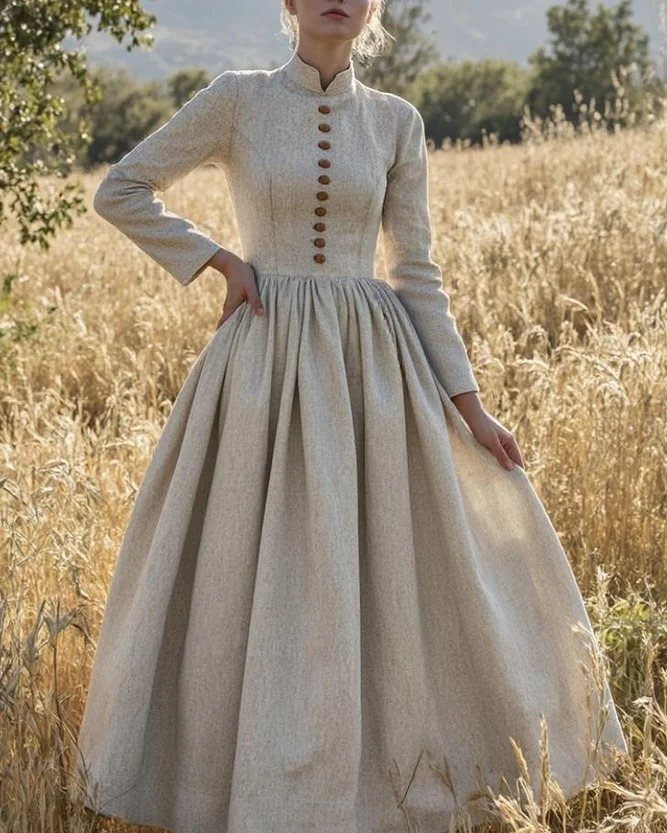
These Victorian dresses run from an early Victorian day dress to a full crinoline gown, a bustle dress, a white wedding dress and a pink ruffled garden party gown, and the setting you will actually stand in decides which one fits.
A crinoline or floral ball gown skirt needs wide doorways and a staircase you can manage, while a black mourning dress or a bustle dress works better in a tighter room or on an uneven path.
The proving detail is the hat: a deep-brimmed bonnet frames an early day dress, and an oversized feathered hat does most of the work on the darker looks.
1. Early Victorian Silhouette Day Dresses
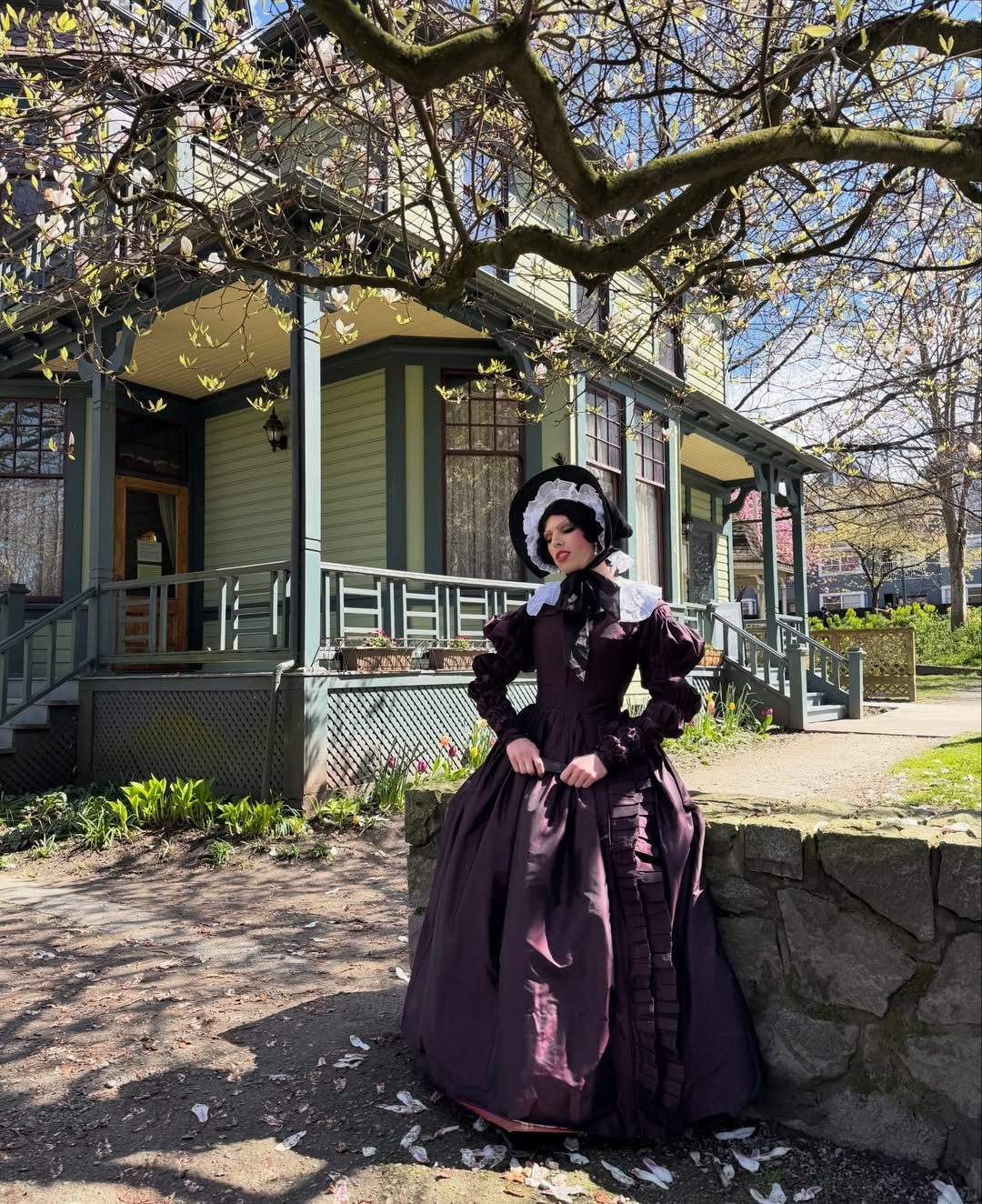
The deep-brimmed bonnet that so often topped an early Victorian day dress frames the face and sets the period faster than any seam detail.
Check the fabric before you buy. A matte, dark solid reads as daywear, while anything shiny pushes the look toward evening.
I would pick a quiet outdoor setting like a garden or porch. The look works best where nothing modern competes with it.
2. Crinoline Era Dresses
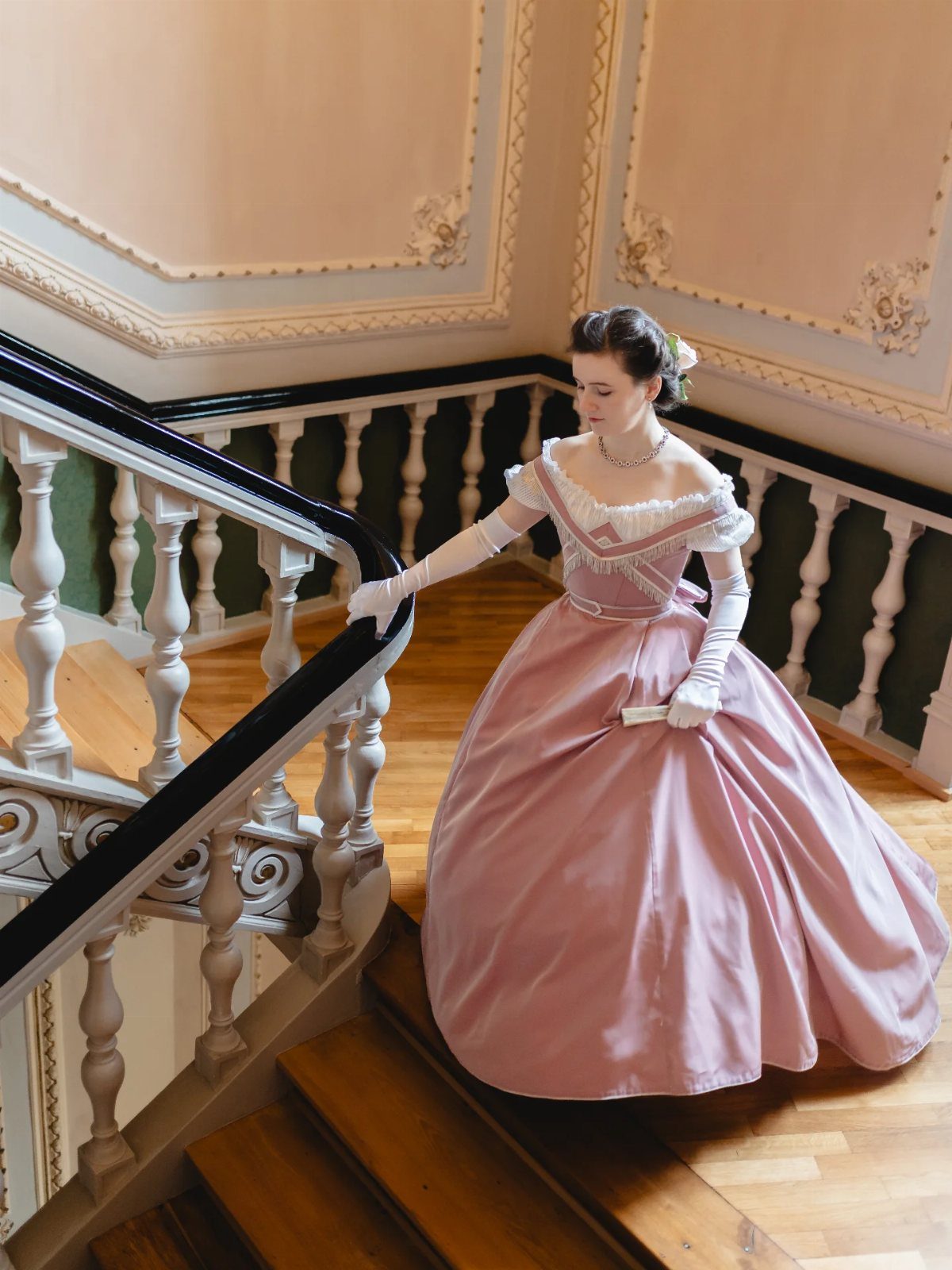
Width is what defines a crinoline gown: the skirt stands out wide in a bell, and everything else is built around it.
Before trying one, measure the doorways and stairs you will use.
A skirt this wide changes how you walk, and a staircase is the real test. Pair it with long white gloves for evening.
Pink keeps the look soft. If you are unsure about the volume, I would test a skirt shape at home before committing to a full gown.
3. Bustle Period Dresses
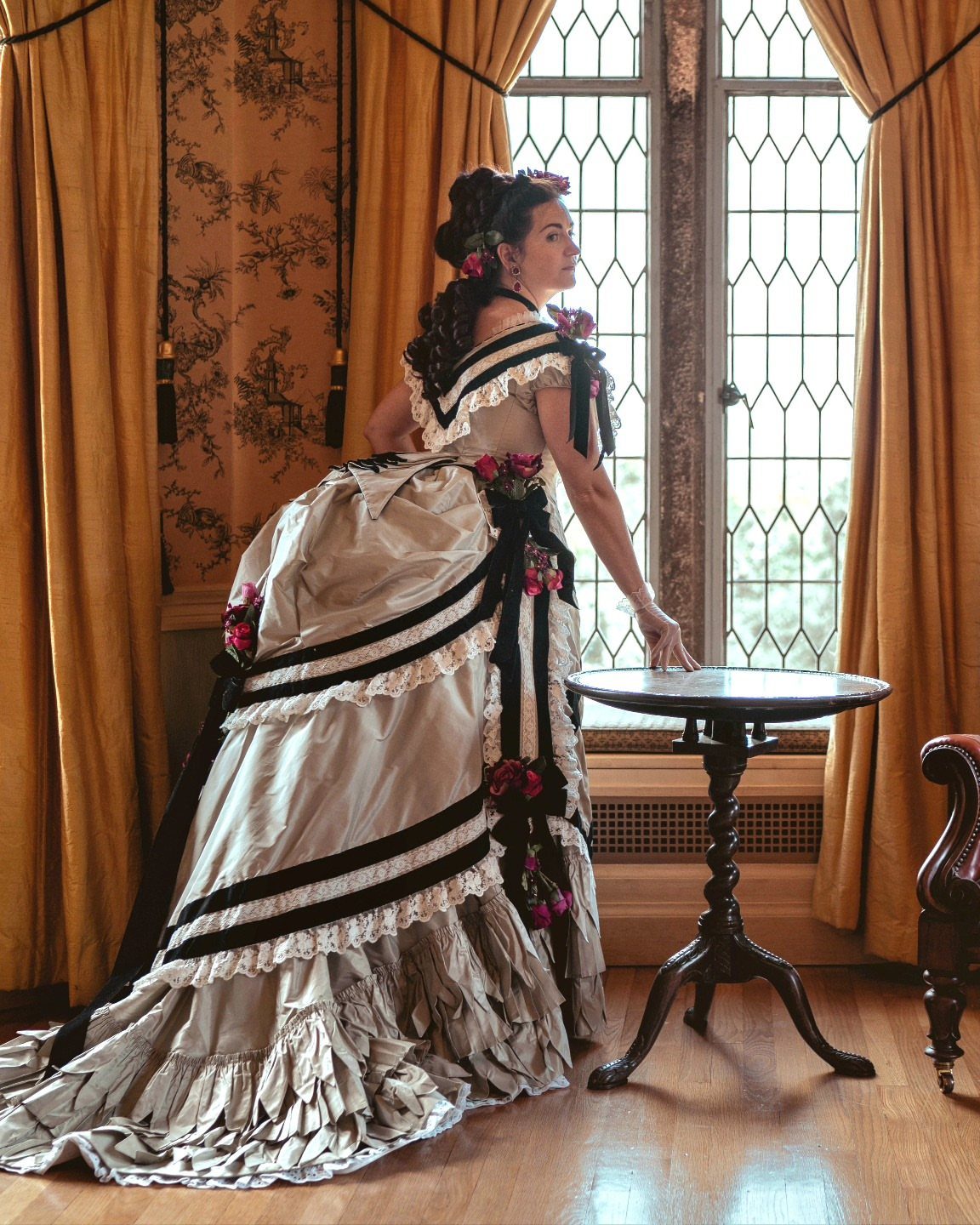
Stand in profile and the bustle explains itself: the fullness moves to the back, and the dress is trimmed to be seen from the side.
Because of that, lace, ribbons and flowers work best when they run down the back drapery rather than the front. I would choose one trim family, say lace with a few ribbons, instead of piling on everything.
Check how you sit before you commit. Fullness at the back changes which chairs work.
4. Victorian White Wedding Dress
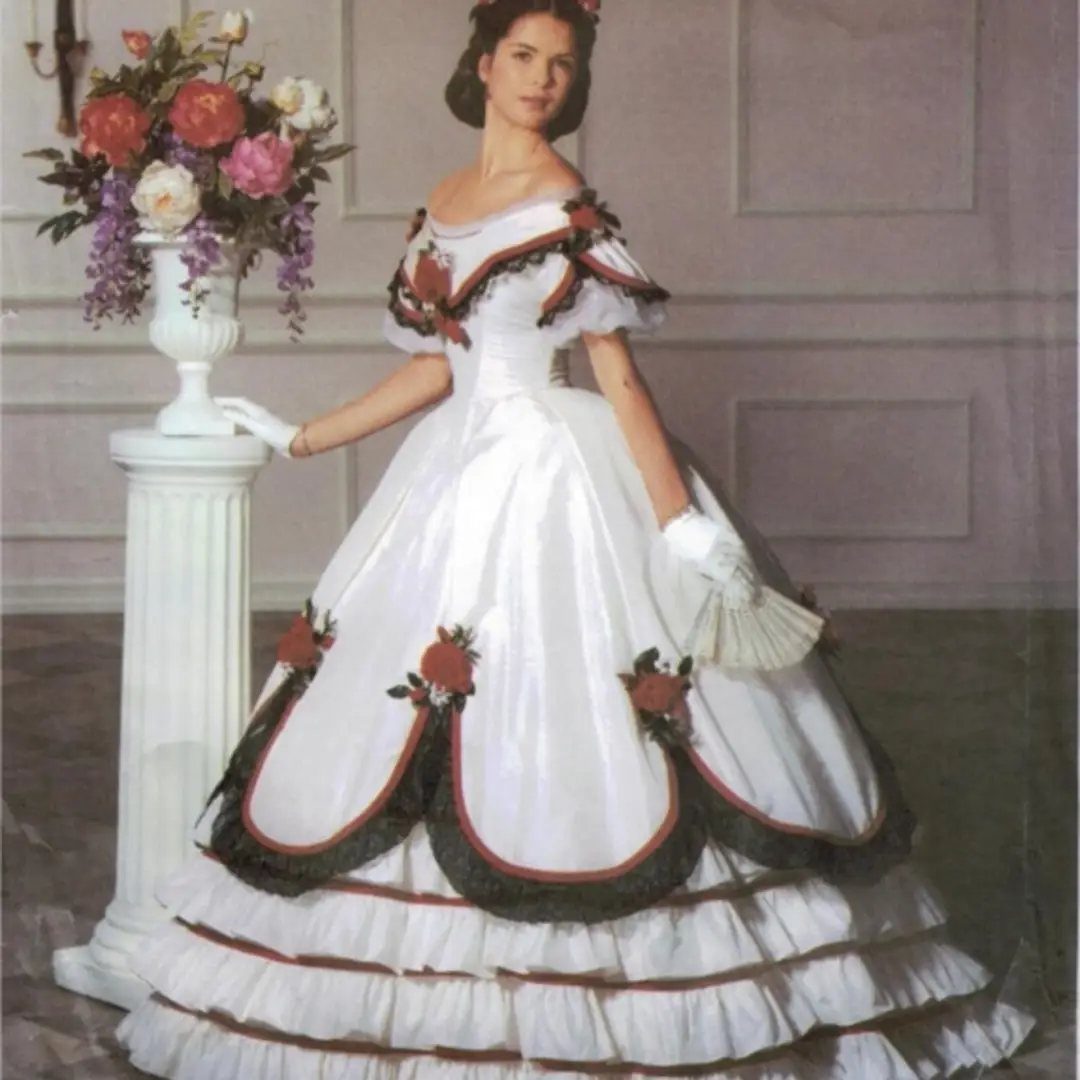
A white Victorian-style gown works well with ivory, cream, or blush lace, and I like it best with a touch of color in the sash, flowers, or trim.
Dark ruffles and red trim give the skirt a pattern that plain bridal satin lacks.
If you want the modern bridal echo without the full costume, I would keep the voluminous skirt and choose one accent color for the trim. A fan gives the hands something to do.
Decide early how much contrast you want, since dark ruffles on white dominate every photo.
5. Victorian-Inspired Dresses
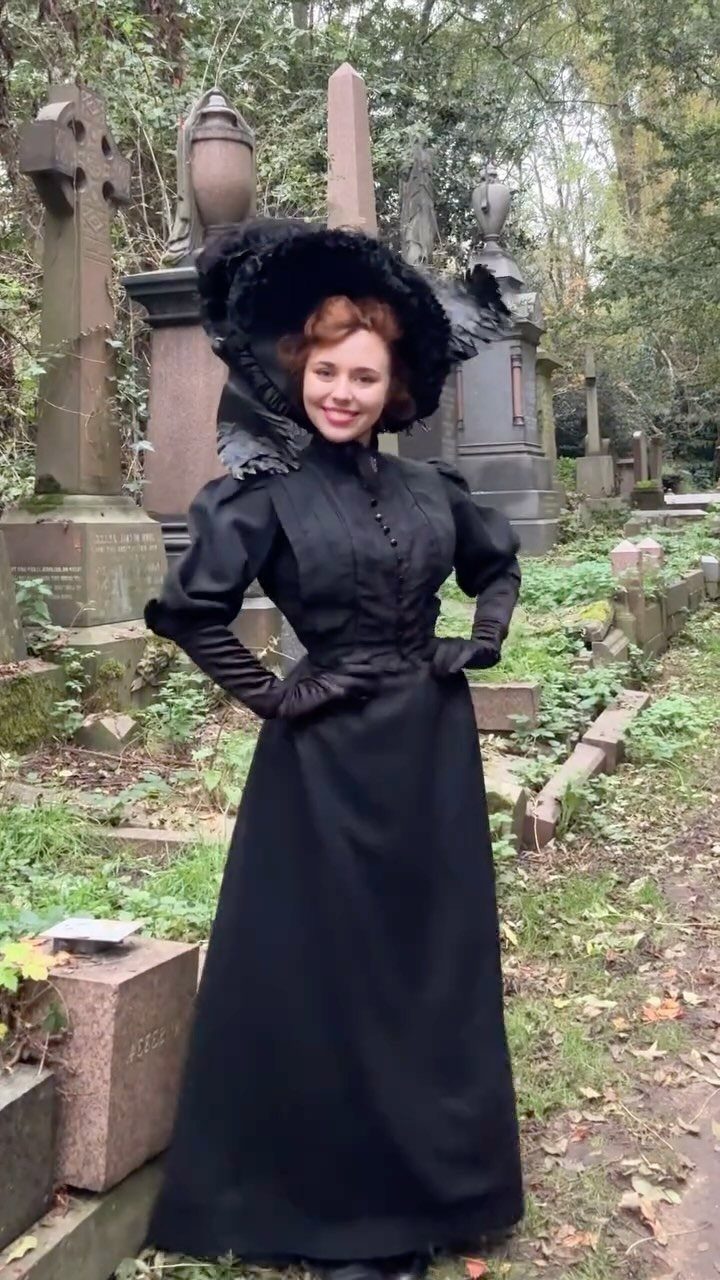
Victorian-inspired means you borrow the mood without copying the pattern. A full-length black dress, black gloves and a large feathered hat are enough to signal the era.
The hat does most of the work, so spend there first. Check that the dress hem clears the ground if you plan to walk over uneven ground, such as a cemetery path.
Black photographs well against overgrown settings. I would keep the rest plain and let the feathers be the detail.
Among its many contributions to history, the era’s fashion, mainly Victorian Dresses, sticks out as an image of beauty, complexity, and social identification. From extensive skirts supported using crinolines to elaborate lace elaborations, Victorian attire has left an indelible mark on the fashion world.
6. Floral Victorian Ball Gown
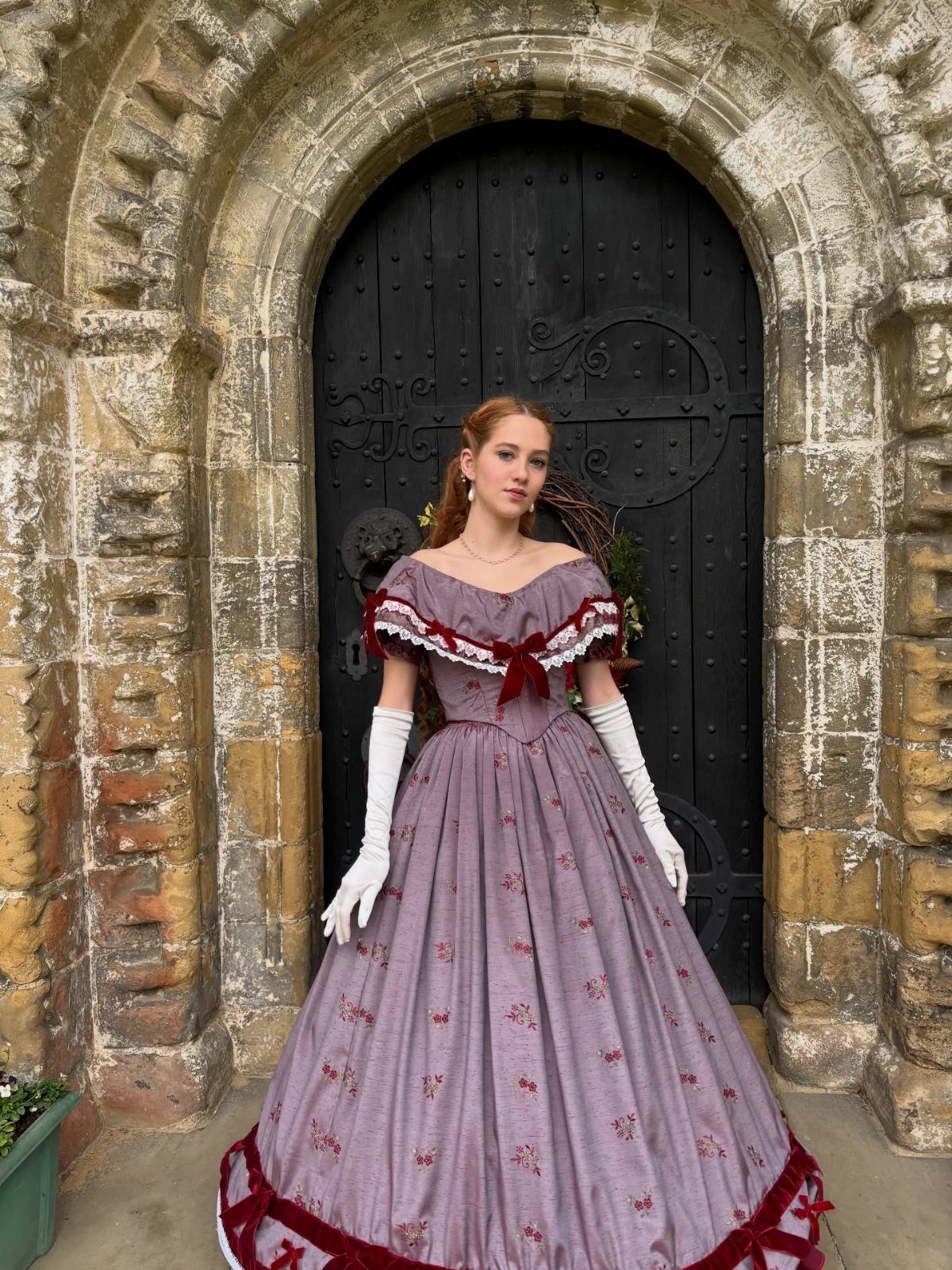
Lavender with red velvet trim is a bolder pairing than most floral ball gowns attempt, and I like it for that. White lace softens the contrast.
Pick one trim to lead. With a floral print already on the skirt, red velvet should sit at the edges, not everywhere.
Long white gloves finish the look. Before buying, check that the print scale suits you, since big florals look different on a voluminous skirt than on a hanger.
7. Victorian Mourning Dress
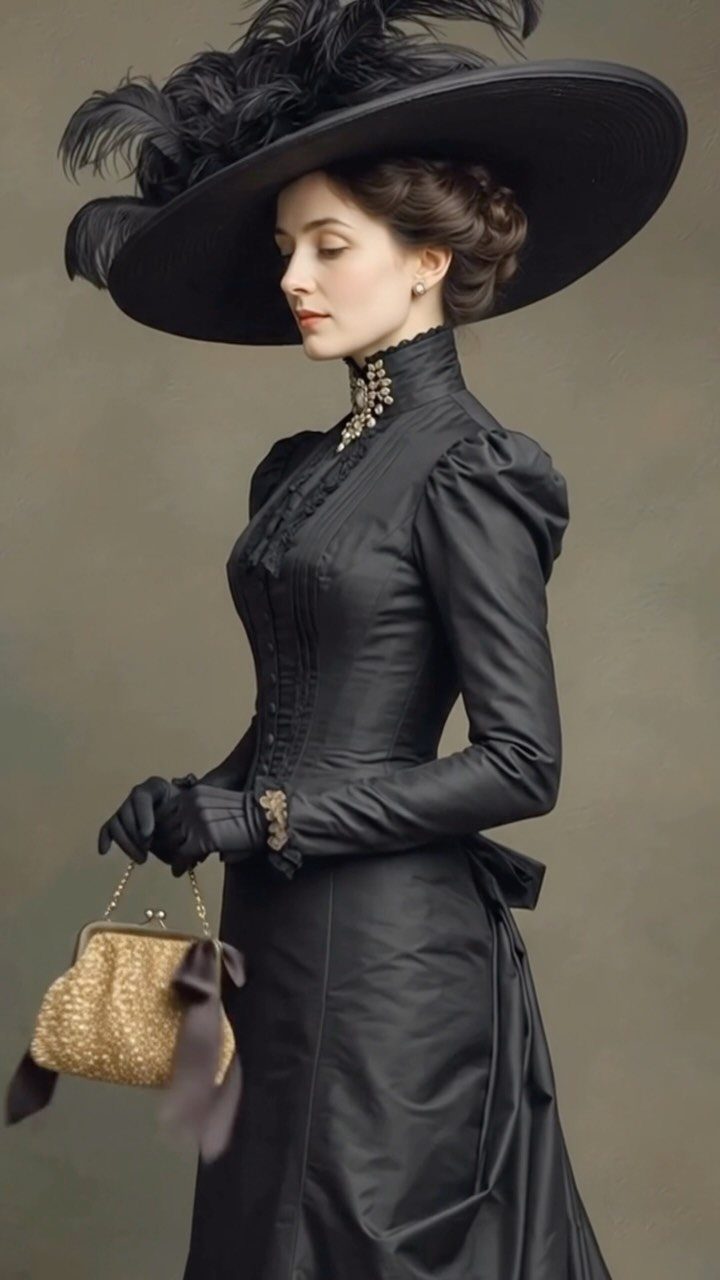
A high collar and unbroken black are what make a Victorian mourning look read as mourning rather than as a costume in a dark dress.
The oversized feathered hat and the gloves finish it, so check how those 3 pieces sit together before anything else.
I would spend on the hat first, since it frames everything above the collar. Try the gloves on with the sleeves you plan to wear, because a gap at the wrist breaks the line.
A small beaded purse keeps the hands busy and the palette dark. Skip bright jewelry.
8. Pink Ruffled Garden Party Gown
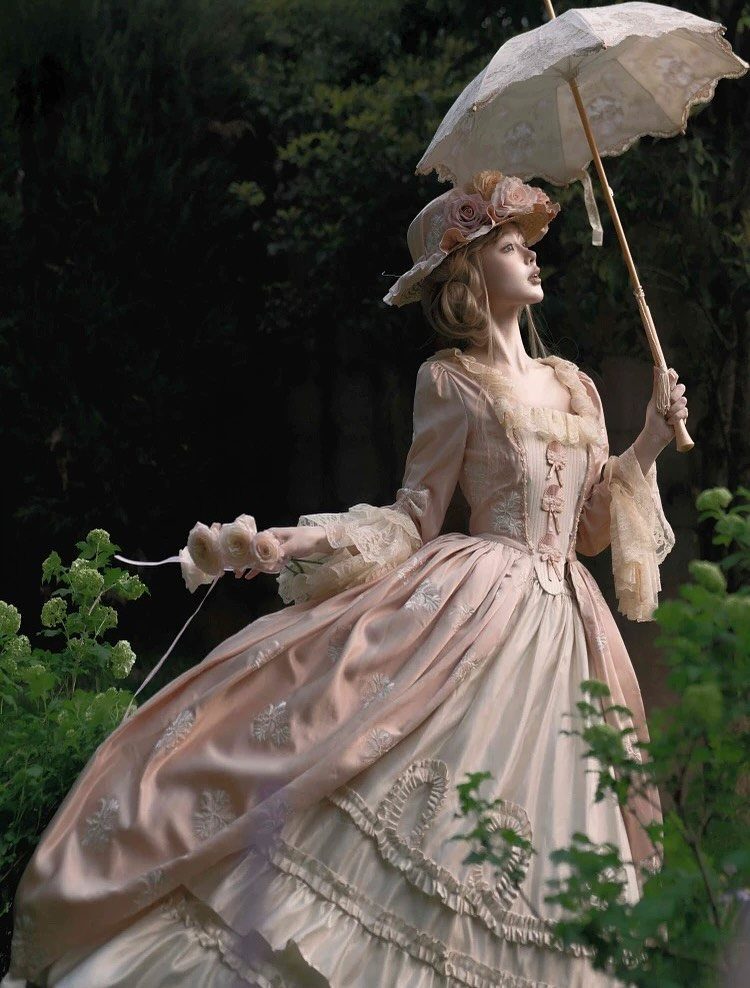
Ruffles in pink, a floral hat and a lace parasol make this the softest gown on the list, and the parasol is the piece I would not leave out.
It gives the hands a job and adds a second layer of lace.
Choose one place for the ruffles to lead. On a skirt this busy, I would keep the bodice and sleeves simpler.
Check the hat before buying: florals on the brim should not compete with flowers on the dress. Outdoors, a garden setting suits the whole outfit.
Frequently Asked Questions
Why were Victorian era dresses so big?
Fullness came from stacked petticoats and underskirts, with a hoop or cage added later in the century.
The bodice was shaped to pull the waist in tight and let the skirt flare from there, so the silhouette read as an hourglass.
How did women dress in the Victorian era?
It changed over the decades, but early Victorian looks had bell-shaped skirts over petticoats, corsets for a narrow waist, and often puffed sleeves.
By day, necklines sat high and sleeves ran to the wrist; after dark, the neckline dropped and the sleeves shortened.
Later the fullness moved to the back in the bustle period, and trims like lace and ribbons ran down the back drapery.
What colors were popular for Victorian dresses?
Pink, white, ivory, cream and blush were common for soft, feminine looks, and lavender with red velvet trim makes a bolder floral ball gown. Black was the color of mourning, worn unbroken with a high collar.
Where can you buy Victorian clothes?
Specific shops aren’t named here, so I can’t point you to one. What I can say is what to look for: upper-class dresses used silk, velvet and taffeta, while cotton and wool blends were the everyday choice.
Muslin and organdy suited summer, and brocade and flannel suited cold months. Check the fabric and the hat first, since the hat does most of the work.