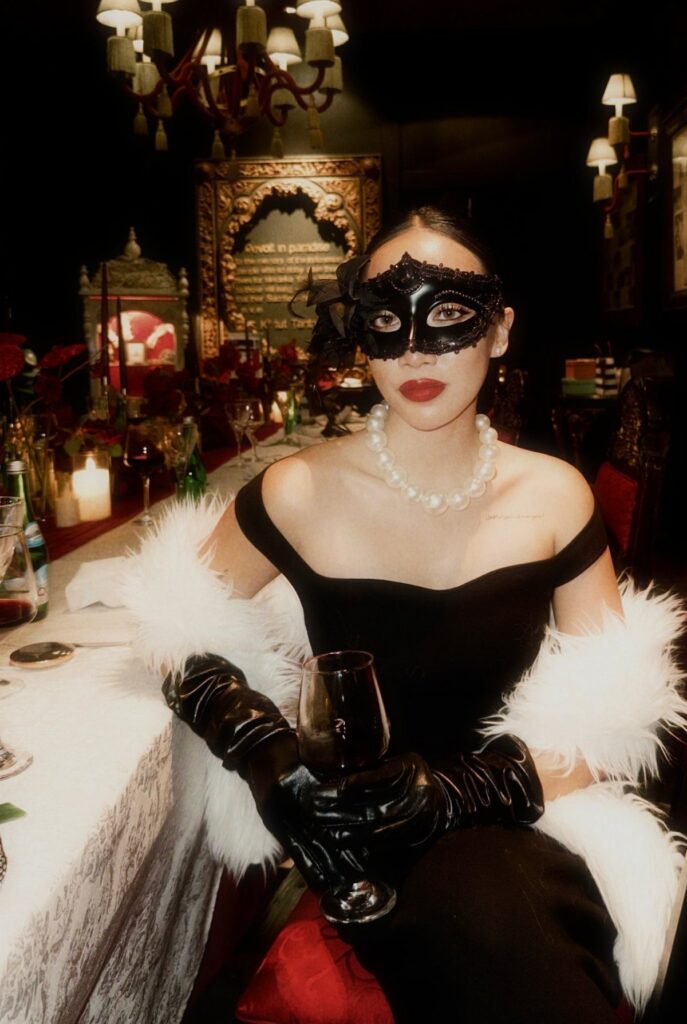
The ideas here run from a plain black dress with a gold butterfly mask to full ball gowns in velvet, satin, and sequins, so the deciding factor is the dress code on your invitation rather than how much drama you want.
Floor-length silk, velvet, or satin with beading or sequins is the usual white tie standard, though some events allow black-tie or even casual.
1. Embroidered A-Line Mesh Dress
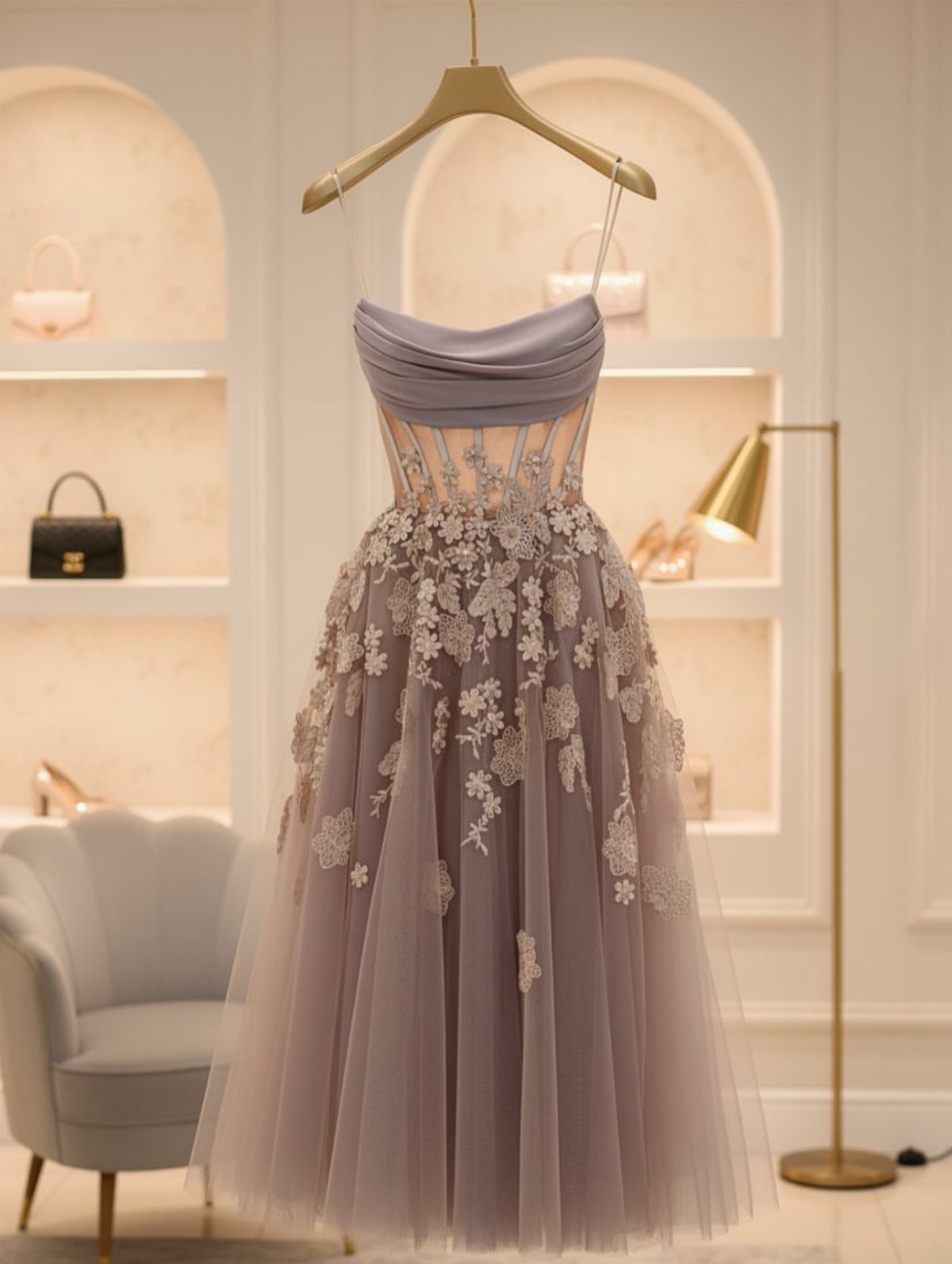
Lilac mesh with floral embroidery gives you the volume of a ball gown without the weight, since the sheer overlay does the work of heavier layers of satin.
The A-line cut skims the hips instead of clinging, so you can dance without a hoop skirt digging into your ribs.
Check the lining before you buy: a dress this sheer needs an opaque slip that matches your skin tone, not the lavender of the mesh.
If the boutique lighting makes the color look washed out, ask to see it in daylight; pale purples often photograph grey.
2. Classic Venetian Ball Gown
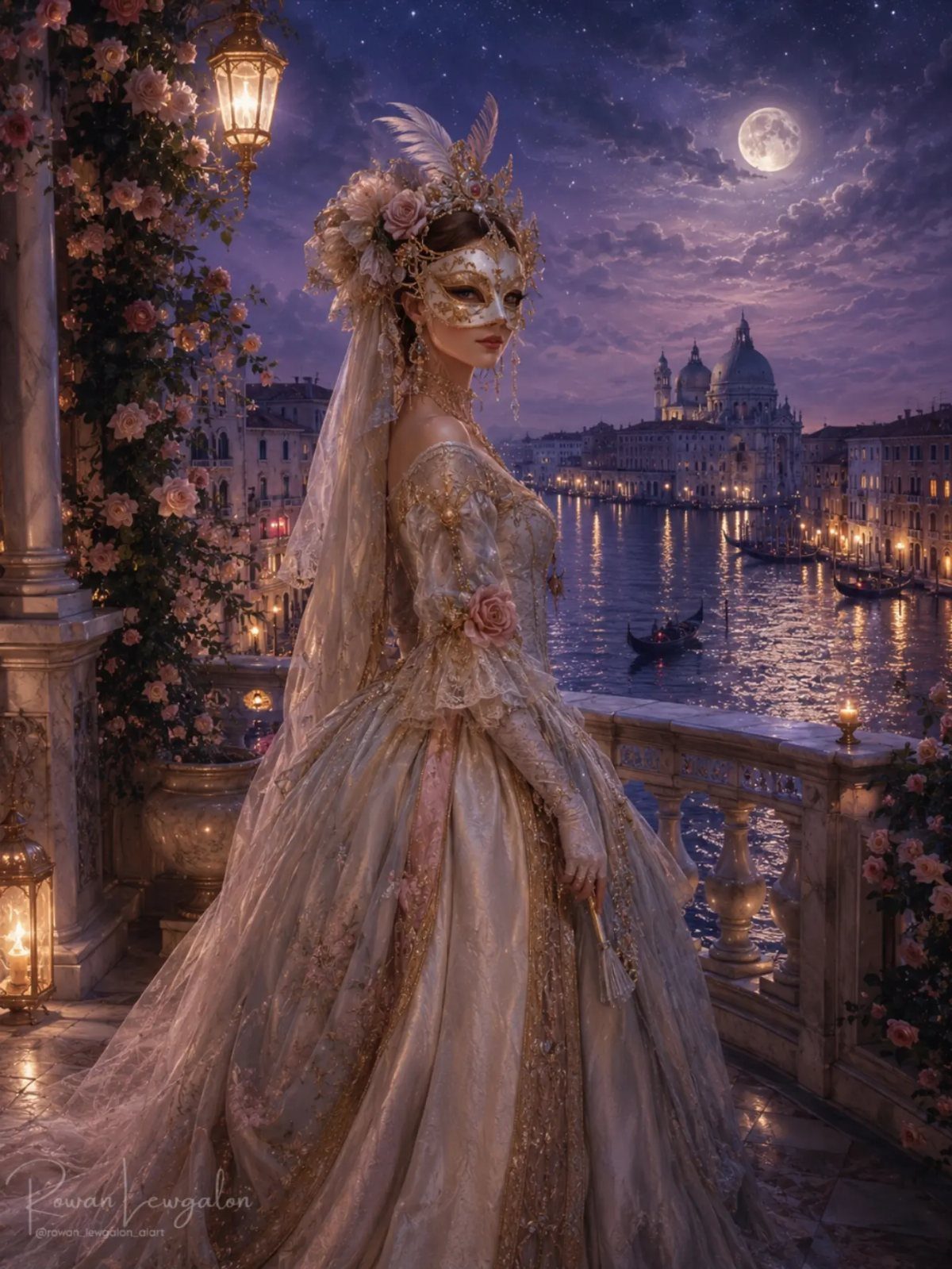
Cream silk with gold brocade reads expensive from across a ballroom, and the full skirt holds its shape without a crinoline if the fabric is heavy enough.
The high neckline and long sleeves mean you skip the strapless bra and the constant adjusting that comes with it.
This works best in winter or in venues with serious air conditioning. Brocade traps heat, and the weight that makes it drape so well becomes a burden once you have been standing in it a while.
Look for a version with a back zipper rather than lacing; you will need help getting into it either way, but a zipper lets you breathe.
3. Champagne Tulle Ball Gown
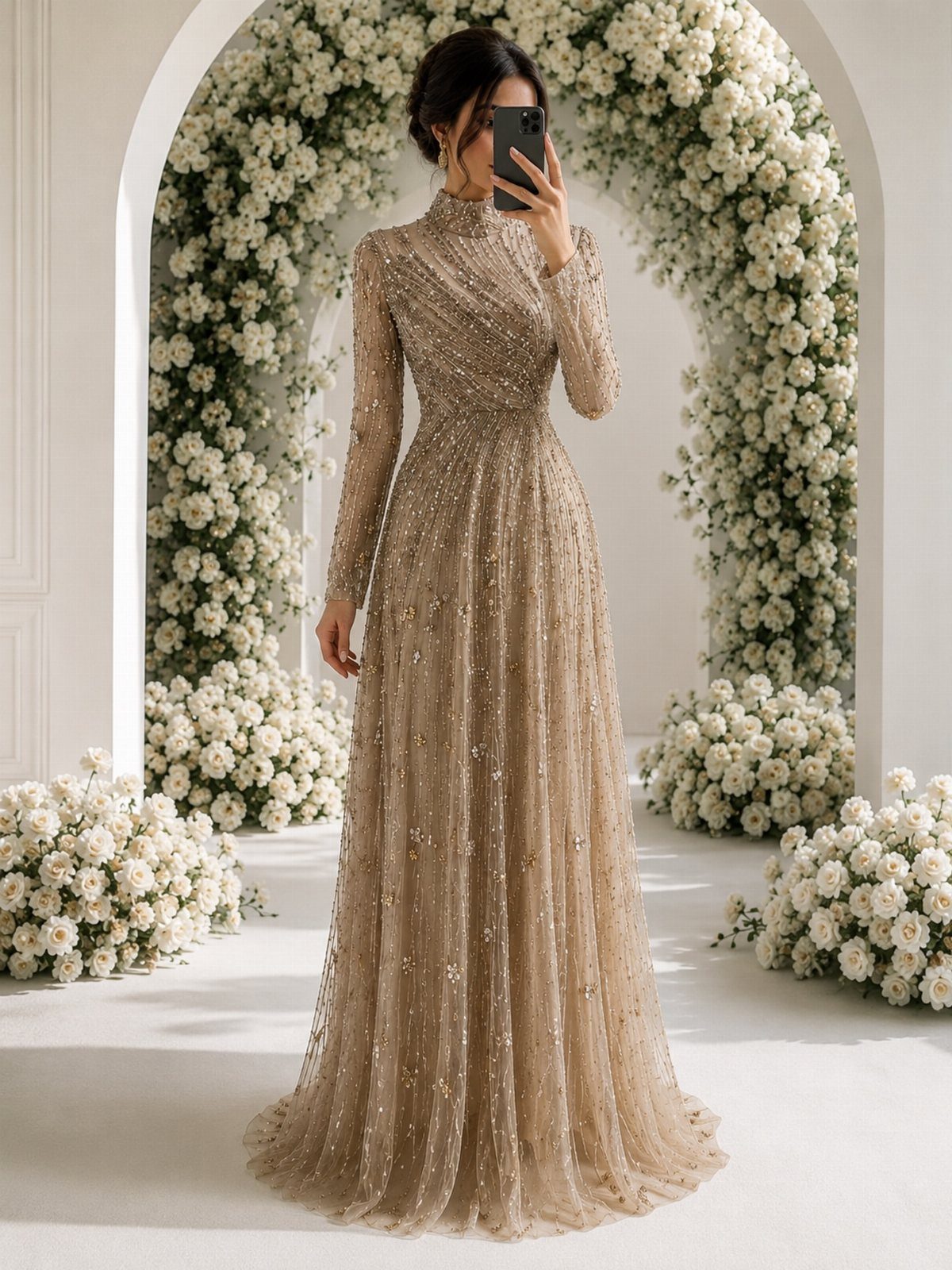
Champagne sequins catch light from every angle, so you glow in dim ballroom lighting without needing jewelry. The high neck and long sleeves balance the sparkle, keeping the look elegant instead of costume-party flashy.
Sequins snag on everything: your own hair, the chair upholstery, the jacket of anyone who stands too close.
Test the dress by running your hand over the skirt; if sequins catch your skin, they will catch your tights. Carry a small pair of scissors in your clutch for emergency thread snipping.
4. Long Sleeve A-Line Dress
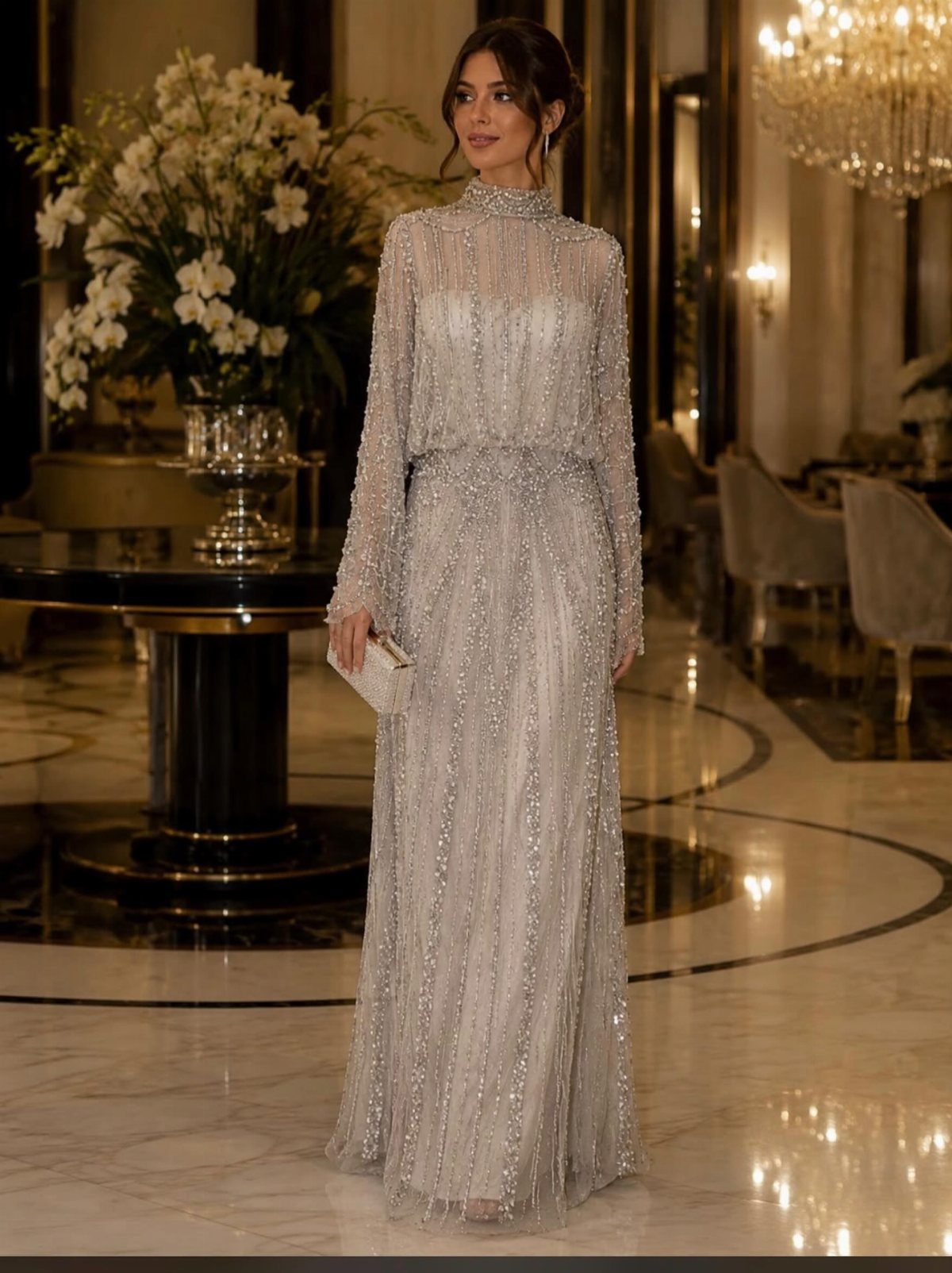
Silver beading on a high-neck, long-sleeved A-line gives you the formality of a ball gown with the coverage of a winter dress.
The embellishments are concentrated at the bodice, so the skirt moves freely and you can navigate stairs without kicking beads loose.
The weight sits at the shoulders, which means the neckline must fit perfectly or the whole dress slides back and chokes you.
When you try it on, raise your arms; if the collar pulls tight, size up. A small clutch is mandatory here, since the beading will scratch anything leather.
5. Emerald Green Ball Gown
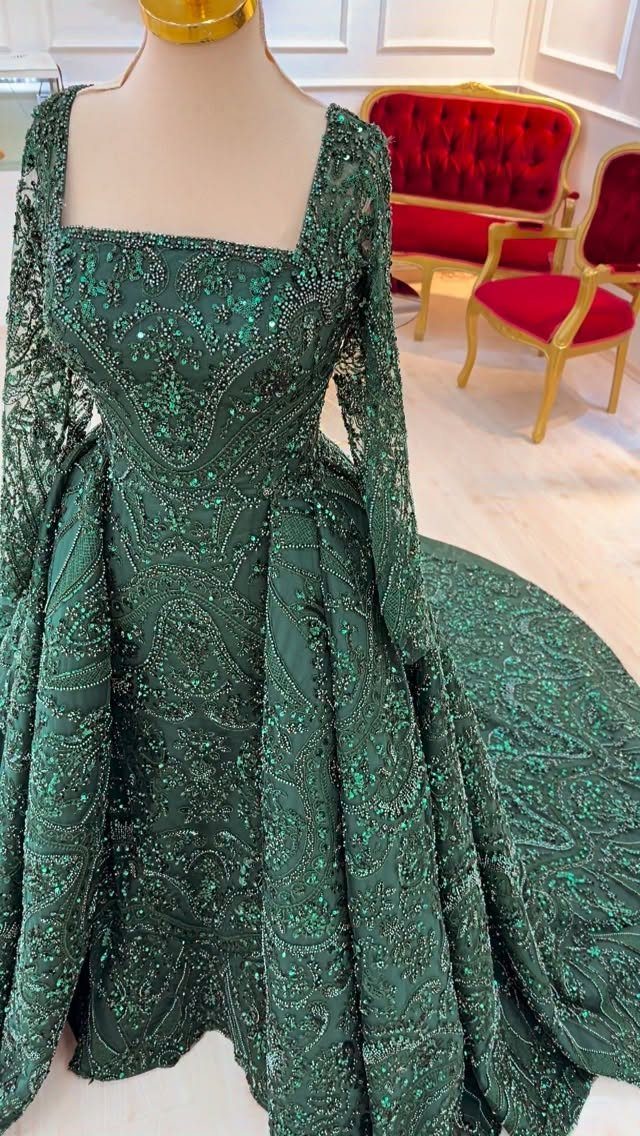
Emerald green stands out in a sea of black and red, and the sequined long sleeves mean you can skip the wrap or jacket. The color flatters most skin tones, which is rare for a jewel tone this saturated.
The showroom lighting makes the beading look gold, but in natural light it often reads silver or clear.
Decide which metal you prefer before you buy shoes and a mask. The full skirt requires a petticoat to keep its shape; without one, the sequins weigh the fabric down and the silhouette goes flat by midnight.
6. Black Velvet Dress with Capelet
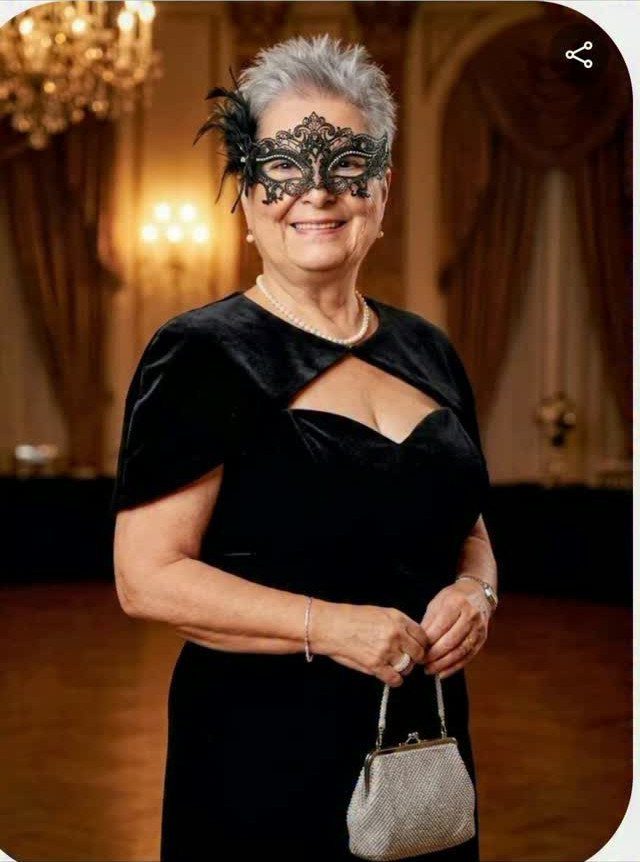
Black velvet with a matching capelet covers the upper arms without the fuss of a shawl that slips off.
The lace mask and pearls keep it from looking like a funeral, and the capelet detaches, so you can remove it when the dancing starts.
Velvet shows every wrinkle from the car ride, so hang the dress in the bathroom while you shower to steam it.
The capelet should hit just below the shoulder blades; any longer and it bunches under your arms when you hold a drink. This suits anyone who wants drama without exposing skin.
7. Black Lace Off-Shoulder Gown
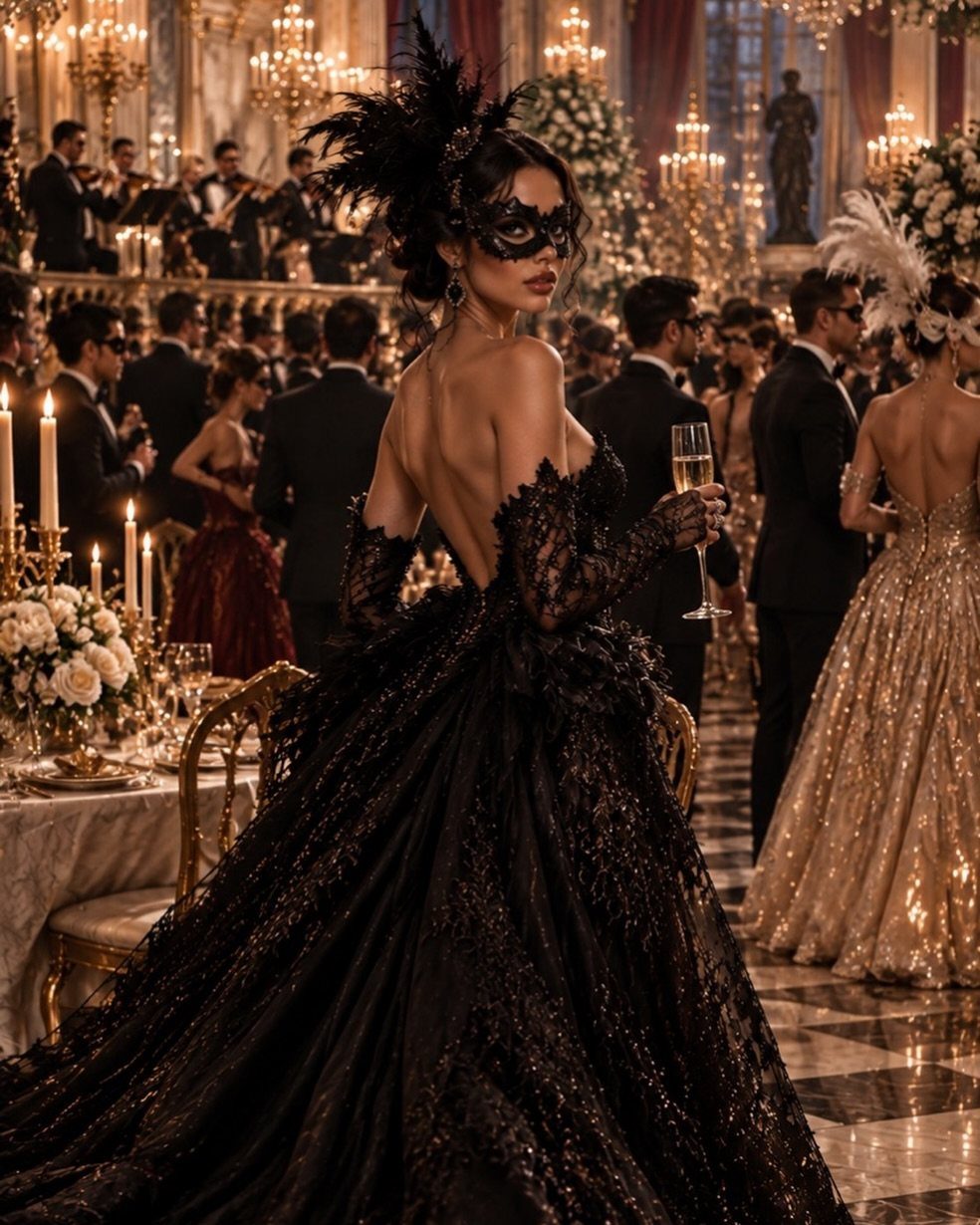
Black lace with an off-shoulder neckline gives you the drama of a ball gown while leaving your shoulders free for a statement mask or elaborate hairstyle.
The bare back and shoulders mean you skip the necklace, but you need a strapless bra that stays put through dancing.
Check that the lace has enough weight to drape rather than cling; cheap lace scratches and shows every line of your undergarments.
If the dress has a train, practice walking in it before the event, or have a seamstress add a bustle loop so you can hold it while climbing stairs.
8. Gold Metallic Draped Gown
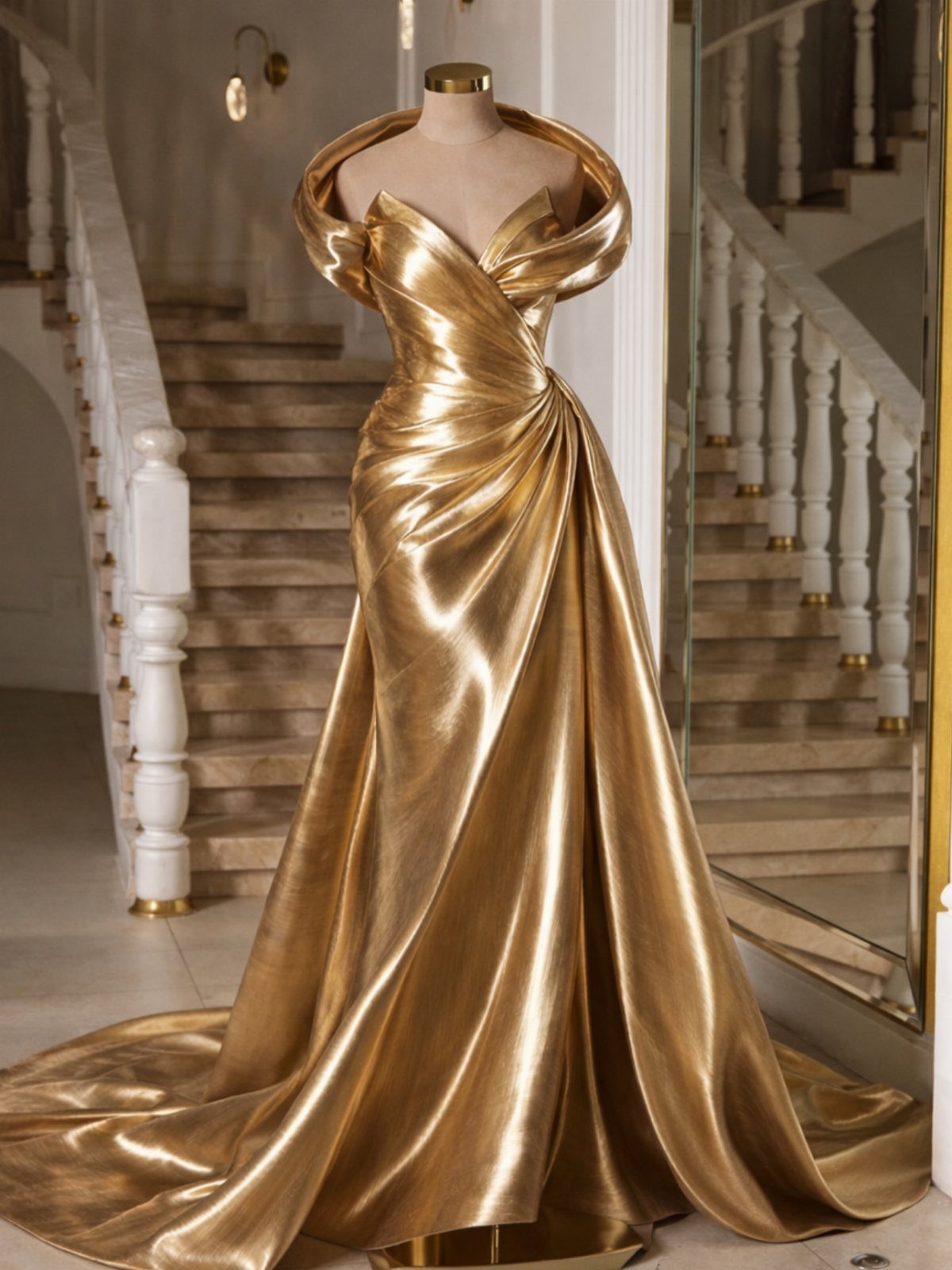
Metallic gold fabric catches light like jewelry, so you can skip the necklace and earrings entirely.
The sculptural draping at the bodice creates shape without boning or tight tailoring, which makes this easier to wear for hours than a corseted gown.
Silk and metallic blends crease the moment you sit down, so a quick steam before you leave keeps the skirt smooth.
Draped bodices often gap at the bust; use fashion tape along the neckline edge to keep it flat against your skin.
9. Burgundy Ball Gown with Fascinator
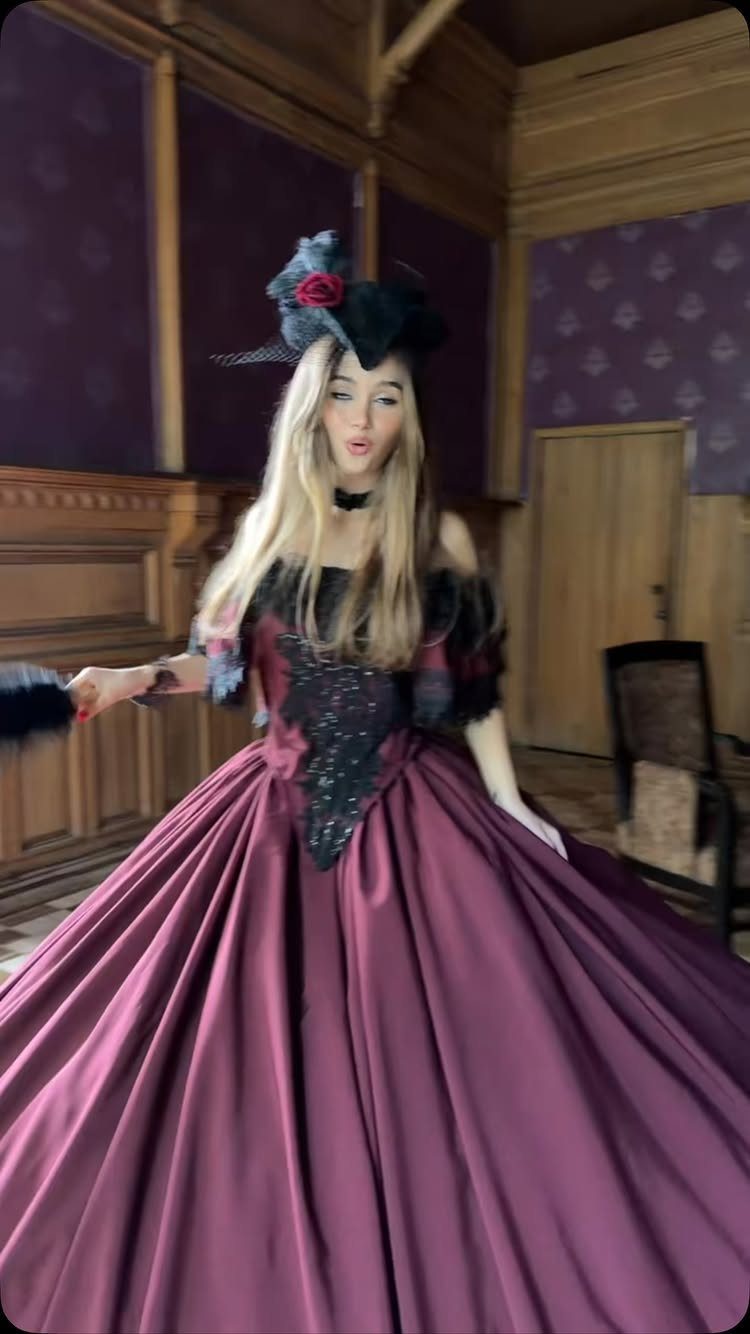
Burgundy reads rich in dim ballroom lighting, and the black lace bodice means you can wear a black mask without clashing.
The fascinator sits higher than a headband, so it works with an updo or voluminous curls that would flatten a traditional tiara.
A skirt this full needs a petticoat or hoop to keep its shape; without one, the fabric collapses between your legs when you walk.
The fascinator should anchor with a comb and bobby pins, not just a headband, or it will slide when you turn your head.
10. Red Velvet Mermaid Dress
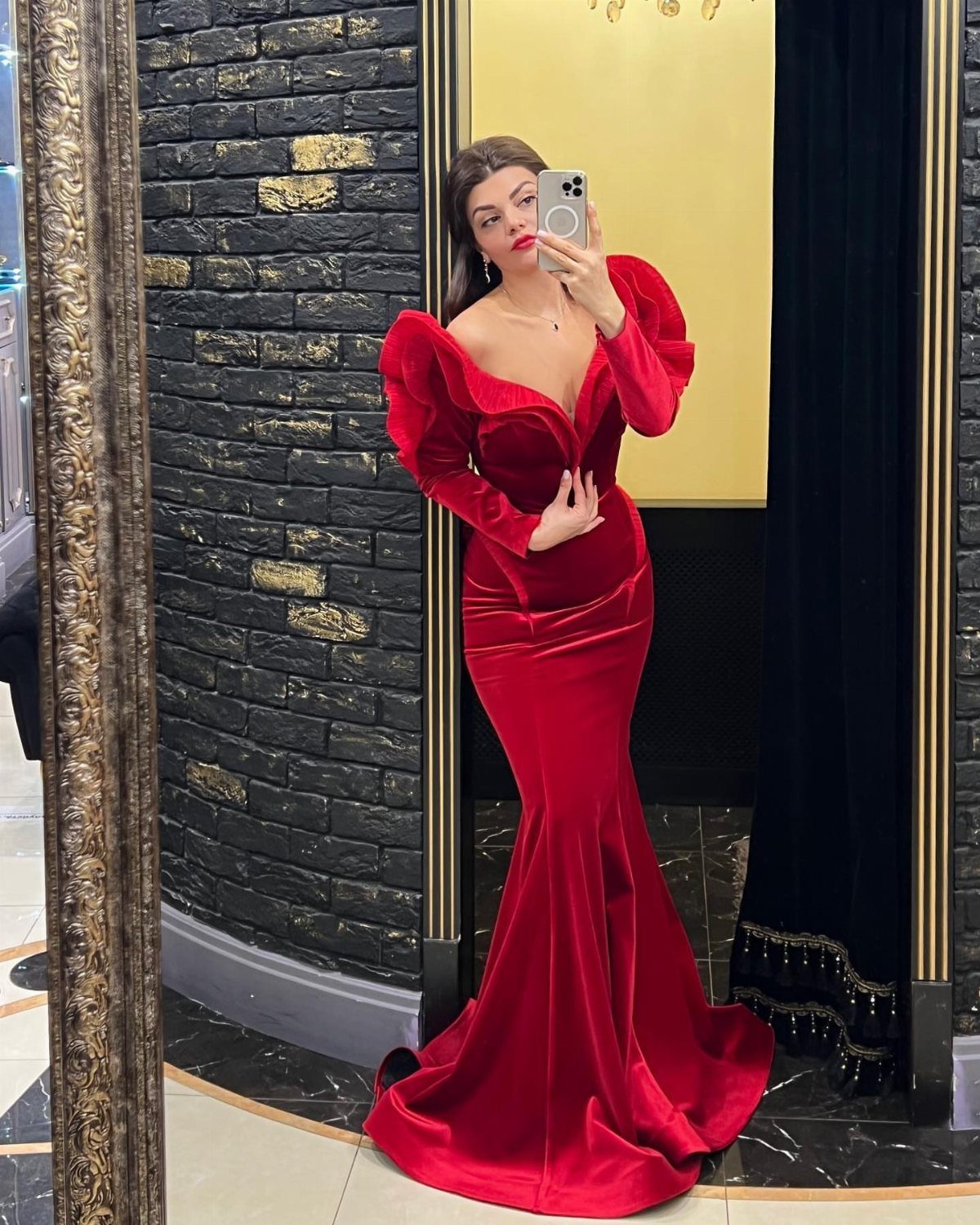
Red velvet with a plunging neckline and ruffled shoulders gives you the fitted silhouette of a mermaid cut without looking severe. The texture absorbs light, so you photograph well in low ballroom lighting where satin would glare.
The ruffles add bulk at the shoulders, which means you skip the wrap but need to check that your mask strap clears the fabric.
Mermaid skirts restrict your stride; practice sitting and climbing stairs before you commit, or choose a version with a back slit for movement.
11. Black Sequined High-Slit Gown
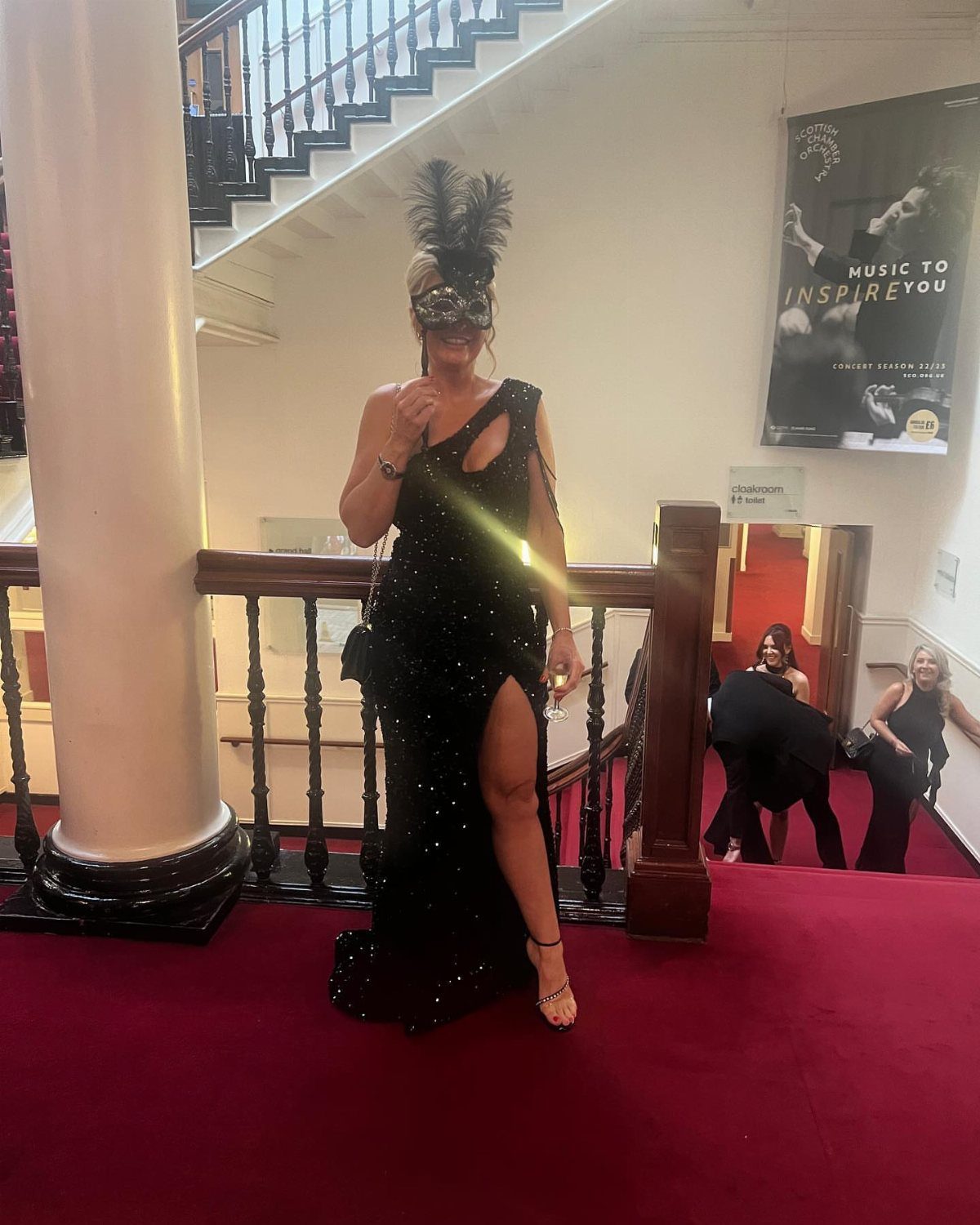
Sequins on black give you sparkle without the disco-ball effect of silver or gold, and the thigh-high slit lets you move in a floor-length gown.
The sleeveless cut means you can wear a statement cuff or opera gloves without fabric bunching at the wrist.
The slit needs double-sided tape at the top edge to keep it from flapping open when you walk.
Sequins snag on hosiery, so wear bare legs or tights you do not mind ruining. A feathered mask balances the sparkle; a plain satin one disappears against the dress.
12. Red Satin Ball Gown
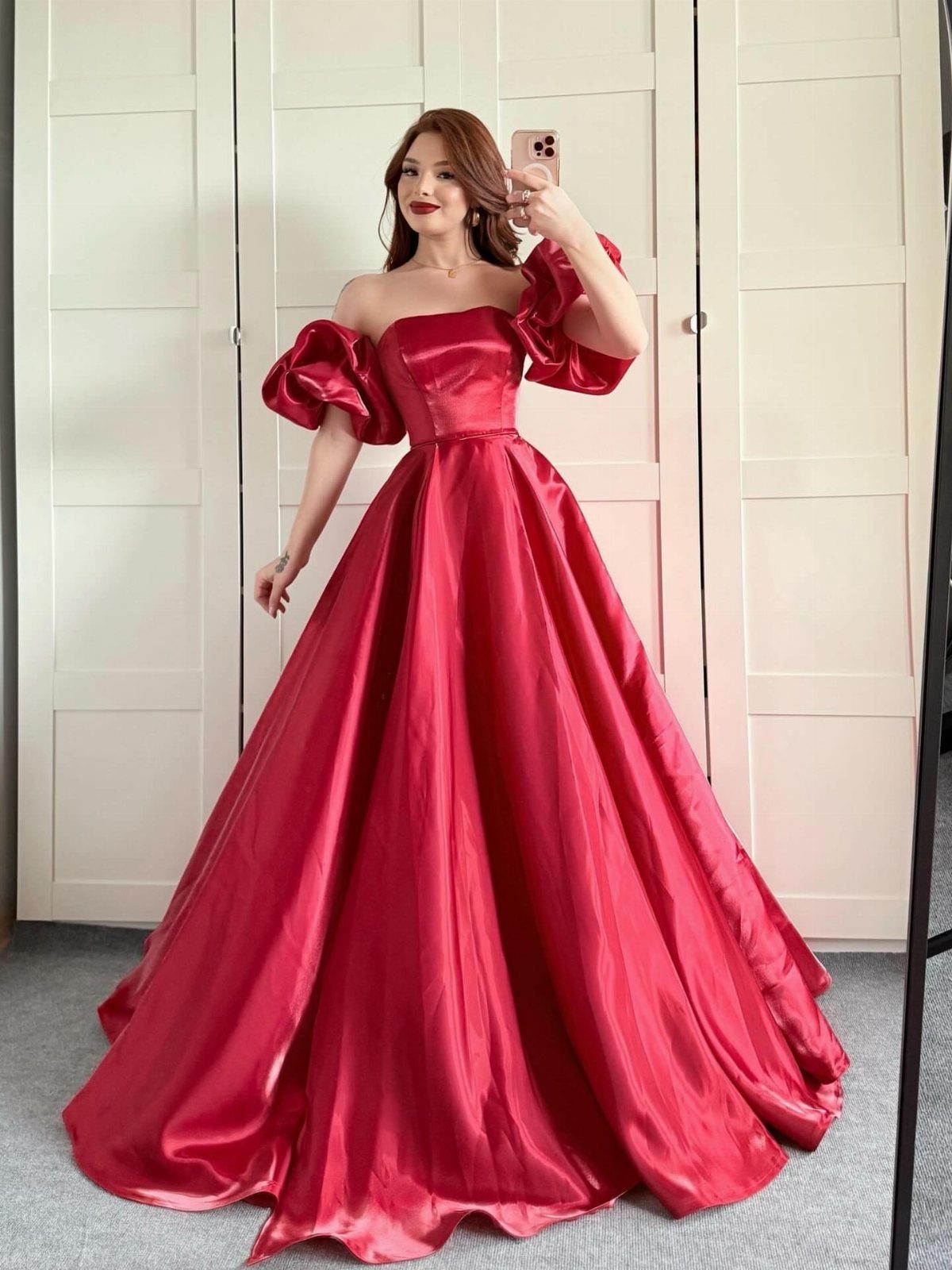
Red satin with off-shoulder puff sleeves gives you the volume of a ball gown with a neckline that stays put without straps. The puff sleeves balance the full skirt, so the silhouette reads intentional rather than bottom-heavy.
Satin clings to every line underneath, so pick smooth shapewear or a plain slip without lace edges.
The off-shoulder neckline can slip down when you raise your arms; look for a version with elastic sewn into the sleeve seam, or add it yourself with a few stitches.
13. Navy Blue Ball Gown with Tiara
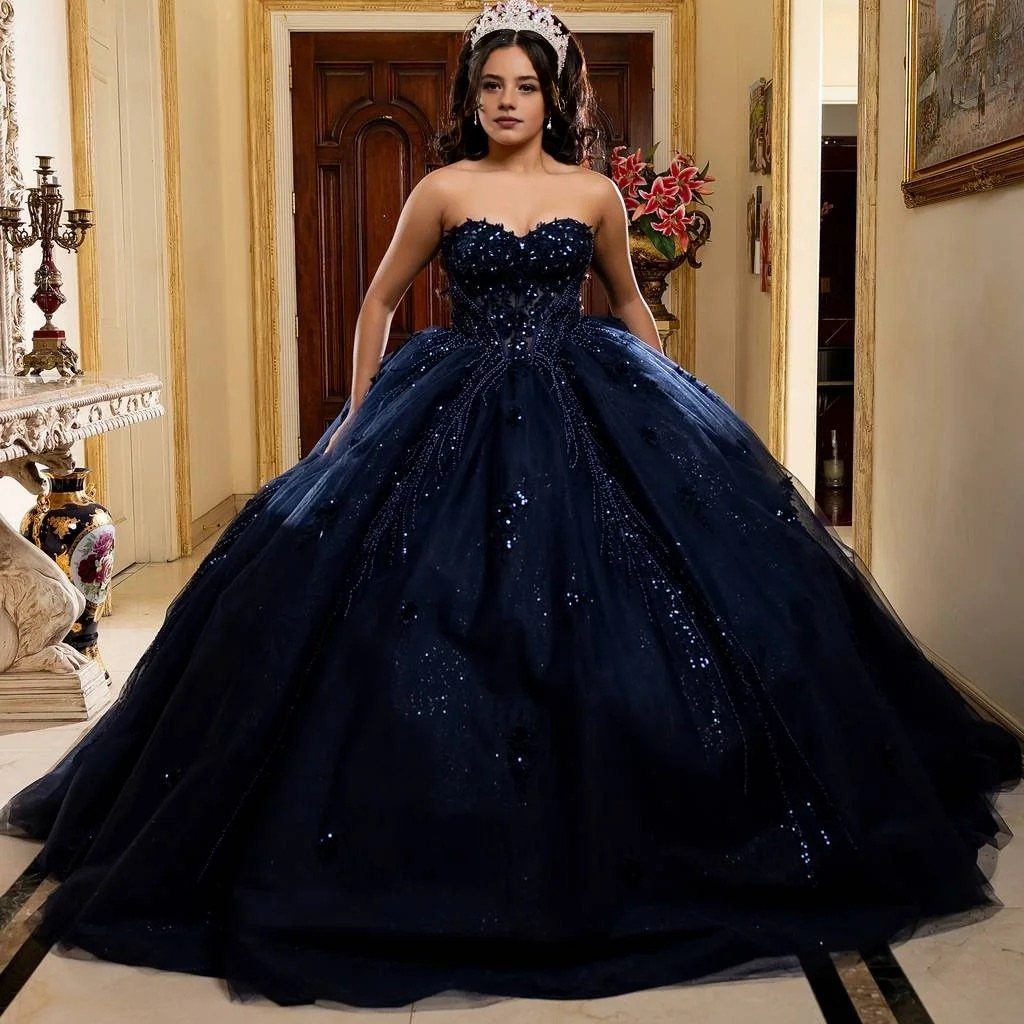
Navy blue with silver beading gives you the sparkle of a lighter gown without the heat absorption of black. The strapless cut means your shoulders stay bare, so the tiara sits higher and reads more formal than a headband would.
Check that the bodice has boning or silicone tape along the top edge; strapless gowns slide down when you raise your arms.
The full skirt needs a petticoat to keep its bell shape, and the tiara requires bobby pins through the comb, not just placement, or it tips forward when you look down.
14. Purple Gown with Folding Fan
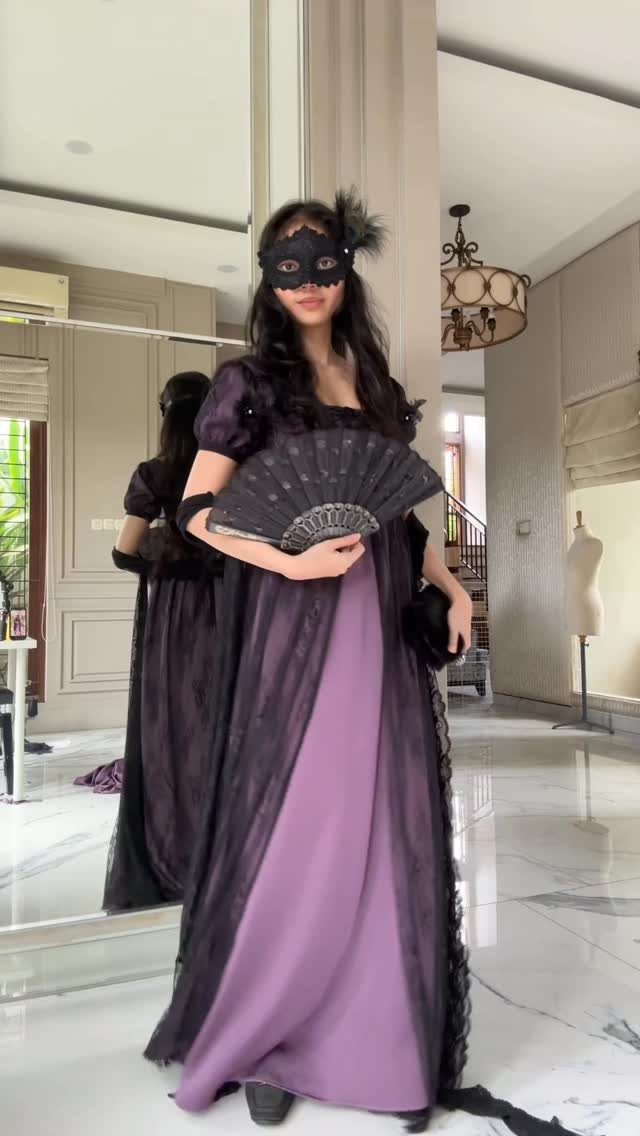
Purple with black lace reads Regency rather than modern formal, and the folding fan gives you something to do with your hands besides holding a drink.
The empire waist suits anyone who finds fitted bodices restrictive, and the fan provides actual air circulation in crowded rooms.
The fan should fold small enough to fit in a wristlet or pocket when you need both hands. Lace masks tie behind the head; check that the ribbons are long enough to knot securely without pulling your hair.
15. Embellished Strapless Black Ball Gown
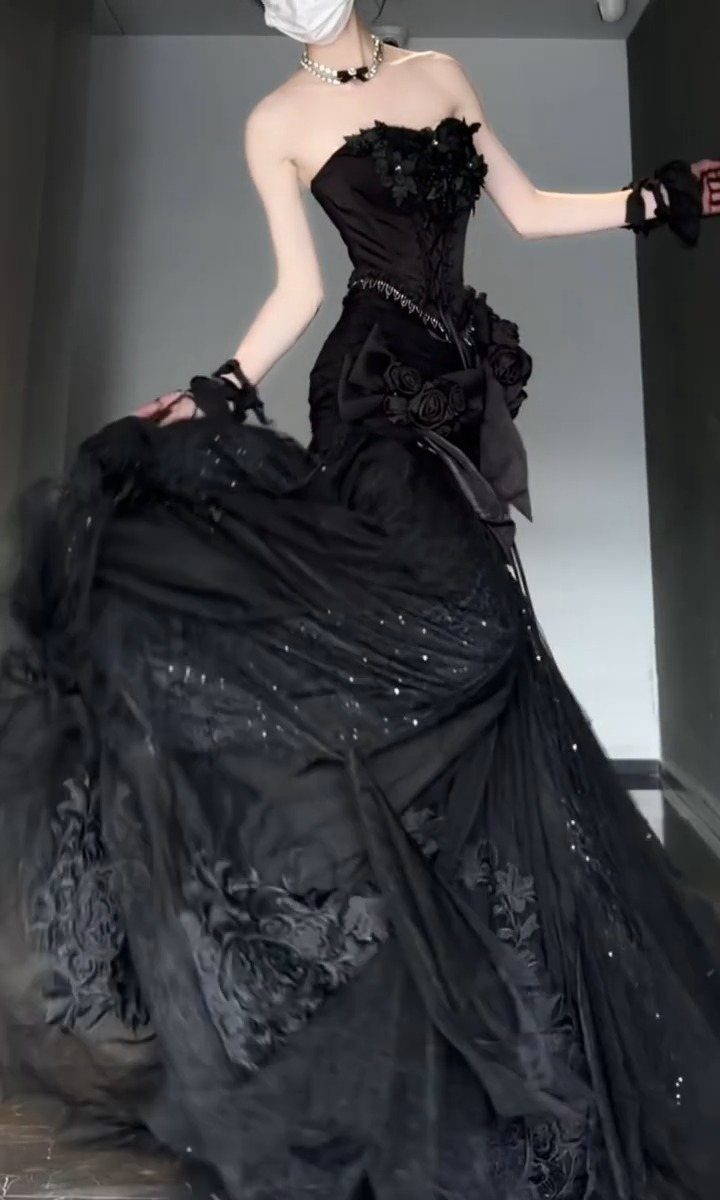
Black tulle with floral lace appliqués gives you texture without the weight of beading, and the strapless cut keeps the focus on the mask. The lace gloves extend the pattern up your arms, so you skip jewelry entirely.
Strapless gowns with heavy skirts need a waist stay or corset back to keep the bodice from dragging down. Test the gloves before you buy; lace that feels stiff in the package scratches your neck when you adjust your mask.
16. Satin Gown with Bow Sleeves
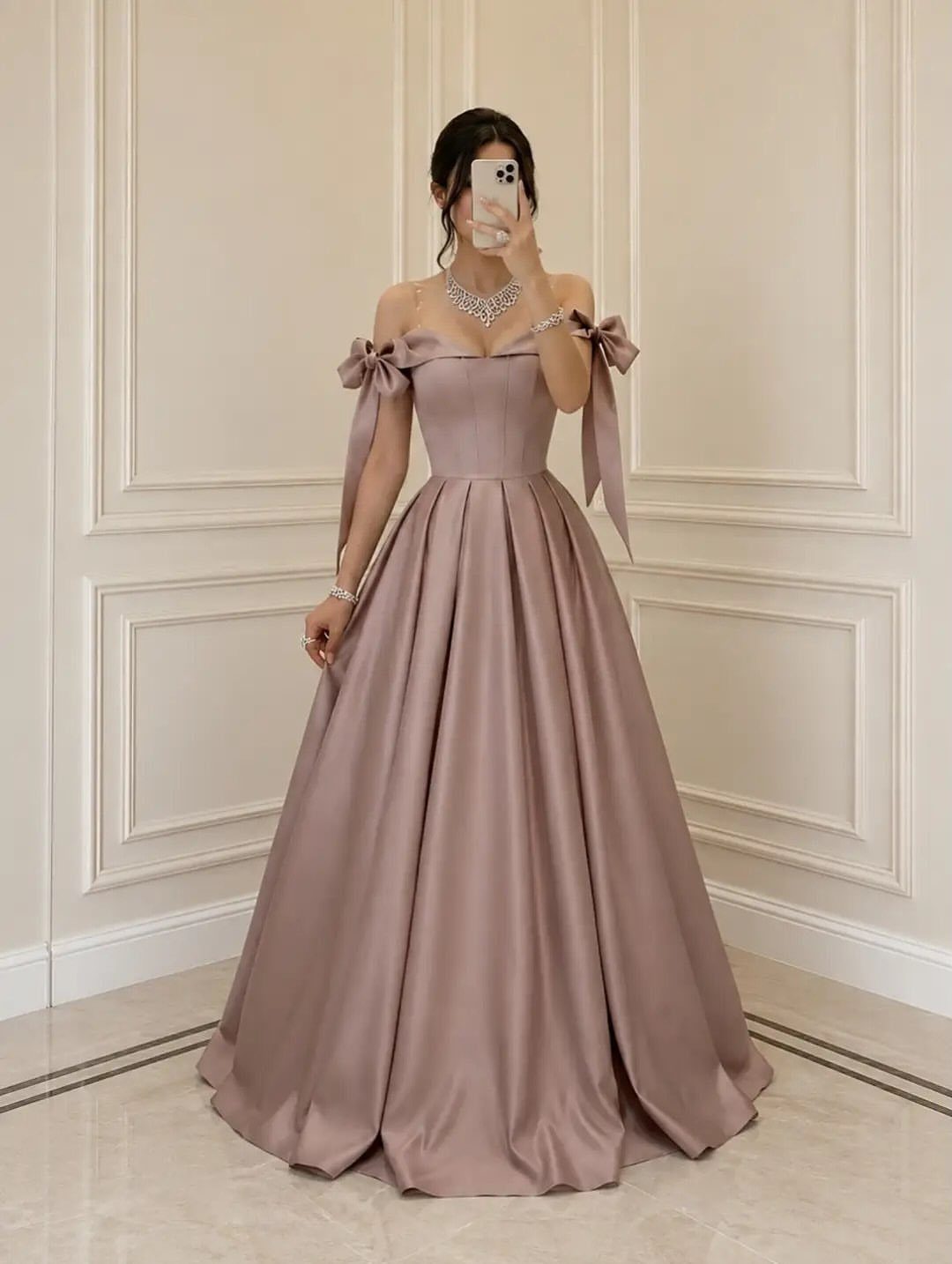
Mauve satin with oversized bows at the sleeves gives you the off-shoulder look without bare arms, since the fabric covers what the neckline leaves open. The bows add volume at the top, balancing a full skirt without a necklace.
Satin shows every crease from sitting, so steam it right before you leave. The bows should be tacked down at the knot; loose ribbons catch on jewelry and drag in your food when you reach across the table.
17. Gold Butterfly Masquerade Mask Look
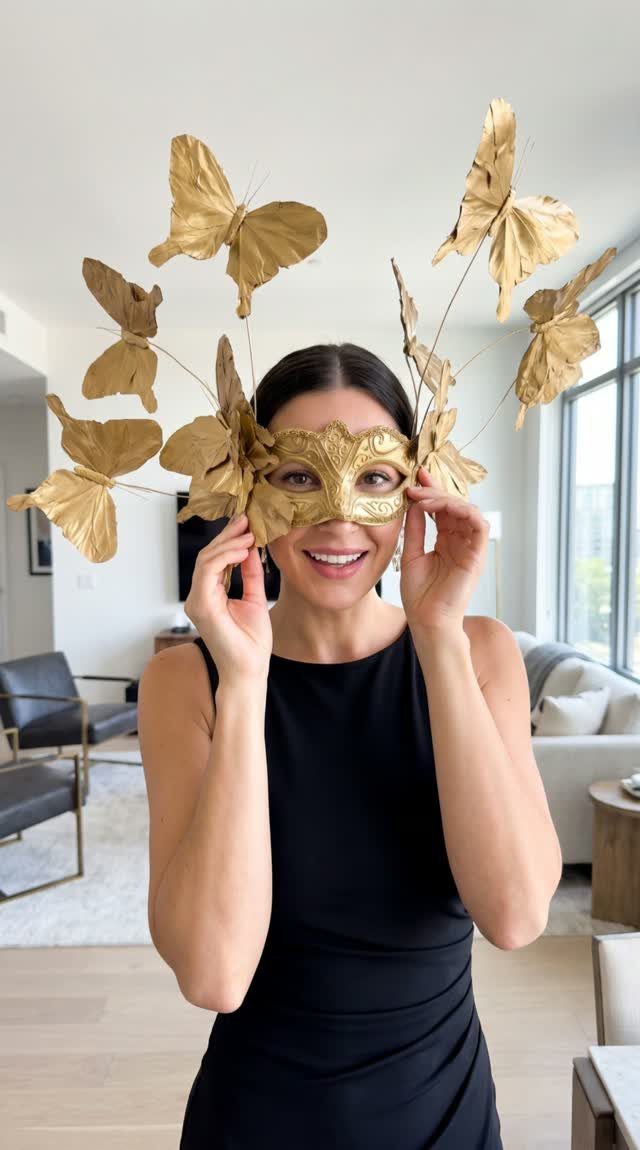
A plain black dress lets the gold butterfly mask carry the entire look, which works when you want drama without a costume. The sleeveless cut keeps the focus on your face and the mask’s sculptural wings.
Butterflies this large catch on hair and earrings, so wear studs and pull your hair back. The mask needs a handle or stick, since tying it requires an elastic band that flattens the wings against your cheeks.
18. Red Halter Dress and Gloves
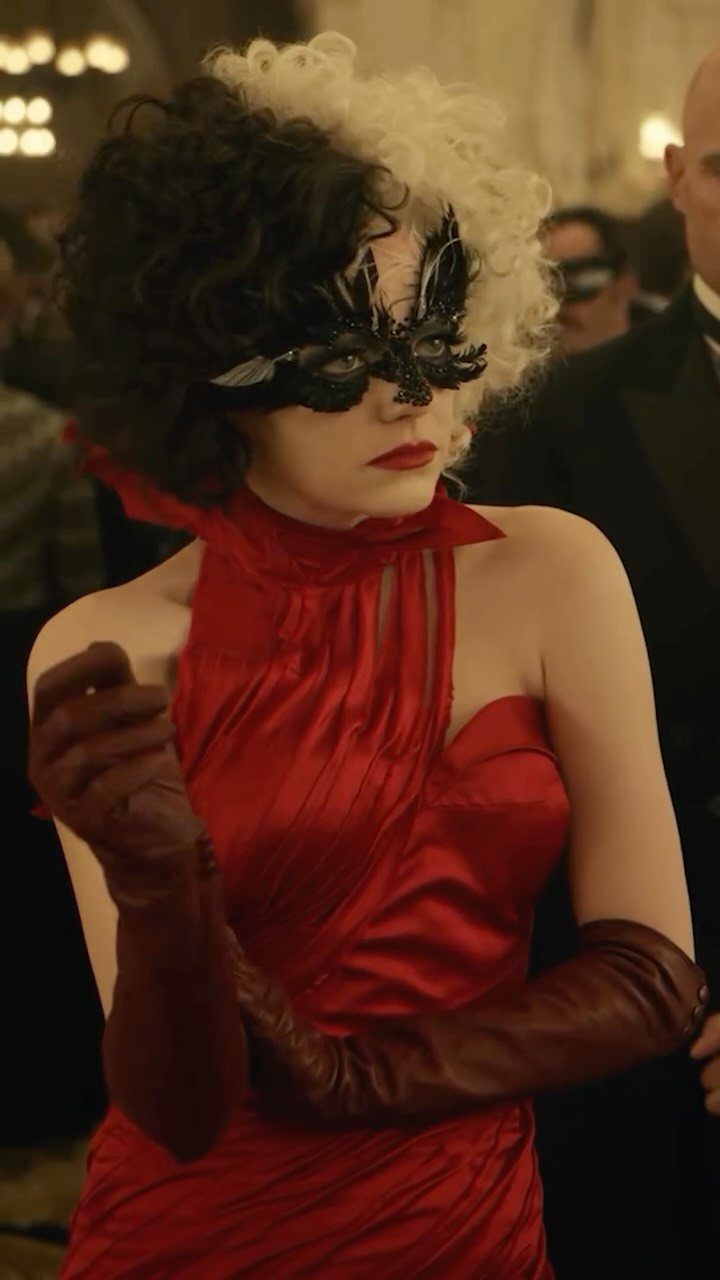
Red satin with a halter neck gives you the support of straps without visible lines across your back, and the long gloves cover what the dress leaves bare.
The black lace mask anchors the look so the red does not read too bright.
Halter necks pull on your neck after an hour; look for one with a wide band or padding at the nape.
Opera gloves should hit above the elbow and stay put with silicone strips, or they slide down when you hold a glass.
Choosing the Right Mask
The mask matters more than the dress or shoes; it is the one element that separates a masquerade from a regular costume party. Pick yours before you finalize anything else, since it anchors the whole look.
Match the mask to your actual style rather than grabbing the most elaborate option. If you prefer minimal jewelry, a simple satin or lace mask works.
If you like drama, choose one with feathers or metalwork. The mask should coordinate with your dress color and any accessories you already own, not compete with them.
Try the mask on with your hairstyle before the event. Heavy masks need an updo or pins to stay put, while lightweight ones work with hair down.
Dress Code Considerations
Check the invitation for a dress code before you buy anything.
White tie is the usual dress code, so plan on a floor-length gown in a rich fabric like silk, velvet, or satin, finished with details like beading, sequins, or feathers.
Some events are black-tie or even casual, so verify before you assume.
Evening events suit rich, deep colors.
Jewel tones like emerald, sapphire, and ruby read well in low light, and metallics catch candlelight without looking costumey. If the dress code is unclear, choose one level dressier than you would normally wear.
Comfort and Movement
You will stand and move for hours, so pick shoes you can actually walk in.
If you want height, choose wedges or heels with padded soles over stilettos. Break them in before the event.
Wear breathable fabrics and layer lightly; heavy gowns trap heat quickly in crowded rooms.
Test your mask for at least an hour before the ball to check for pinching at the nose or eyes. If it irritates your skin, stick a small cushion or moleskin inside the edges where it touches your face.
Frequently Asked Questions
What is a masquerade ball dress code?
White tie is the usual dress code, which means a floor-length gown in a rich fabric like silk, velvet, or satin, finished with beading, sequins, or feathers.
Invitations sometimes call for black-tie or even casual instead, so read yours before spending anything.
What happens at a masquerade ball for adults?
Guests wear masks and elegant outfits, then spend the evening mingling and dancing. What sets the night apart from a standard costume party is the mask itself.