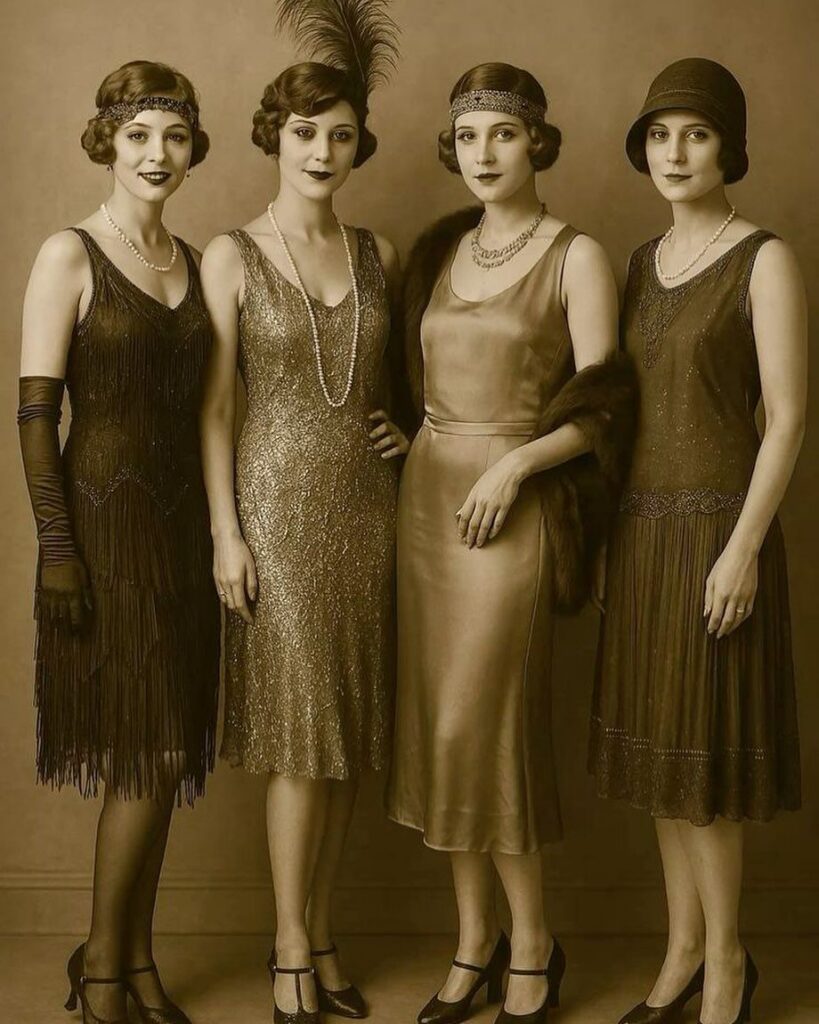
Roaring 20s dresses run from lightweight lace day dresses to floor-length beaded gowns heavy enough to fatigue your shoulders by midnight.
The deciding factor is your event’s dress code and how much you actually plan to move. Fringe at mid-thigh length sways when you walk; at floor length, the gown depends on beadwork sheen alone.
1. Fringe Dresses
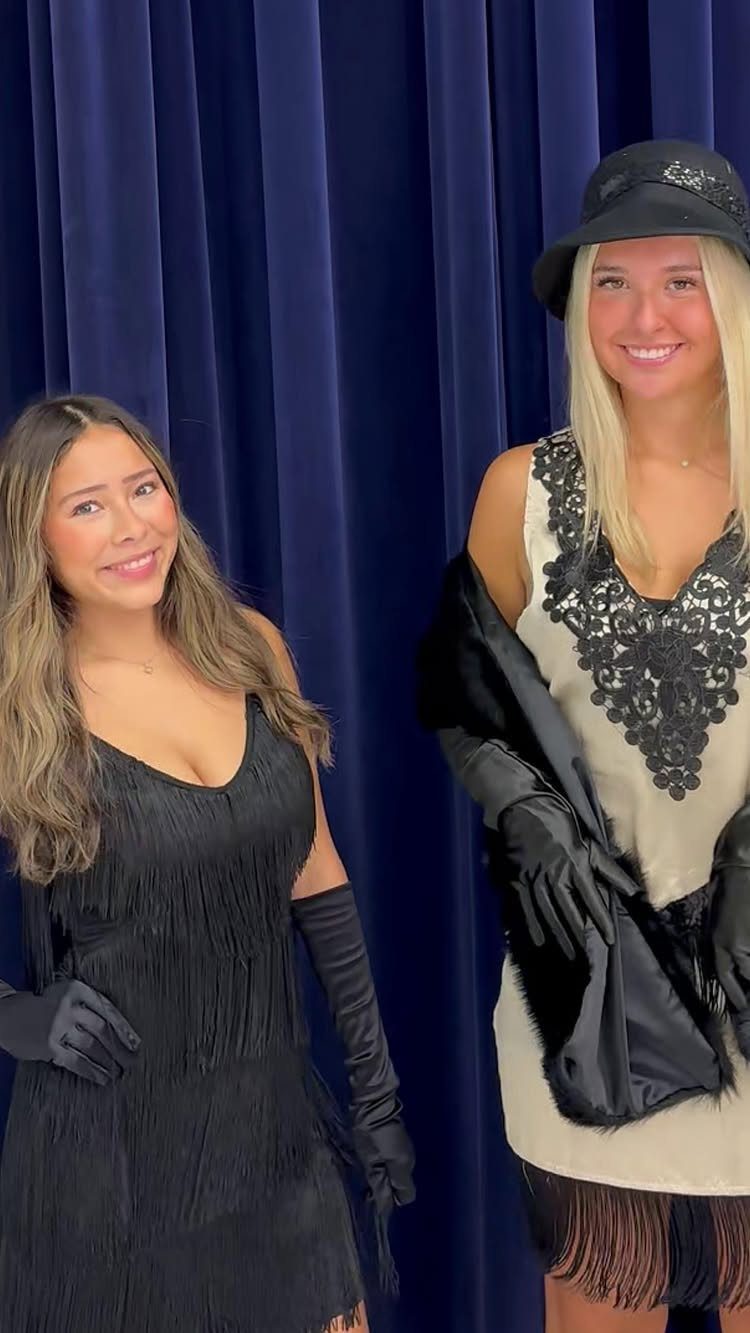
Fringe is the one 1920s detail that actually moves with you when you walk or dance. Every step, every turn, the fringe sways and catches light in a way beads or sequins never will.
Before buying one, check the fringe length against your knees. Too long and it tangles; too short and it loses that signature swing.
Mid-thigh is the standard length that lets fringe swing without tangling at the knee. I would also feel the weight of the fringe itself, cheap nylon hangs limp while heavier rayon or silk fringe actually flows.
For a costume party, this is the safest choice if you plan to move at all.
Fringe adds weight and can itch at the neckline after an hour of wear. A slip underneath solves most of that.
2. Beaded Sheath Dresses
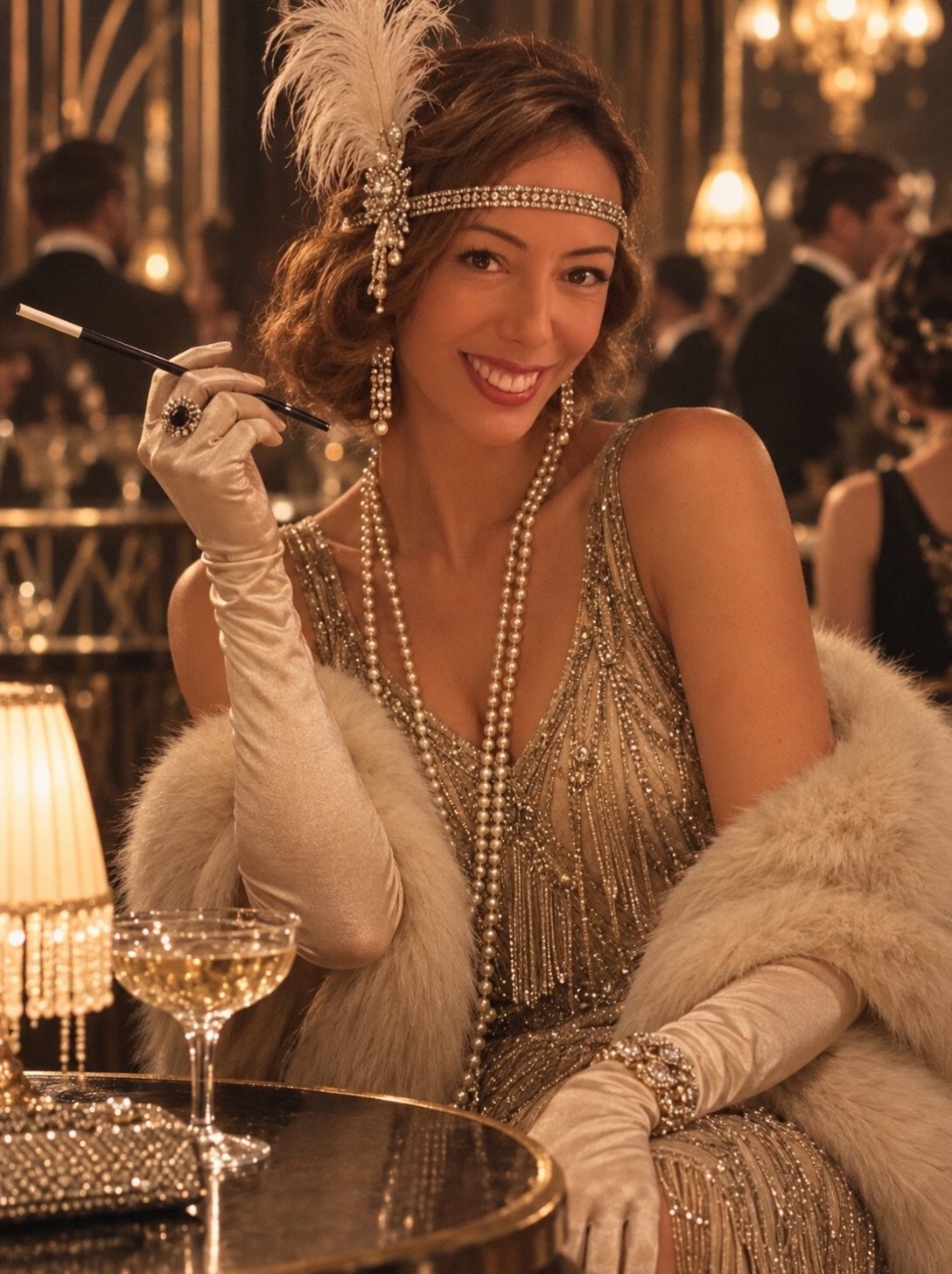
A beaded sheath dress sits closer to the body than fringe styles and reads as more expensive, which it usually is. The beadwork itself is the decoration, so you wear less jewelry, not more.
Heavy beadwork needs only one statement accessory, like a white fur stole, to finish it. I would skip the stole for anything except a winter formal, the beads already carry enough visual weight.
Check whether the beads are sewn on individually or attached as panels; panel beading is faster to produce and costs less, but it limits how the dress moves and can gap at the sides.
This style works on more body types than people assume. The straight cut does not mean it hangs shapelessly; the weight of the beads creates its own line down the body.
3. Lace and Embroidered Dresses
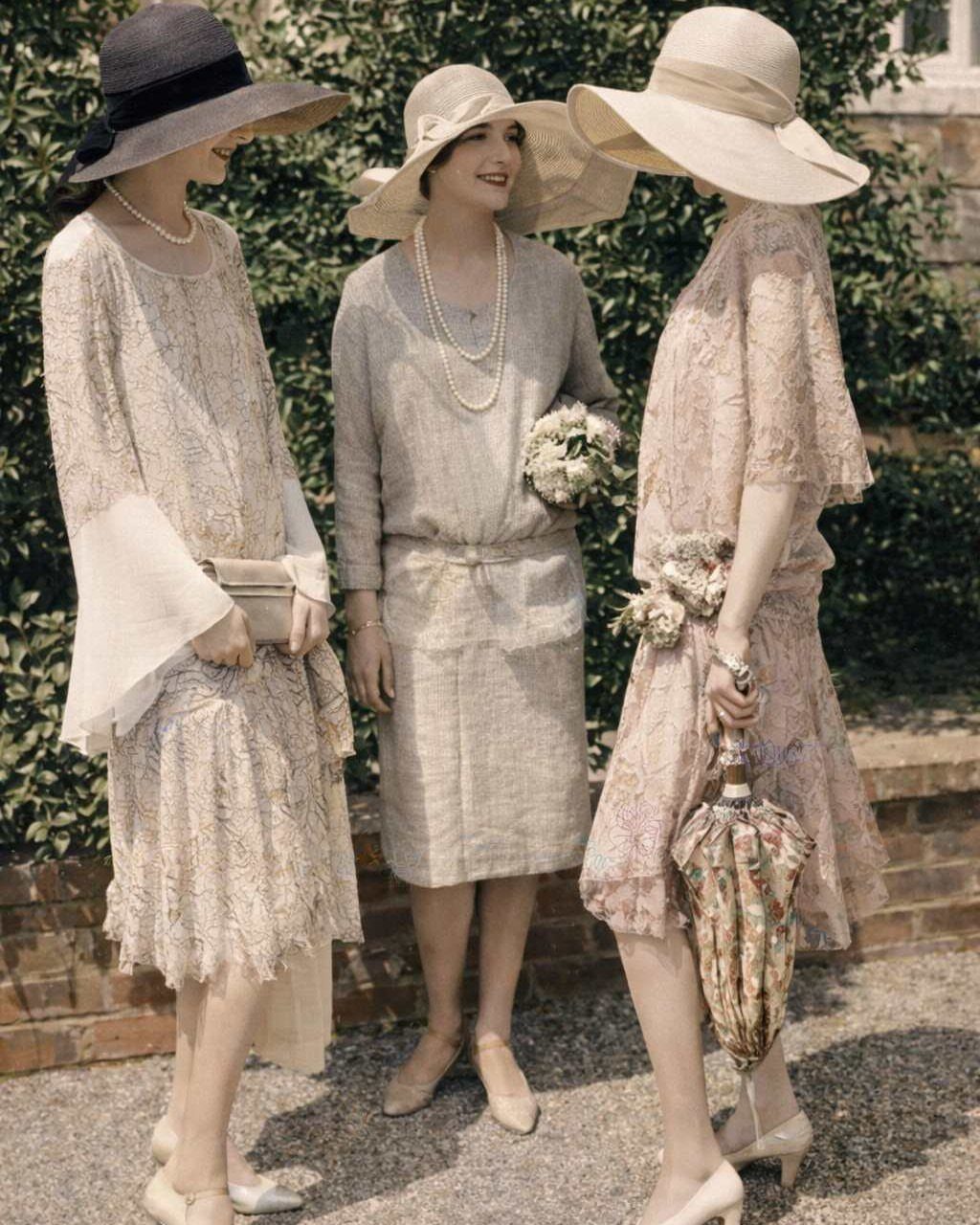
Lace and embroidery read daytime where beads read evening. Wide-brimmed hats and low heels keep lace dresses grounded for garden events.
The drop waist is the structural detail that marks it as 1920s; without that low horizontal seam, it is just a lace dress.
Solid underlayers beneath lace are more practical for garden events and easier to wear without constant adjustment. Embroidery adds texture without the weight of beading, so this is the most comfortable option for long parties in heat.
I would choose this for a tea party or outdoor wedding where heavy beadwork would look overdressed. Lace reads softer and less dramatic after dark than beadwork or sequins.
4. Flapper Dresses
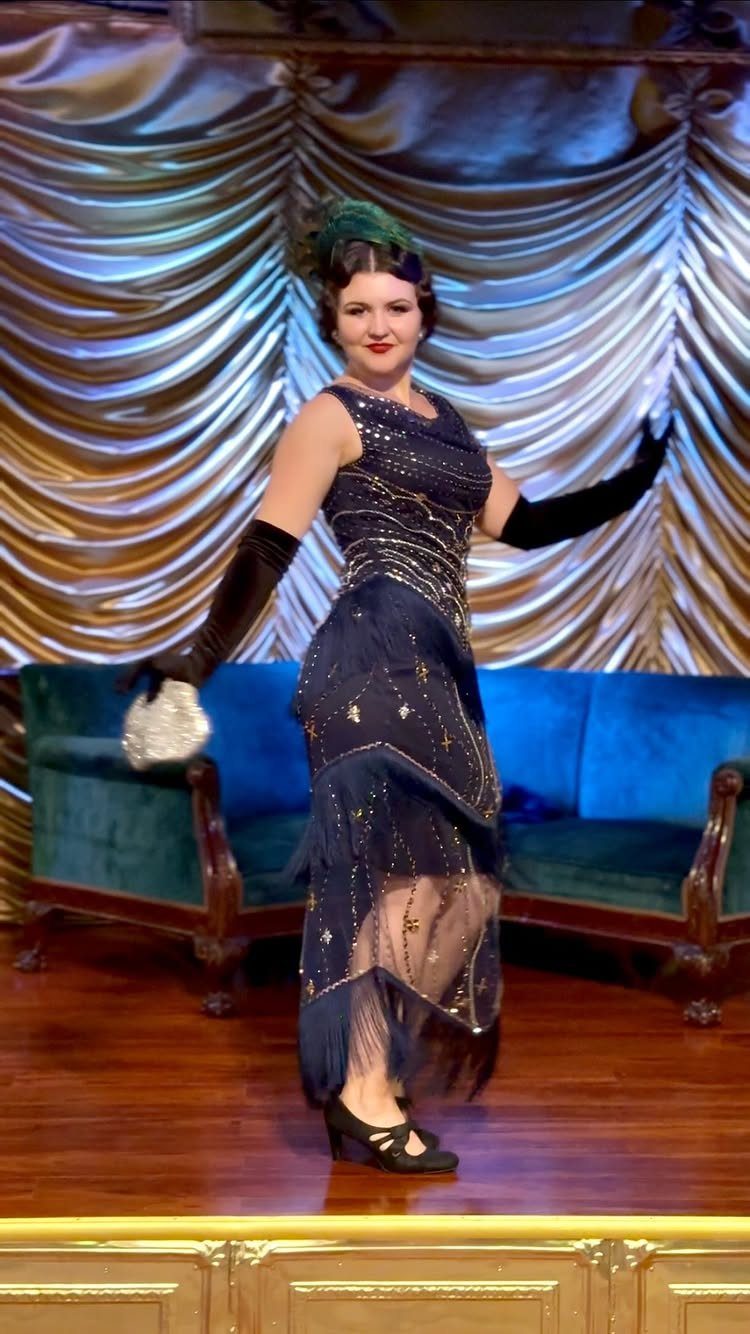
Flapper dresses combine multiple decorations: beading, fringe, and often sequins together. The classic flapper formula pairs beadwork and fringe with a feathered headpiece.
This is the most recognizable 1920s style and the most likely to read as costume rather than inspiration. I would wear it only where a full theme is expected, not to a black-tie event with a loose dress code.
All those embellishments add real weight; a finished flapper dress can feel substantial in your hands and on your shoulders. Check the total weight before buying; heavily decorated flapper dresses fatigue the shoulders over an evening.
For authenticity, the hem should be uneven or jagged, not straight. A scalloped edge reads as period-appropriate detail at most events.
5. 1920s Formal Evening Gowns
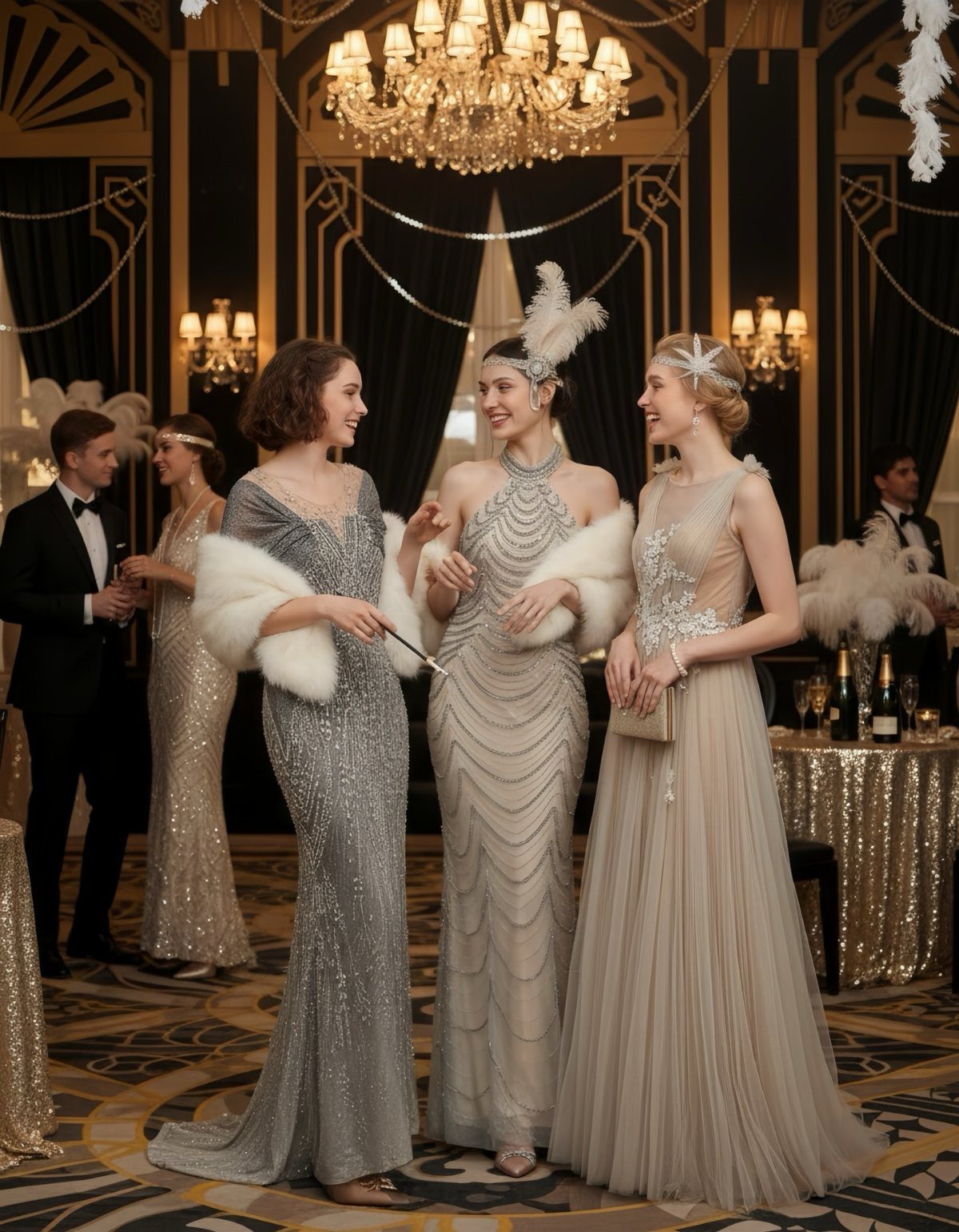
Floor-length 1920s gowns are the formal option, and the only style here that works for true black-tie events without apology. Floor-length beaded gowns belong in ballrooms with fur wraps and headbands.
The length changes everything.
Where shorter 1920s dresses rely on movement for effect, a floor-length gown depends on the sheen of the fabric and the quality of the beadwork. Cheap beading at floor length looks cheap from farther away, which defeats the purpose.
The fur wrap is optional and season-dependent, but the headband or hair ornament is not. Without it, the silhouette loses its period anchor.
This is the least versatile purchase. I would rent before buying unless I attended formal events regularly.
6. Sheer-Sleeve Sequined Dresses
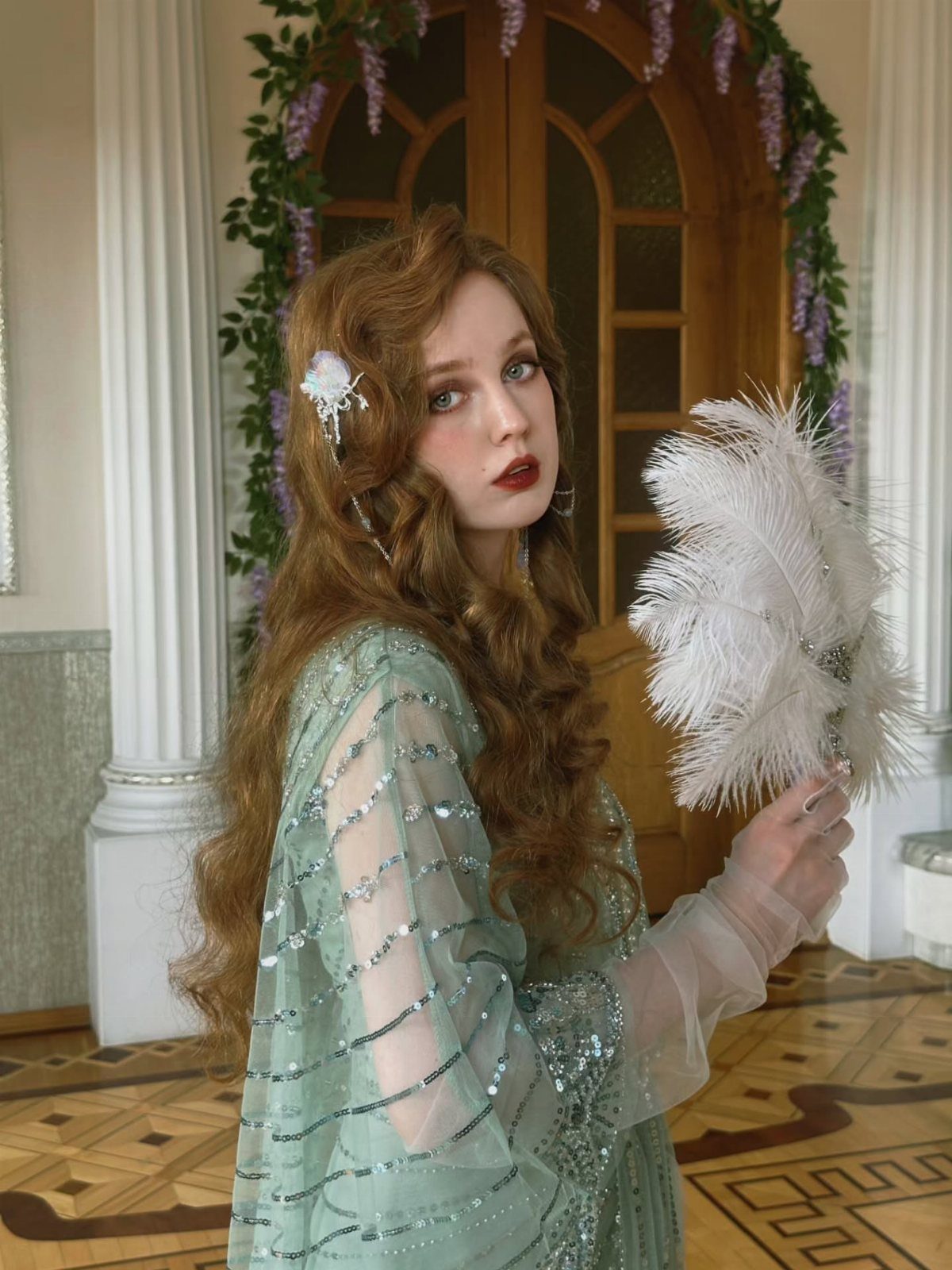
Sheer sleeves with sequins solve a specific problem: how to cover arms without looking matronly. Sheer fabric from shoulder to wrist works best with sequins concentrated on the bodice and scattering down the sleeves.
Flat-sewn sequins photograph better and snag less than ones left to catch light at angles. I would verify the underlayer color against my own skin tone, sheer sleeves only work when the contrast is intentional, not accidental.
The feather fan is a prop that completes the look but is not required; I would skip it for any event where I needed both hands free.
This style suits warmer venues where full coverage would overheat, or events where you want decoration without the weight of all-over beading. Sheer fabric and sequin edges fray faster than solid construction.
Frequently Asked Questions
Where can I find a 1920s dress?
Online stores carry the widest selection, especially for party and formal styles. Thrift stores and vintage shops work well if you enjoy hunting, and you can turn a plain modern dress into something period-appropriate with a sash, brooch, or scarf.
Day dresses from the actual 1920s were more formal than our casual standards now, so they take a little more creativity to source or assemble.
How to dress like a flapper?
A flapper dress piles on the decoration: beading, fringe, and sequins together, usually finished with a feathered headpiece.
A true flapper hem dips and peaks rather than running in a clean line. I would wear this full combination only where the theme is explicit; at a loose dress code event it reads costume, not inspiration.
Did they wear long dresses in the 1920s?
Yes, floor-length gowns were standard for formal evening events and black-tie occasions.
These column-shaped, waistless dresses relied on rich fabric sheen and quality beadwork rather than movement for their effect. The headband or hair ornament was essential to anchor the period silhouette; without it, the look loses its 1920s identity.
What can I wear to a 1920s themed party?
Fringe earns its place on the dance floor; every step does the work for you. For a more expensive impression, a beaded sheath dress reads formal and needs little jewelry.
For garden parties or afternoon tea, I would reach for lace or light embroidery over dense beadwork that feels better suited to midnight. Add a headband, low heels, and period-appropriate accessories to finish.
What colors were popular in 1920s dresses?
Black, ivory, and cream formed the evening backbone, with metallics like gold and silver adding luxury through beadwork and sequins.
Evening events in the ’20s leaned into deep, saturated color: emerald, sapphire, ruby against black. Art Deco prints broke from tradition with sharp geometry and clashing brights that read as aggressively modern then and still do now.