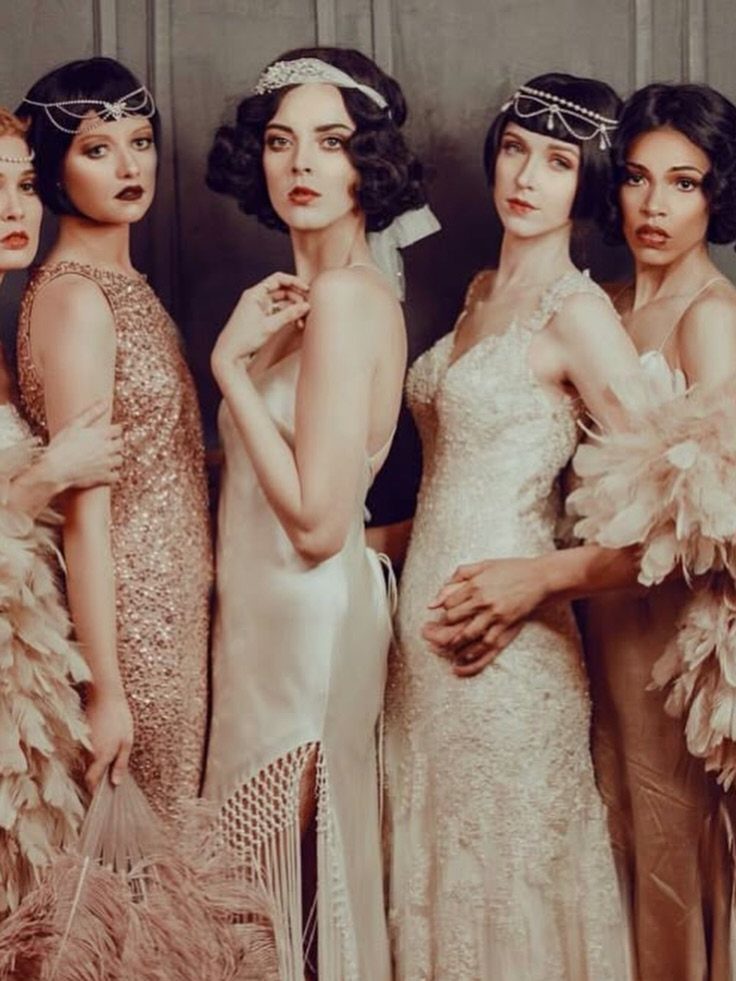
These 9 outfit ideas move from a simple cloche hat and cardigan to a full tuxedo suit with a floor-length coat, so the event itself does the narrowing: garden party, cocktail hour, or a Gatsby theme that lets you pile on every signal at once.
Cotton day dresses with elbow-length sleeves sit at one end and velvet cocoon coats with gold collar lining at the other, so fabric weight and waist placement do the real sorting.
A true drop waist sits at the hip, not the natural waist, and that single seam position is what makes a dress read as 1920s rather than merely vintage-look.
1. Flapper Dress
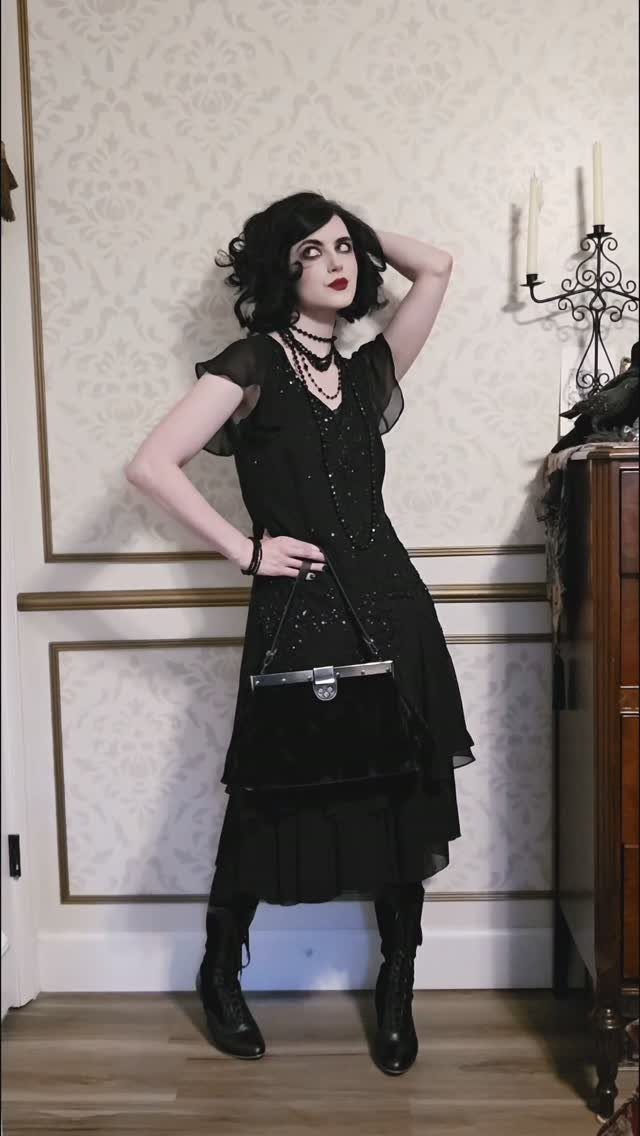
The flapper dress is built around a dropped waist that sits at the hip, not the natural waist, with a straight cut that hangs loose from there.
That silhouette is what makes it read as 1920s rather than just a vintage-look dress.
Before buying or making one, check where the waist seam actually falls. A dress that claims the style but cinches at your natural waist misses the point entirely.
The visible dress carries heavy beading, which adds weight and structure; a lighter fabric without that density will need more careful handling to keep the line straight rather than clinging.
Layered necklaces fill the neckline without altering the dress itself, which is useful if you are renting or borrowing the piece.
I would look for a length that hits near the knee, not mid-calf; the shorter line is easier to wear without looking costume-heavy.
Gone were the constrictive corsets, excessive petticoats, and long bloomers. “The men won’t dance with you if you wear a corset,” a collective of flappers said to The New York Times in a 1920 report.
2. Hair Accessories
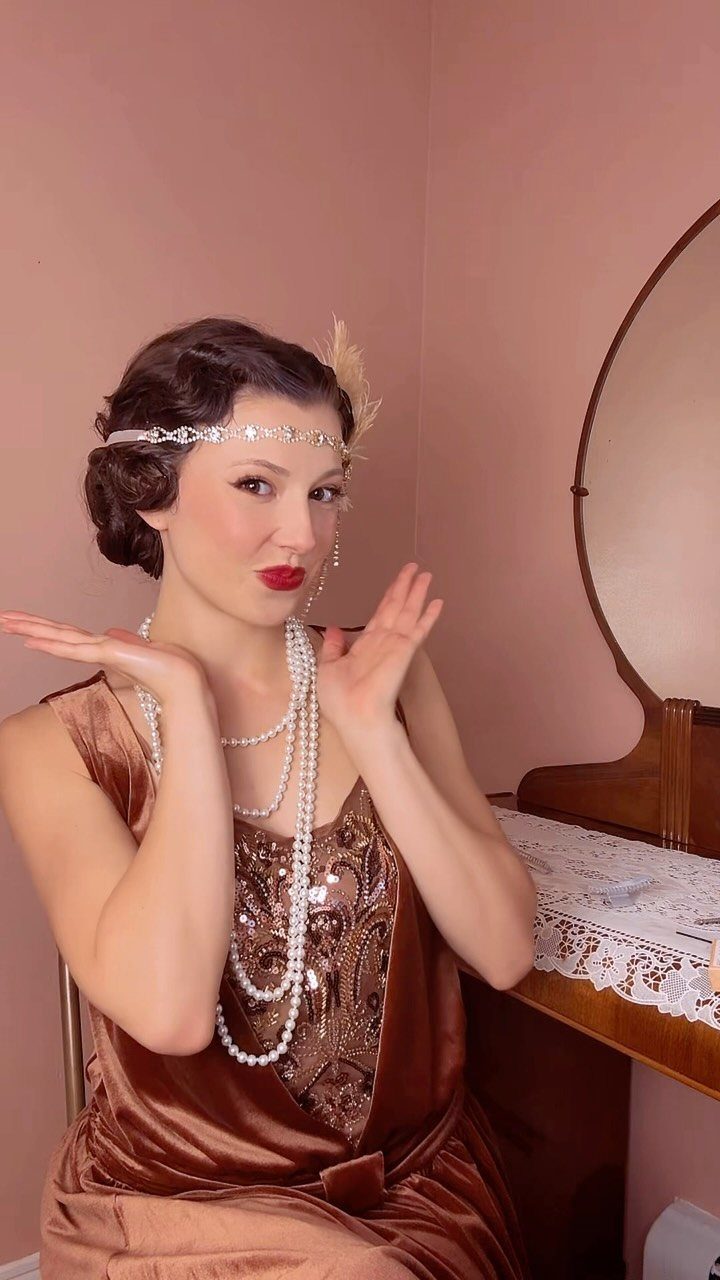
1920s hair moved toward simplicity, and the accessories did the visible work instead of elaborate styling. A headband with beading or a feather cluster sits low across the forehead, not pushed back like a modern sports band.
Placement changes the whole effect.
Too high and it reads as generic festival wear; too low and it interferes with blinking. The visible piece combines both beadwork and feather, which is the dressier end of the range.
For a daytime or less formal version, a plain satin band or a simple brooch at the temple works the same way with less weight.
Check how the band fastens: elastic hidden at the back is more comfortable for an evening than a rigid band that presses behind the ears.
I prefer the feathered version for parties where there will be dancing, since the movement adds something the hairstyle itself does not.
3. Fringe Dresses
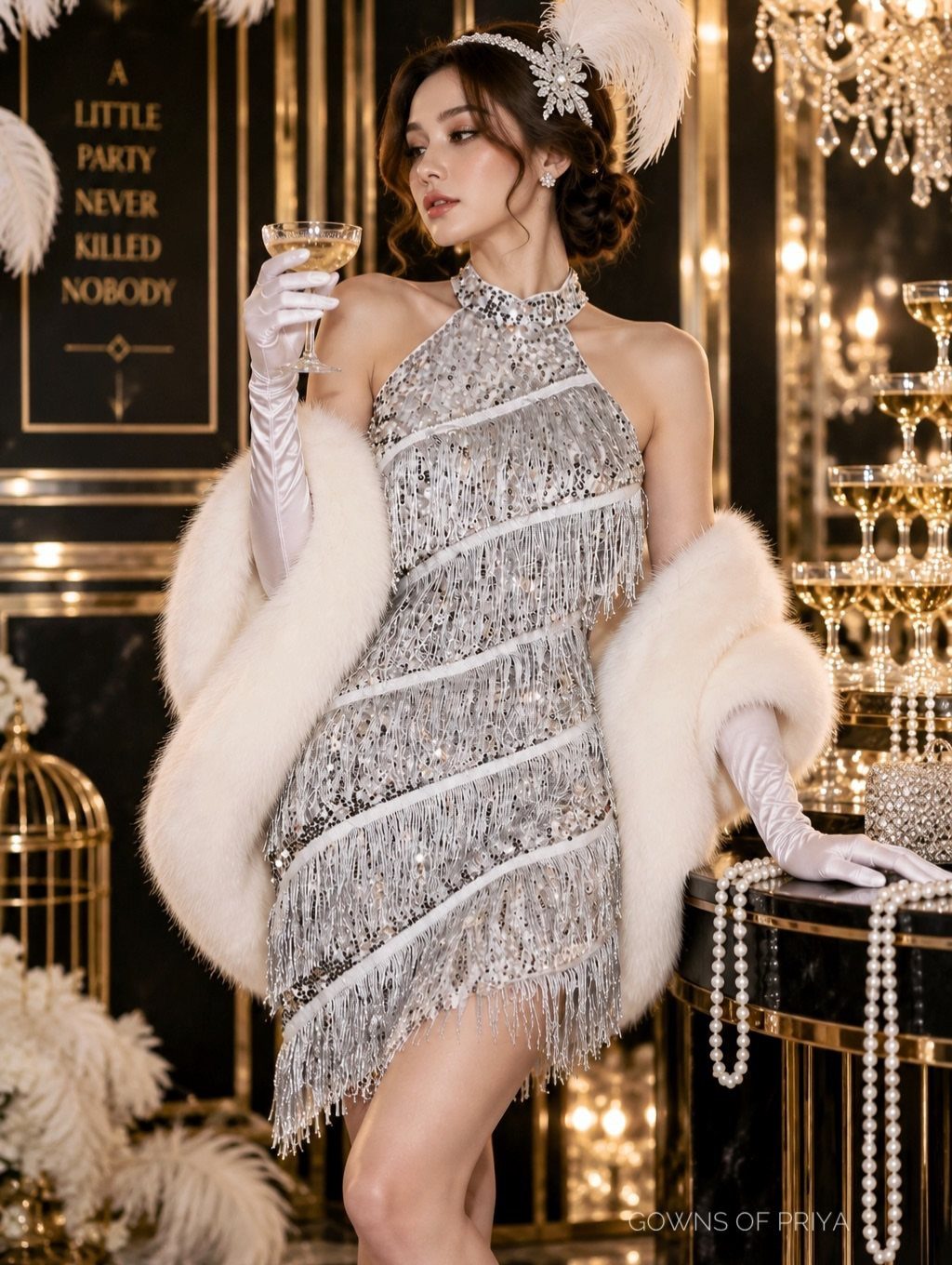
Fringe dresses add movement through hanging strips that sway with any step or turn, which makes them the choice when you will be on your feet and visible.
The visible dress uses sequins under the fringe, so the base catches light even when the fringe is still.
Fringe demands more upkeep than it looks like.
Fringe tangles, catches on chair arms, and sheds over time. A dress with fringe only at the hem, not full coverage, lasts longer and is less trouble in a crowd.
The visible stole adds warmth and a color break; if you are buying rather than assembling, a faux fur piece in cream or black is the easiest addition that still reads as period.
Gloves to the elbow complete the frame without requiring any change to the dress itself. I would skip the full-length glove for a party with passed food; the shorter version is practical and looks as right.
4. Gangster Girl Outfit
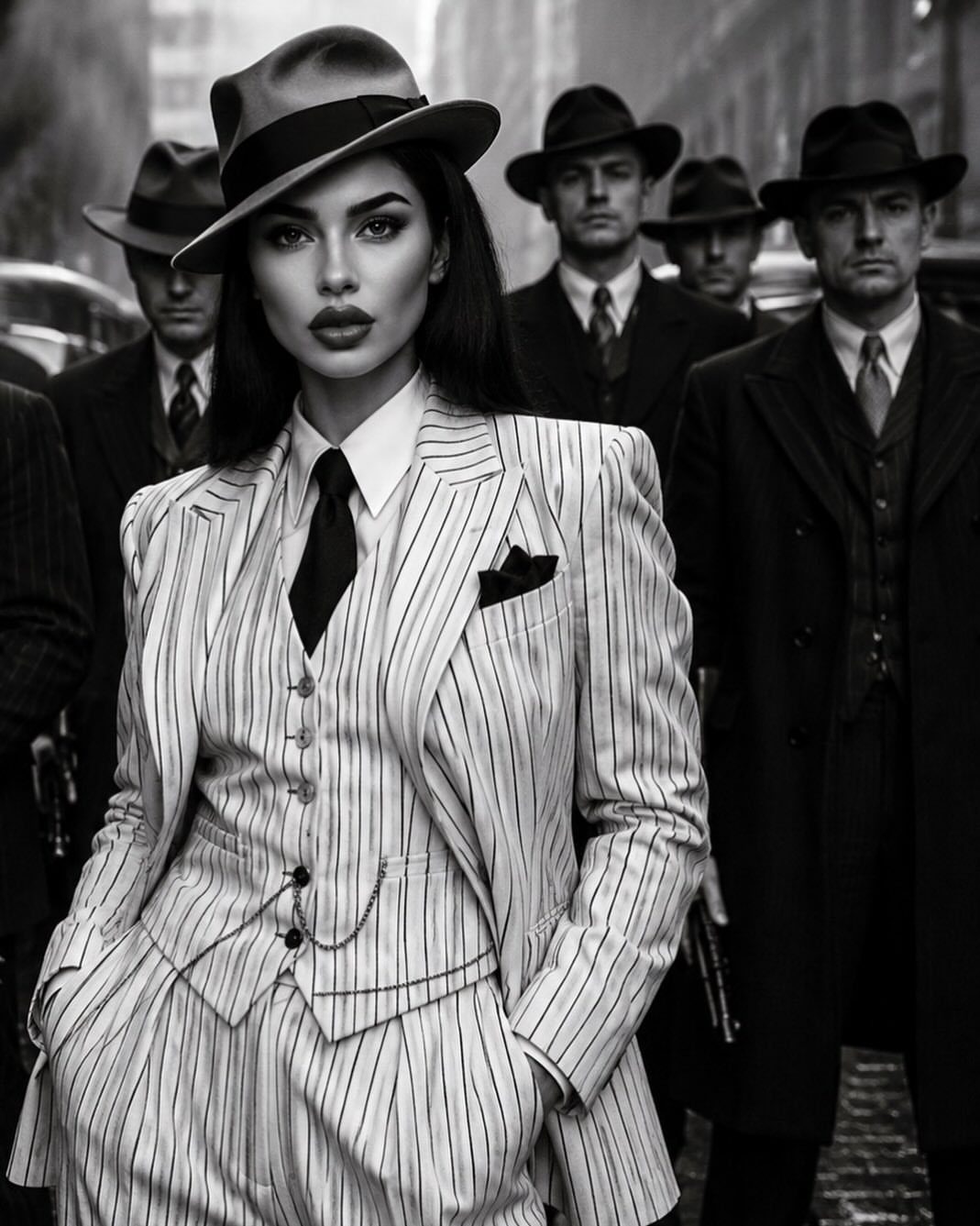
The gangster girl outfit borrows from menswear: a structured suit, a tie, and a hat that sits low and level. The visible version uses pinstripes, which were common in the period and read clearly from a distance.
Fit is the detail that decides it. A suit sized for women but cut with menswear proportions works; a standard women’s blazer with the buttons on the wrong side does not.
The tie should be tied, not a pre-tied clip, and the collar closed. The fedora sits level, not tilted back; that angle is what separates the look from a costume-shop generic.
Trousers should break slightly over the shoe, not pool or hover. I would choose a wider leg than modern tailoring allows, since the 1920s cut was fuller and the narrow leg looks like modern workwear that happens to be pinstriped.
5. Cocoon Coats
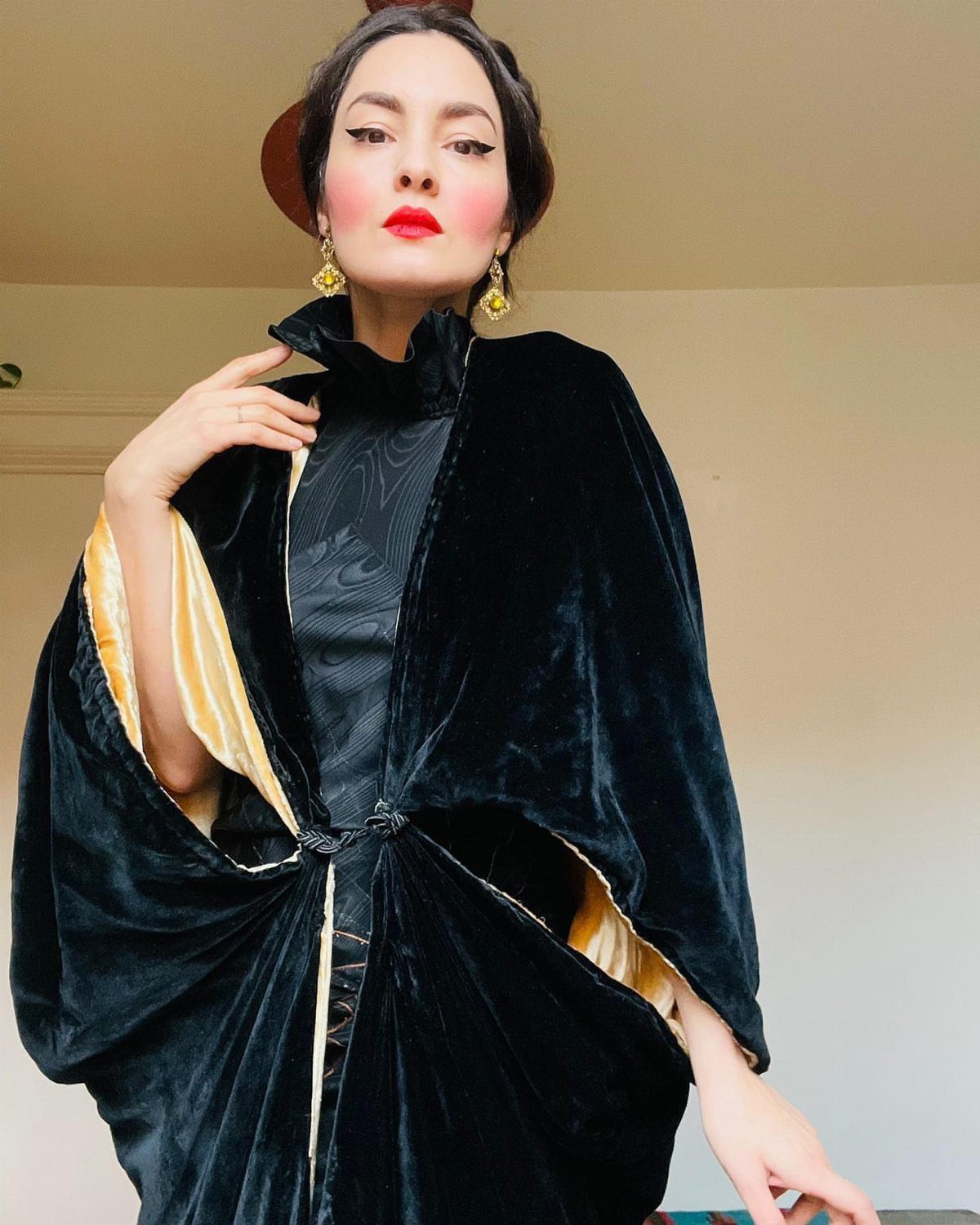
Cocoon coats wrap the body in a curved cut that narrows at the hem, creating a rounded silhouette without a defined waist. The visible coat uses velvet with a contrasting lining that shows at the collar and any open edge.
The shape works because it assumes the dress underneath is straight and loose; worn over a belted or fitted modern coat, the proportions fight each other.
Check the shoulder line: a true cocoon coat has minimal structure there, relying on the drape of the fabric.
The visible gold lining is a detail you could add to a plain coat with a scarf at the neck, if you are adapting something you already own.
Weight matters. Velvet or a heavy wool holds the shape; a lighter fabric collapses into something that reads as an unstructured cardigan.
6. Drop Waist Day Dress
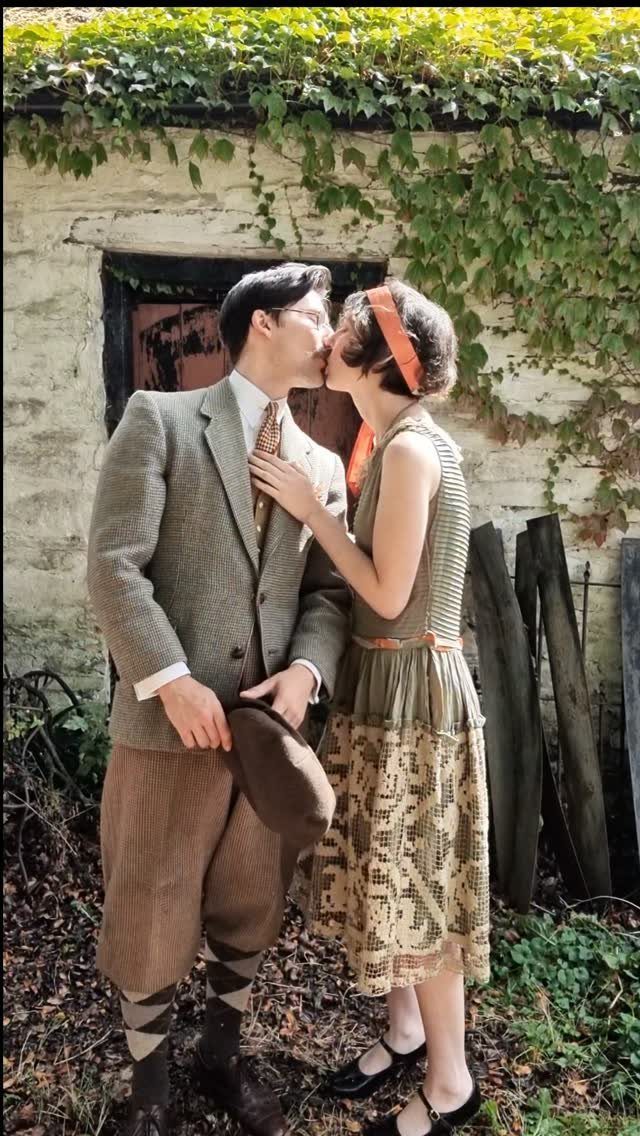
The drop waist day dress takes the same lowered seam as the flapper dress but in a simpler fabric and cut, meant for walking and sitting rather than dancing.
The visible dress is paired with a man in period tweed, which suggests the context: outdoor events, garden parties, daytime gatherings where a beaded evening piece would be too much.
Fabric choice is what separates day from night. Cotton, linen, or a light wool in a small print or solid reads as daytime; anything with sheen or heavy embellishment shifts it toward evening.
The visible dress appears to have a subtle pattern, which is the safer choice for versatility.
Accessories should be lighter: a cloche hat rather than a beaded band, a simple pendant rather than layered pearls, a cardigan or light coat rather than fur.
I would check the sleeve length before buying; a true 1920s day dress often had sleeves to the elbow or longer, which is more flattering on more arms than the modern sleeveless default.
7. Cloche Hat Daytime Ensemble
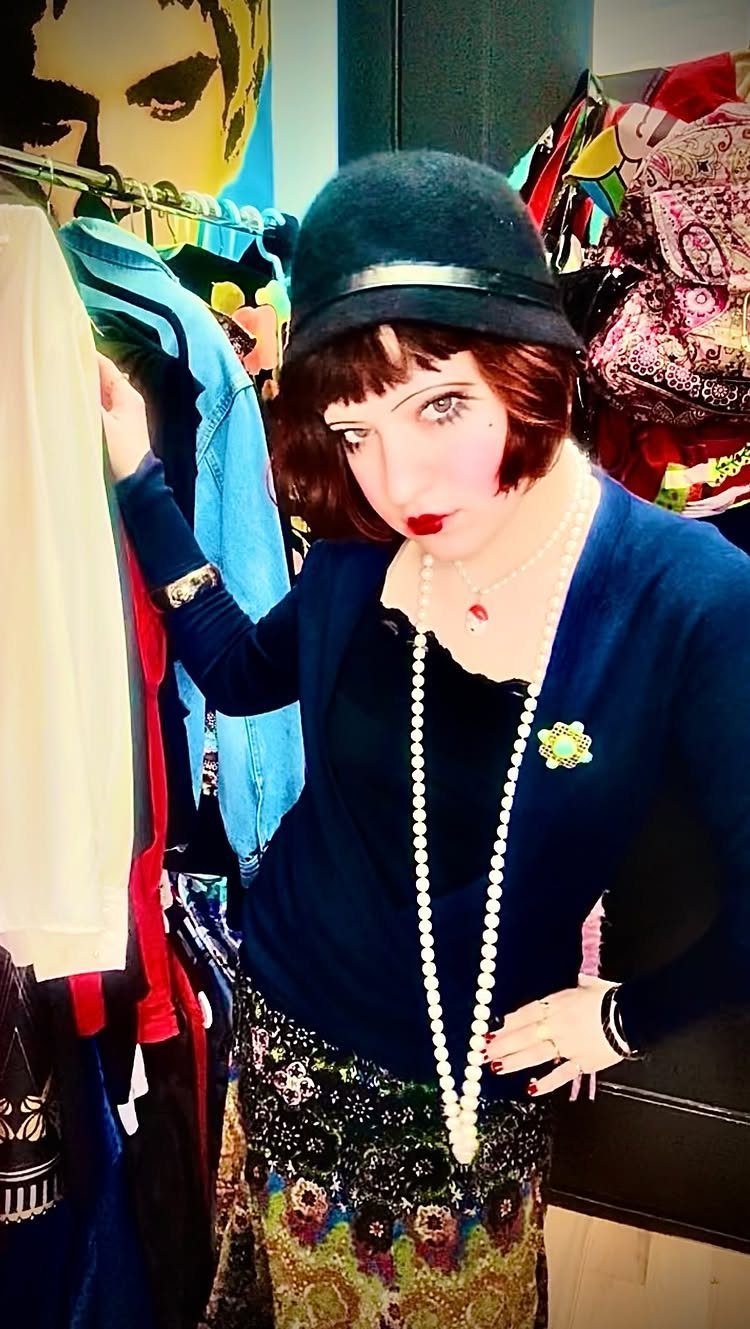
The cloche hat pulls down low over the forehead and follows the curve of the head, which means it frames the face rather than sitting on top like a modern cap.
This is the practical end of 1920s dressing. The visible outfit builds from pieces that are easier to find secondhand or adapt from what you already own: a cardigan, a patterned skirt, a long strand of pearls.
The maker of the visible look notes that most of her pieces are thrifted, and that she saves her actual 1920s dresses for occasions because they are too fragile for regular wear.
That is the approach I would take. A reproduction cloche in wool felt is affordable and lasts; a real period hat is a collector’s piece.
Layer the necklaces long, letting them fall to the waist or below; that length is the period proportion, whether you wear one strand or several.
The cardigan should button to the neck or wear a pin at the collar to close it.
8. Wide-Leg Trousers and Waistcoat
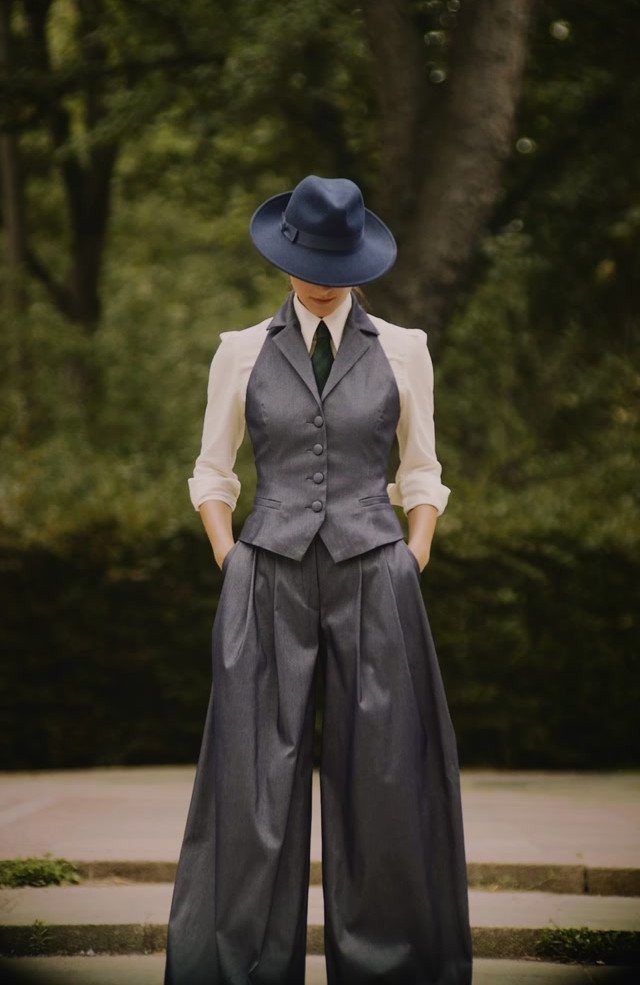
Wide-leg trousers with a waistcoat over a white blouse and tie take the same menswear borrowing as the gangster suit but loosen it into something that moves more easily through a daytime event.
The visible trousers are fuller than modern wide-leg cuts; they need that volume to read as 1920s rather than contemporary office wear.
Check the rise before buying or tailoring.
A true 1920s trouser sits at the natural waist, which is higher than most modern pants are cut. Without that height, the waistcoat cannot sit properly and the whole proportion collapses.
The visible fedora is tilted down, not level; that angle softens the look away from strict formalwear toward something you could wear to a garden party or a daytime gathering.
I would keep the palette restrained: grey, navy, cream, with one accent piece. The tie should be narrow, not the modern width, and actually tied.
9. Tuxedo Suit Ensemble
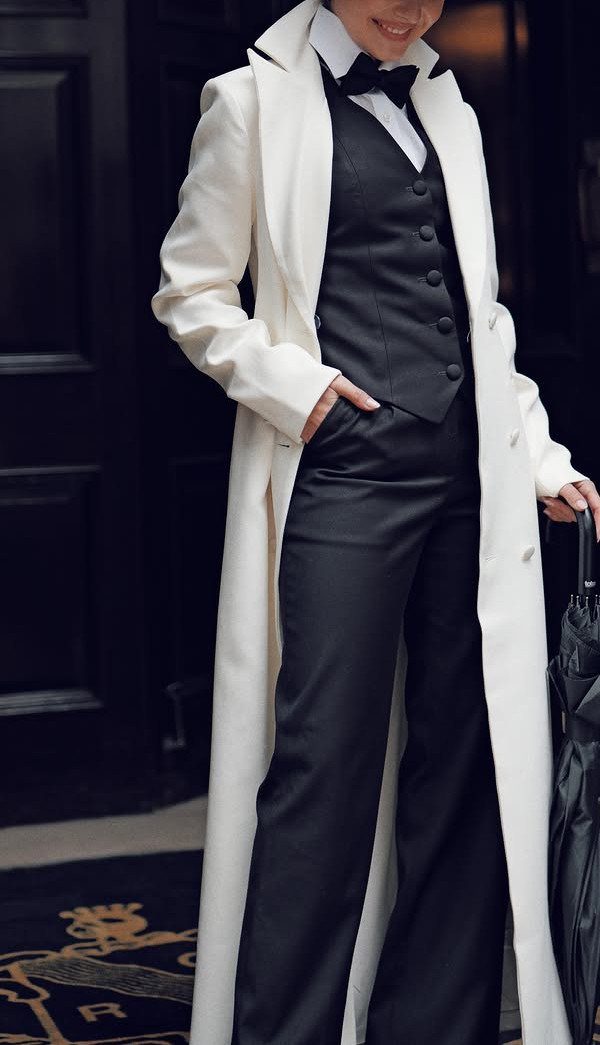
A tuxedo suit on a woman in the 1920s was evening wear pushed further into formal territory, and the visible version adds a floor-length white coat that turns the whole thing into an entrance piece.
The coat length is what separates this from the shorter gangster or day suits; it assumes an event where you will be seen arriving and leaving.
The visible look keeps the palette strict: black waistcoat, black trousers, white shirt, black bowtie, with the white coat as the single break. That discipline is what makes it work.
A colored coat or a patterned waistcoat would tip toward costume. Check that the waistcoat is cut for a woman’s torso; a man’s waistcoat gaps at the chest and the armholes sit wrong.
I would reserve this for events where a long coat is practical to wear indoors and out; if you will be removing it, the impact leaves with it.
Popular Colors and Patterns
Evening dresses in the 1920s leaned hard on black, ivory, and cream because those quiet backgrounds let the beading and sequins do the talking.
Gold, silver, and bronze came in through those embellishments rather than as solid fields of color. Emerald, sapphire, and ruby carried the weight for formal occasions where a neutral would read as underdressed.
Art Deco prints favored geometry: clean symmetry, sharp angles, and colors that sat in stark opposition. The look was modern then and still registers as intentional now rather than merely old.
For a contemporary choice, I would put the metallic or jewel tone in a small element, a belt or a panel, and keep the ground neutral.
A full metallic dress demands an occasion; a black dress with gold beading at the neckline gets more use.
Styling for Different Occasions
A floor-length beaded or sequin gown is the obvious pick for a formal event, though a velvet gown with soft draping or chiffon tiers will read as period-appropriate without the full flapper costume.
The tunic cut, with no waistline at all, is the period silhouette in a longer length.
A cocktail party is where fringe earns its place.
The movement matters more in a crowd than across a ballroom. Keep the shoes simple; the dress is doing the work.
For a wedding, softer tones and lace read correctly without competing. Understate the accessories; the romantic feel depends on restraint.
A Gatsby-themed party is the one setting where you can load in every signal at once: the headband, the gloves, the clutch.
I would still stop at one heavily beaded element. Two fight each other for attention.
Modern Adaptations
A 1920s dress becomes wearable now when you reduce the embellishment to a single detail: beading at the neckline, a panel of fringe, a subtle metallic thread. Full coverage reads as costume; one element reads as reference.
Modern accessories do the updating.
Sleek heels rather than T-straps, a structured bag rather than a beaded clutch, contemporary jewelry rather than period paste. A tailored blazer or cropped jacket over a drop-waist dress changes the context entirely.
Hair and makeup are the easiest shifts.
Soft waves in place of finger waves, a natural glow instead of the defined lip and brow. The face stays current while the silhouette nods back.
I would not try to modernize a fully beaded evening gown; that piece is already doing one thing well. The day dress, the simpler sheath, the separates: those are the ones that take a blazer and move into ordinary life.
Frequently Asked Questions
Did they wear long dresses in the 1920s?
Evening gowns kept their length through most of the decade, though day hems climbed.
Floor-length beaded or sequin gowns, velvet with soft draping, and tiered chiffon all read as period-appropriate for formal events. The flapper’s shorter hem was a later development, not the whole story.
What defines a 1920s-inspired dress style?
The defining feature is the drop waist, with the seam sitting at the hip rather than the natural waist, creating a straight, loose line from there.
Beading, fringe, or sequins add period texture, but without the lowered waist the shape is wrong.