The 7 ideas here run from a budget find to a full-price piece, and they differ in effort as much as cost: a stole takes a few minutes to style, while a pinstripe suit needs proper tailoring.
Styling for different occasions decides which of these fits your night, so start with where you will wear it.
Color choice shifts with the setting: a dark base suits a night out, but a themed party with a strict period look asks for more costume and less polish.
1. Flapper Dress
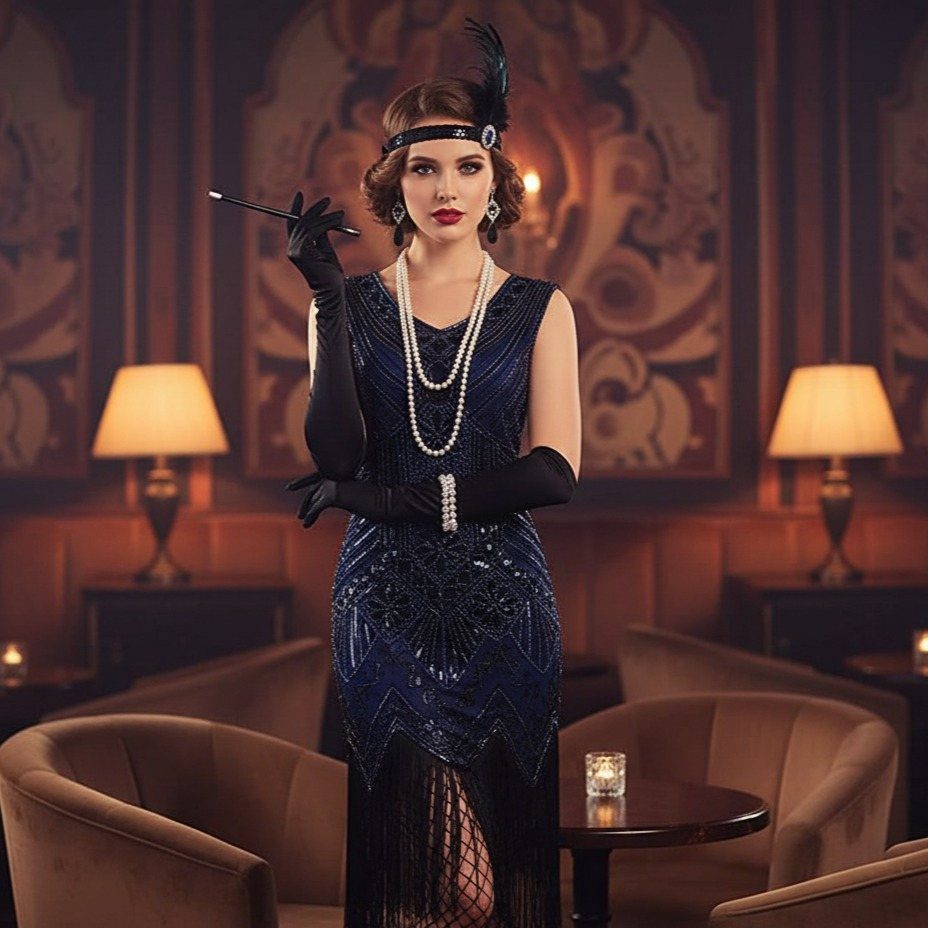
A flapper dress is a short evening dress, typically beaded or sequined, with fringe that swings as you move.
A navy dress works well for a night out. It is dark enough to read as evening, and beading catches the light without needing much else.
If you are buying one, check that the fringe is stitched firmly along the hem and at the seams, since loose strands are the first thing to go.
I would choose a dark base over a bright one, because it pairs easily with the long gloves and headband that finish the look.
Of the many fashion trends that came out of the 1920s, it is the flapper dress that continues to reign supreme.
2. Fringe Dresses
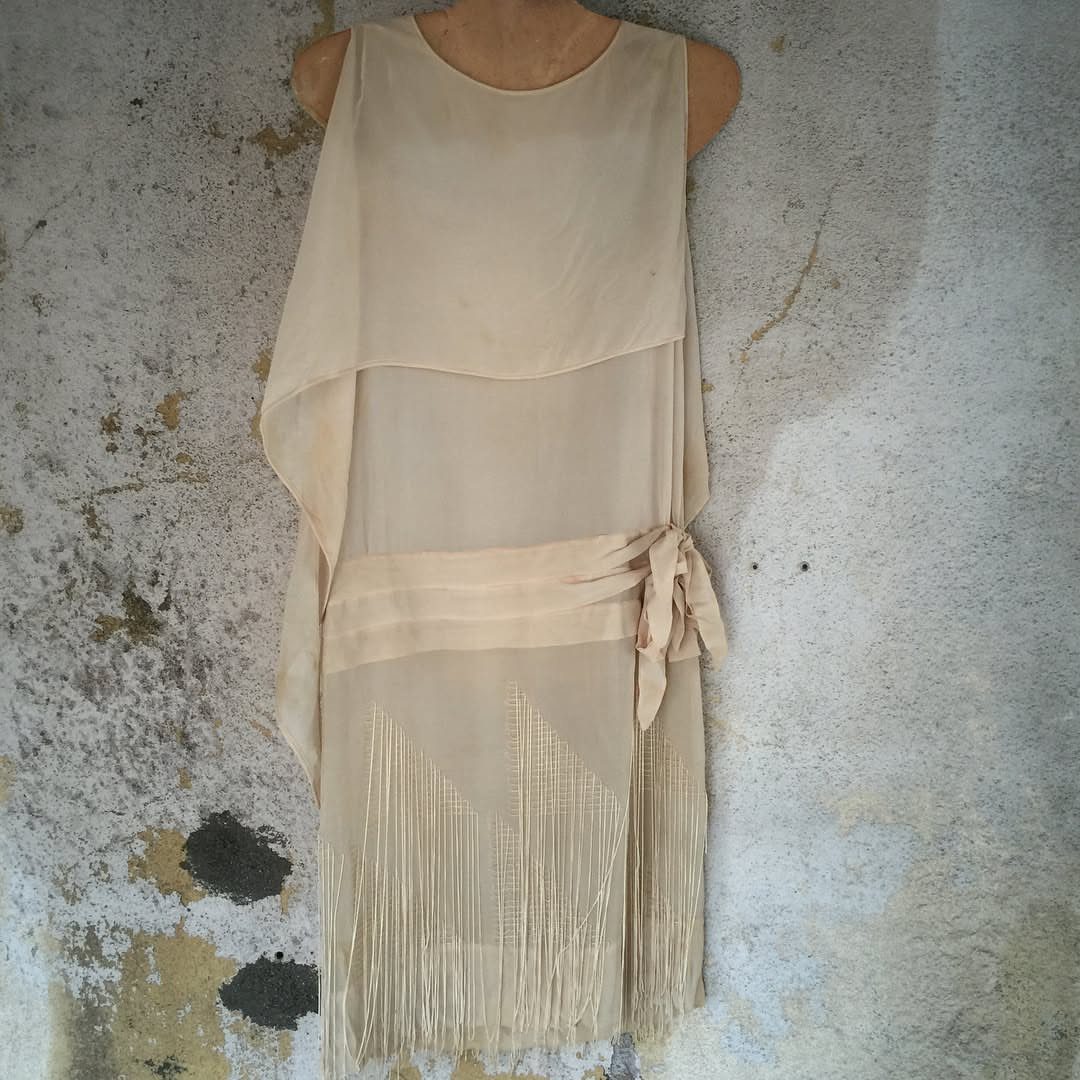
Fringe does one job on a dress, and it does it best at the hem, where each step sets the strands swinging. When you shop, look at how the fringe is attached.
I trust strands sewn in tight rows more than ones hung from a single line. A sash in the same tone keeps the outline from looking busy when the fringe is heavy.
3. Drop-Waist Dresses
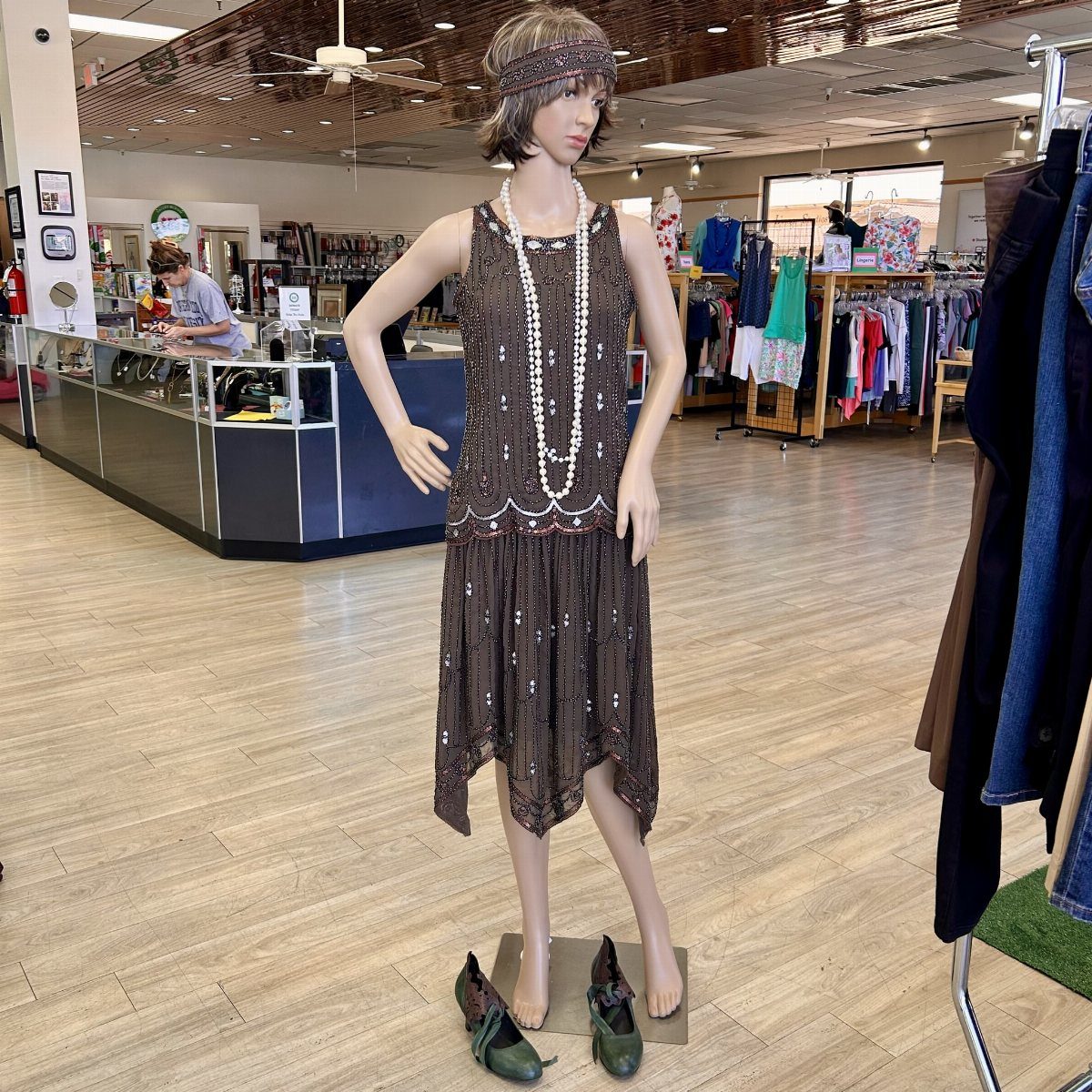
A drop-waist dress moves the seam down to the hip, so the bodice hangs straight from the shoulders with no defined waist.
Choose a brown beaded drop-waist dress with the beading on the lower body, where it catches the light as you move.
To check the fit, lay the dress flat and look at the seam: it should sit at the hip bone, not above it. Darker beading hides a seam better than pale fabric.
4. Headbands, Long Gloves, and Statement Jewelry
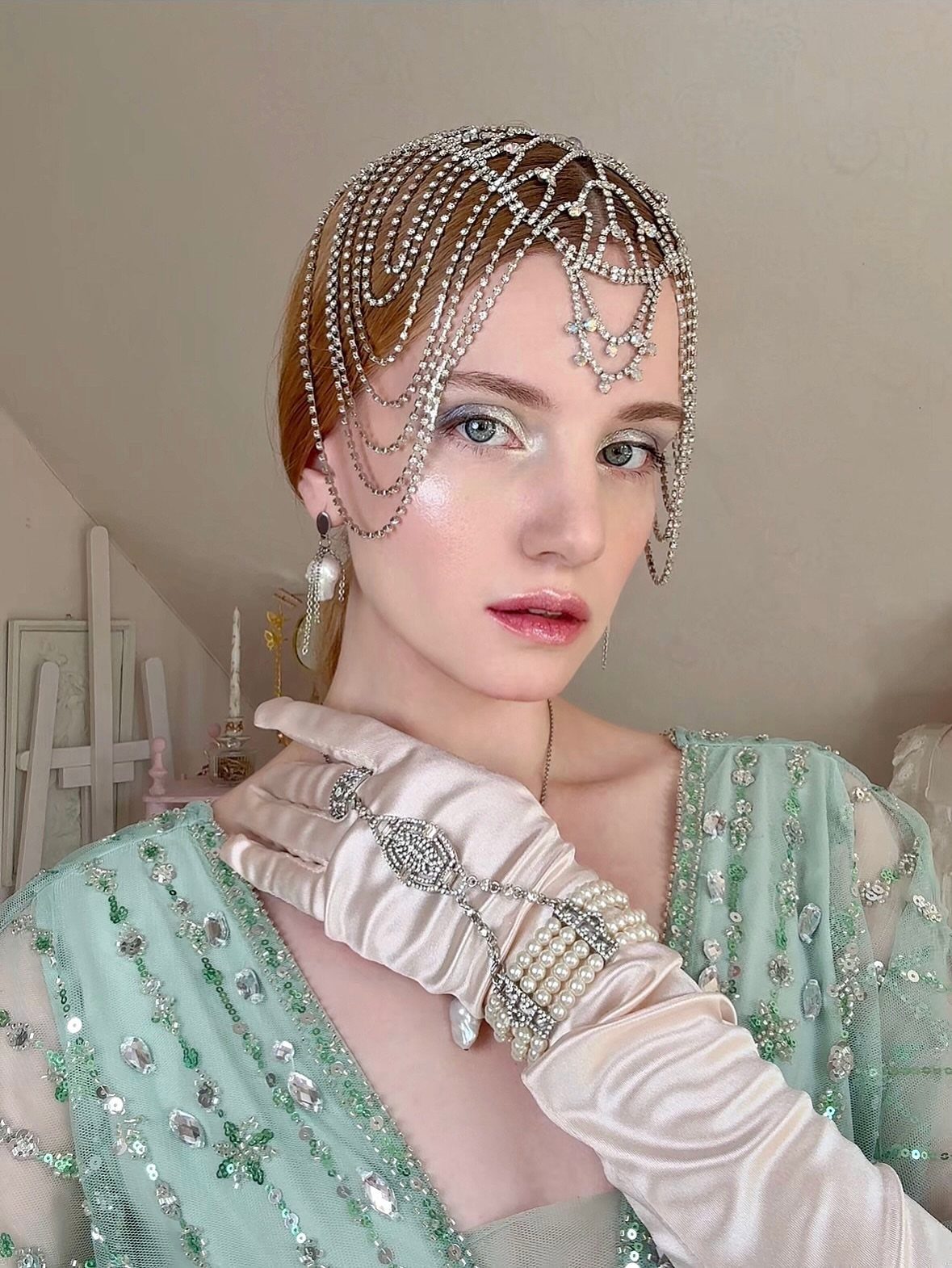
Start with the head, because a headpiece sets the tone for everything below it.
Long satin gloves, a crystal headpiece, and pearl and rhinestone jewelry can make an outfit read as 1920s without a full costume. Gloves should reach well past the wrist so they cover the upper arm.
Satin shows wear and marks quickly, so keep them away from makeup and drinks. Statement earrings and a single layered pearl strand are enough; more than that starts to compete with the headpiece.
5. 1920s Gangster Pinstripe Suit
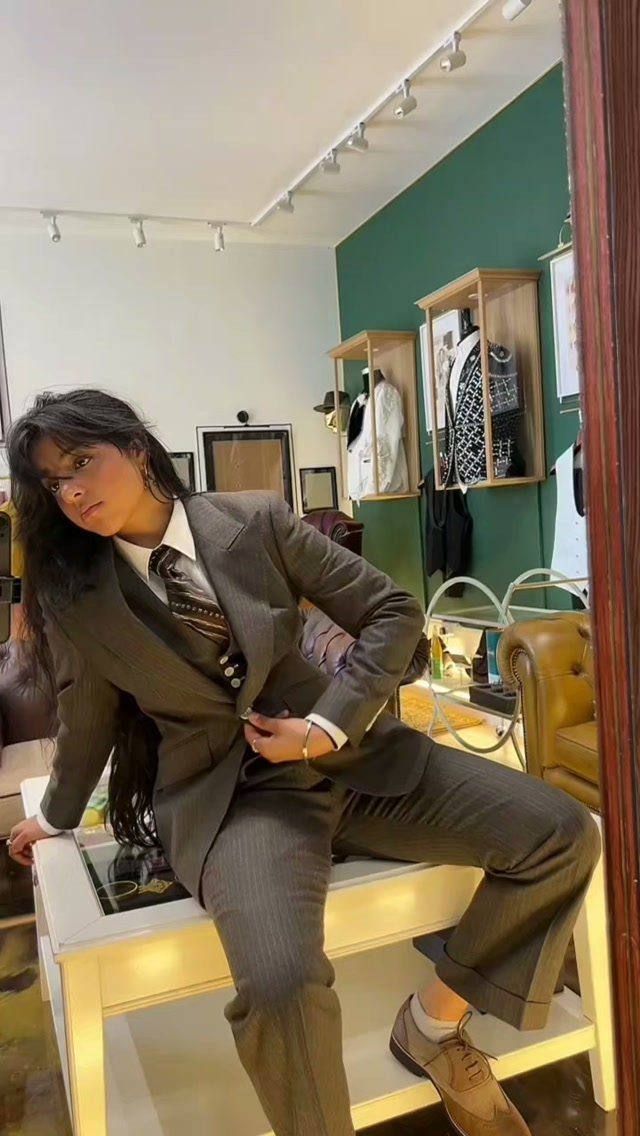
A gangster-style suit is a pinstripe suit with a vest, a white shirt, and a tie, worn with a deliberately sharp posture. Grey is the easier choice for a party because it works with black or silver accessories.
Choose a vest that fastens high enough to close cleanly over the shirt, and a tie that is knotted fully. Tailoring matters more here than in a dress, since any gap at the shoulders or waist will show.
6. Faux Fur Stole Wraps
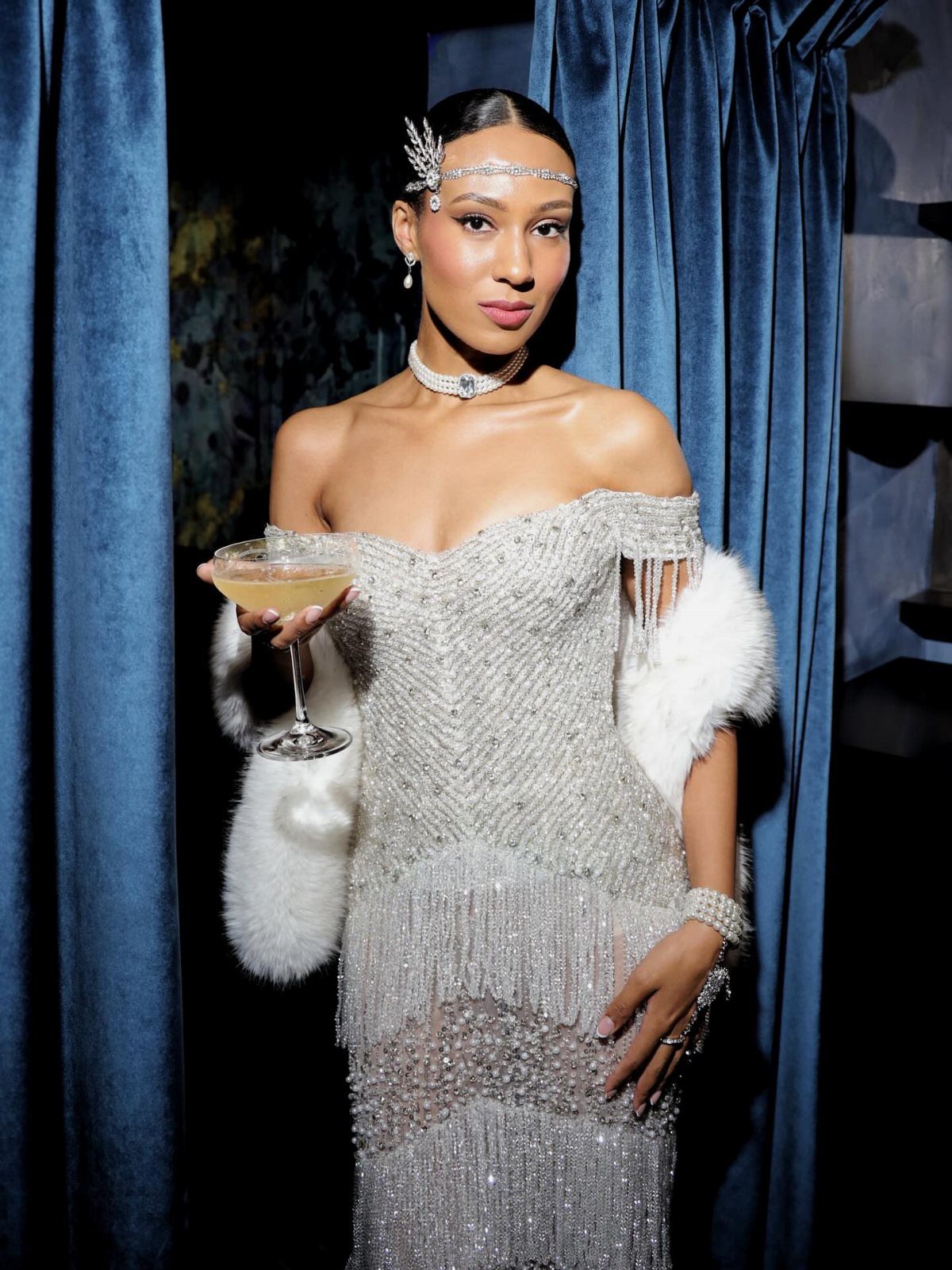
Wrap the arms, not the shoulders, if you want a faux fur stole to stay put at a party.
The white stole here drapes over the arms and warms a silver beaded dress without hiding it. Faux fur looks crisp when new and shows wear quickly, so keep it away from cocktail glasses and buffet tables.
A stole is also easy to remove when the room gets warm, which is the main reason I would pick it over a full jacket.
7. Two-Piece Flapper Costumes
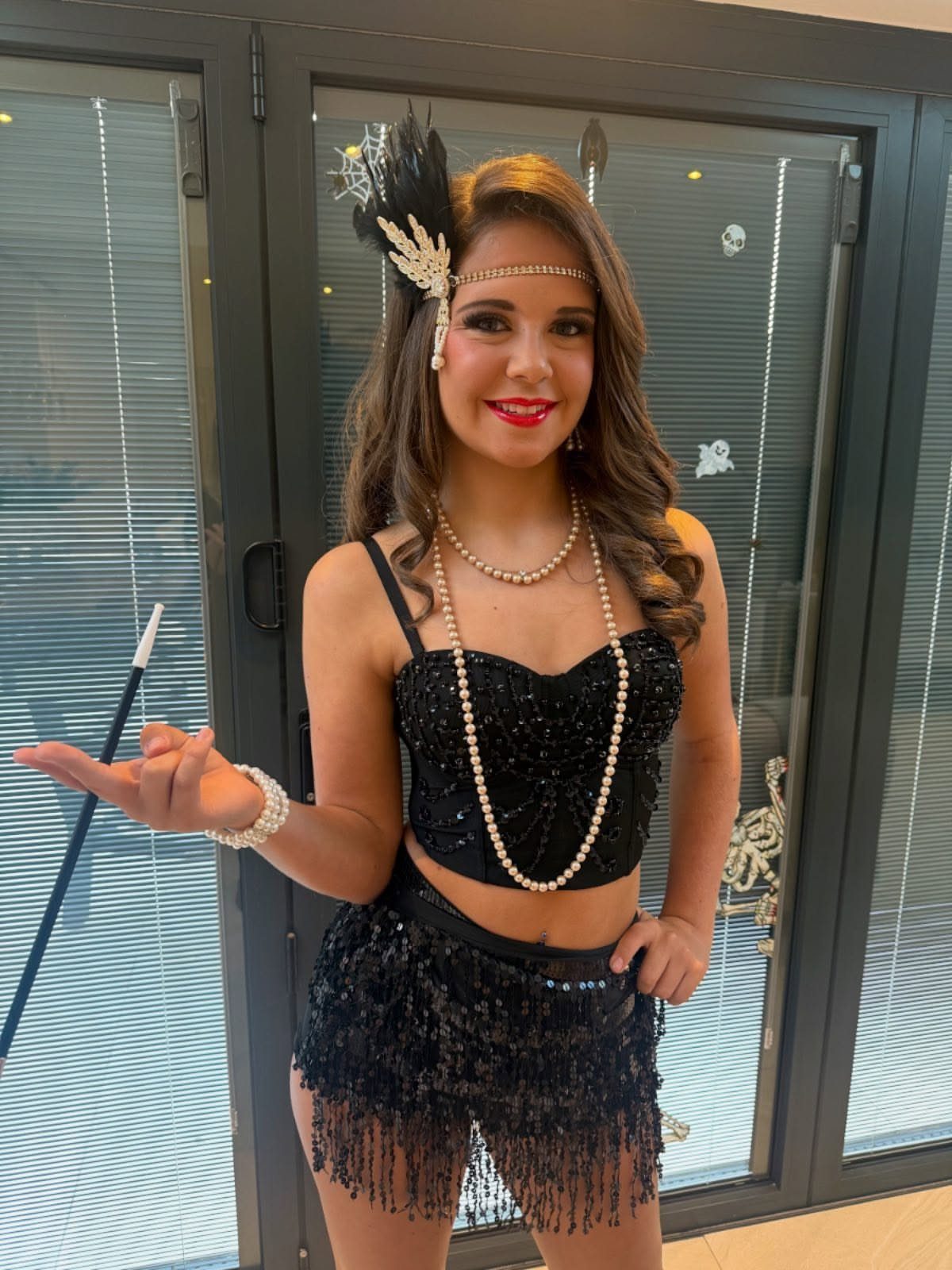
A two-piece flapper costume is a sequined crop top and matching fringed shorts, worn as a set so the sparkle runs across the waist and hips.
The version here is black, which is the right base for a night out because it reads as evening and lets the pearls and feathers do the talking.
Choose a skirt with a fringe or sheer layer at the hem, so the outfit moves when you walk. Check that the sequins are sewn down at the seams, since loose sequins shed on chairs and in bags.
Most of the look comes from the accessories: a feathered headband and two or three strands of pearls, layered at different lengths. Keep the rest of the outfit plain.
A matching set costs more than a single dress, but you can wear the top with black trousers or a plain black skirt later.
Styling for Different Occasions
The occasion decides how much the dress has to carry on its own.
For a formal evening, a beaded or metallic dress can do most of the work, so I keep the heels elegant and the jewelry minimal. Let the fabric be the focal point and resist anything that competes with it.
Cocktail parties are where the playful side of the era comes out.
Fringe or a flapper-style cut does the heavy lifting here, and long drop earrings or a deep red lip can match the room’s energy. This is the one setting where a louder accessory feels right instead of costumey.
For a wedding, I lean toward softer tones or lace details.
The look should feel romantic, so keep the accessories understated, such as a small clutch and fine jewelry. Avoid ivory that could read as bridal, and check with the couple if the invitation mentions a dress code.
Themed parties are the exception.
At a Gatsby-style party, go further with vintage pieces and let the accessories carry the costume. The more of the outfit that looks period-correct, the more the look reads as deliberate.
Popular Colors and Patterns
Evening wear in the 1920s leaned on black, ivory, and cream, which makes those three the simplest starting point for a night out.
Black suits almost any setting, so it is the safe buy. Ivory and cream feel lighter for a summer evening, though they show marks more easily.
Metallics show up mostly as beading or sequins in gold, silver, and bronze.
Match the metal to your jewelry so the outfit stays in one tone. A bronze beaded dress with gold accessories looks intentional, while mixing metals can look scattered.
Jewel tones of emerald, sapphire, and ruby suit formal evenings better than bright prints. A deep shade gives a rich look without much added decoration.
Art Deco patterns rely on geometric shapes, symmetrical lines, and bold contrast.
Look for a beaded pattern in one or two colors, arranged in a symmetrical design, so it reads as deco instead of busy. Black and white graphic pieces give the most contrast with the least effort.
Frequently Asked Questions
What should I wear to a 20s theme party?
A dark beaded or sequined flapper dress with fringe is the safest pick, and navy or black work especially well for a night out.
A simple dress can stay plain when satin gloves and a feathered or crystal headband carry the period look.
At a Gatsby-style party, a grey pinstripe suit with a vest and tie is the male-cut alternative that still reads as 1920s.
What is a 1920s style dress?
A 1920s style dress is a short, loose evening dress with a drop waist, where the seam sits at the hips instead of the natural waist.
Beading, sequins, and fringe were the usual decoration, chosen to catch the light as the wearer moved.
How do I make an outfit look 1920s?
Start with the headpiece, since it sets the tone for the rest of the outfit. Keep everything else plain, because more than a statement earring or one layered pearl strand starts to compete with the headpiece.