The 7 ideas below move from a simple modern flapper dress through beaded and sequined options to fully coordinated pair looks, with the deciding factor being how much movement your event involves and whether you plan to dance.
A navy dress with a feather fan photographs well and gives you something to do with your hands at a seated dinner, though I would leave it behind for a standing cocktail party where it becomes one more thing to track.
Fringe on a flapper dress catches the light and exaggerates every kick and turn without adding weight, but for a dancing event, I’d choose a hem with less fringe or none at all.
1. Modern Flapper Dress
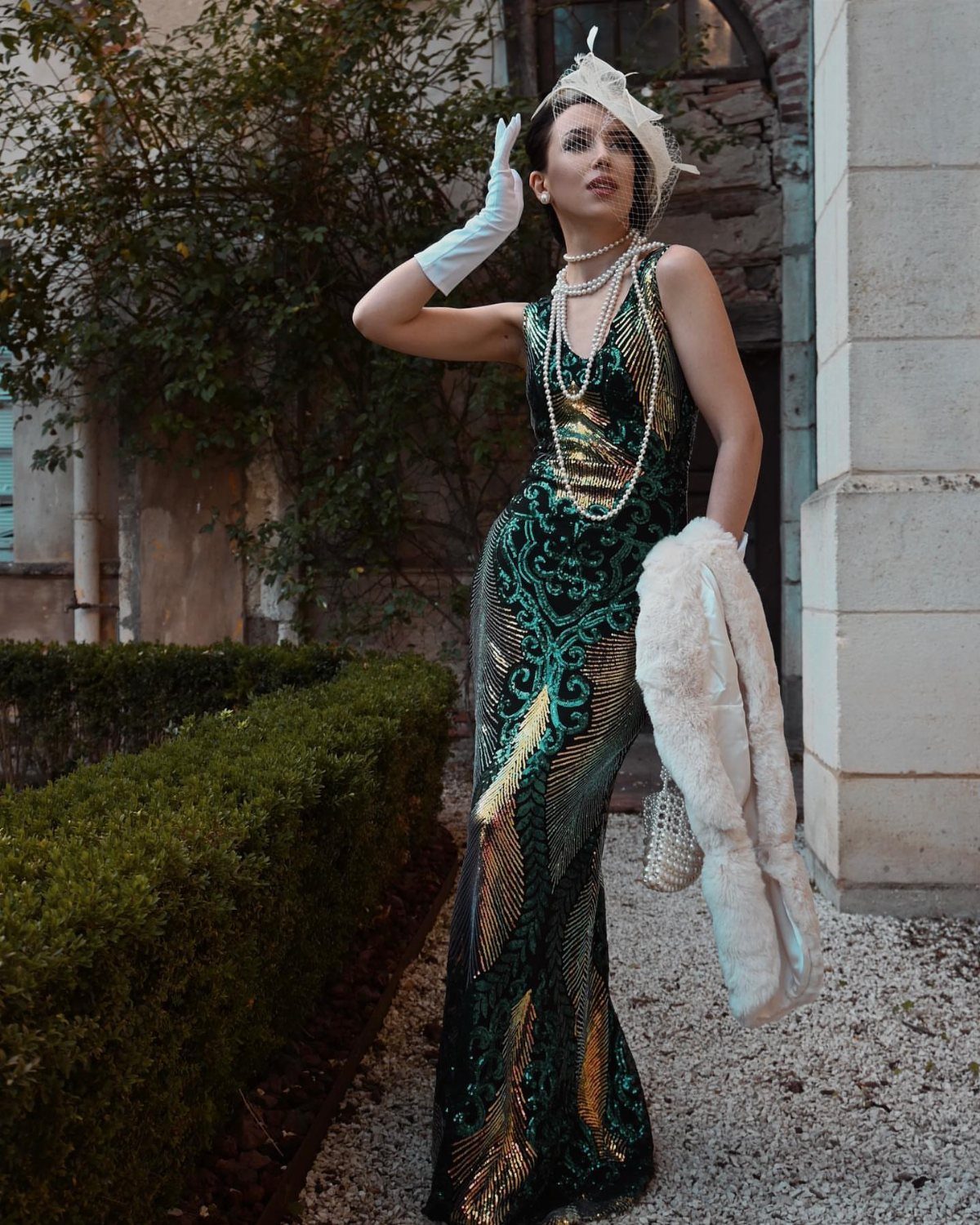
A modern flapper dress keeps the silhouette loose through the hips and drops to the floor, which reads more formal than the knee-length originals but still carries the spirit.
Floor-length sequined versions read more formal than the original 1920s day-to-evening standard, so check your invitation’s dress code before committing to the extra fabric and sparkle.
2. Grey Beaded Chiffon Flapper Dress
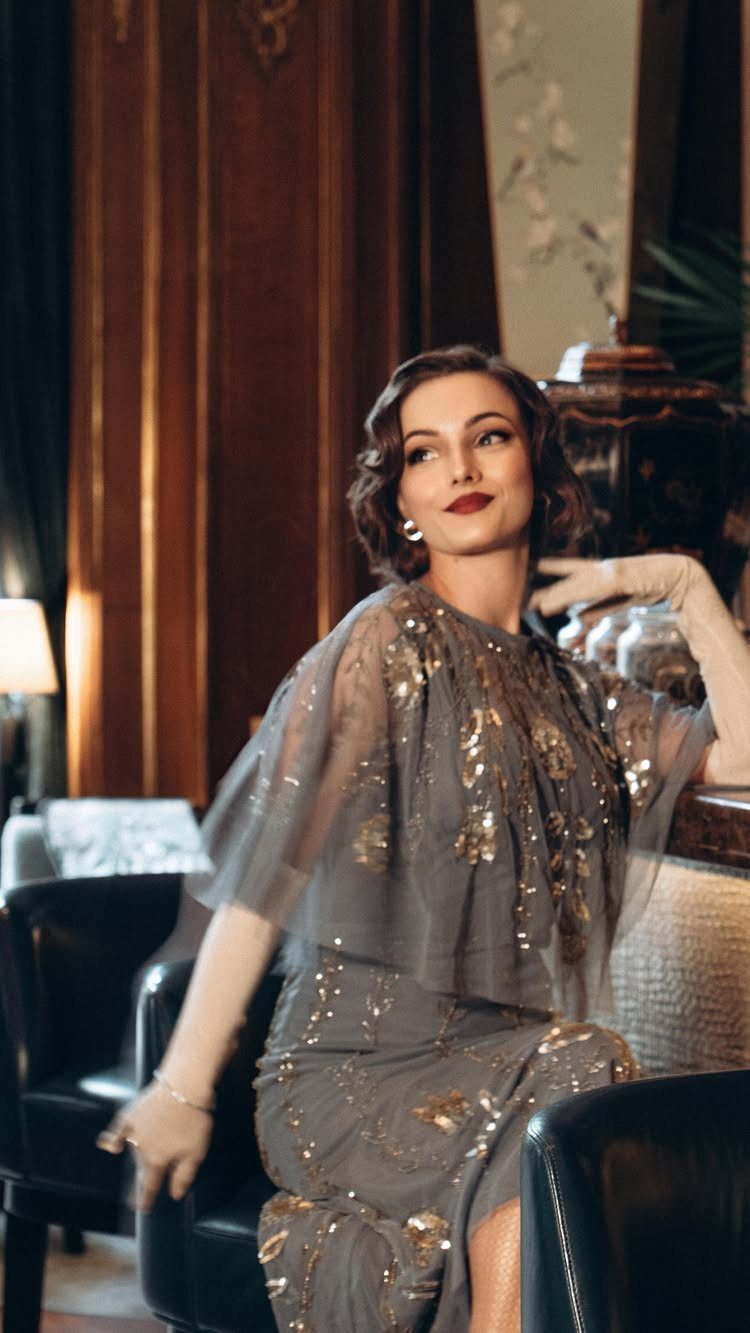
Grey chiffon with gold sequin work reads softer than the typical black or jewel-toned flapper dress, which makes it easier to wear if your event is a wedding reception or an anniversary party where you want the era without the nightlife edge.
Finger waves and dark lipstick are doing real work here; without them, the dress alone might scan as generic beaded cocktail attire.
If you are not styling your hair in waves or a bob, I’d add a feather or jeweled headband to signal the period.
Chiffon this heavily beaded needs a slip underneath, so budget for that layer and check that the armholes sit high enough to hide it.
3. Navy Dress with Feather Fan
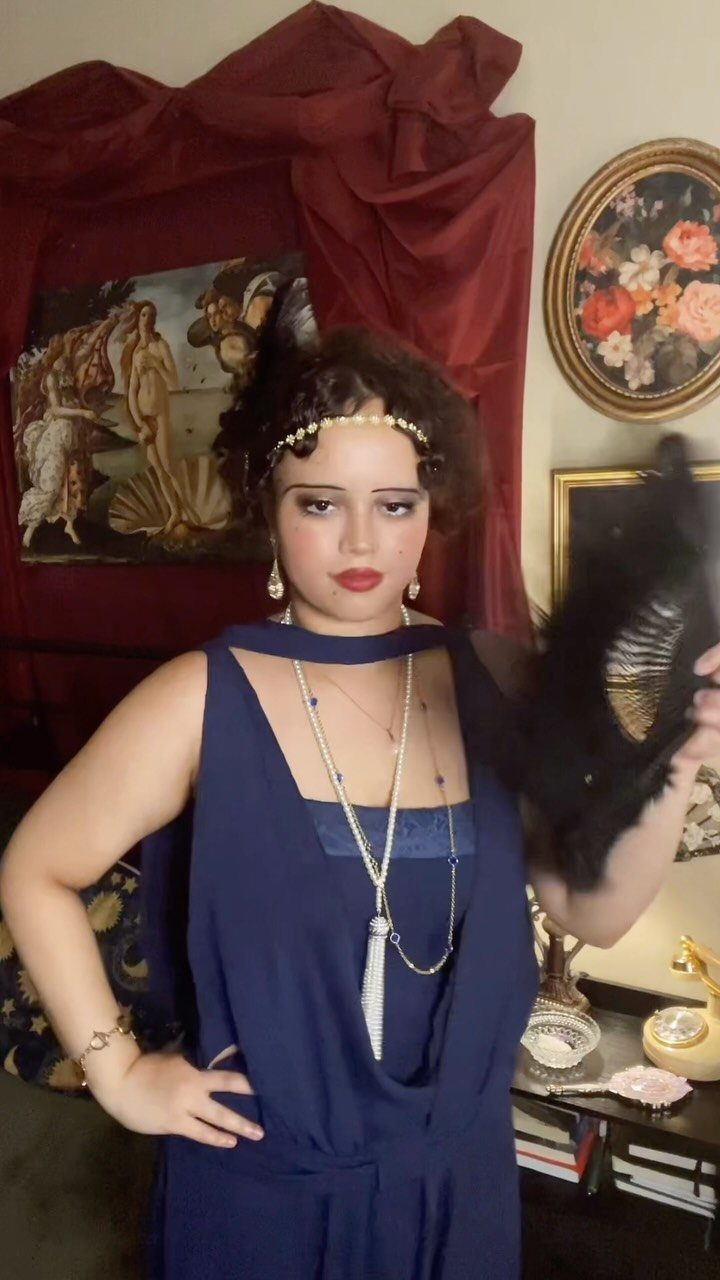
The feather fan is the detail that separates this from a standard navy dress with pearls, and it is a prop that actually earns its place at a seated dinner or a photo-heavy event.
Fans in the 1920s were functional accessories for crowded rooms before air conditioning; now they give your hands something to do in pictures and start conversations.
Layered pearls and a pearl headband are doing the recognizable flapper work, so the navy base can stay simple and sleeveless.
A fan with real ostrich feathers sheds less than synthetic ones and folds smaller, though it costs more. For a standing cocktail party, I’d skip it; you will set it down and forget it.
4. Green Day Dress with T-straps
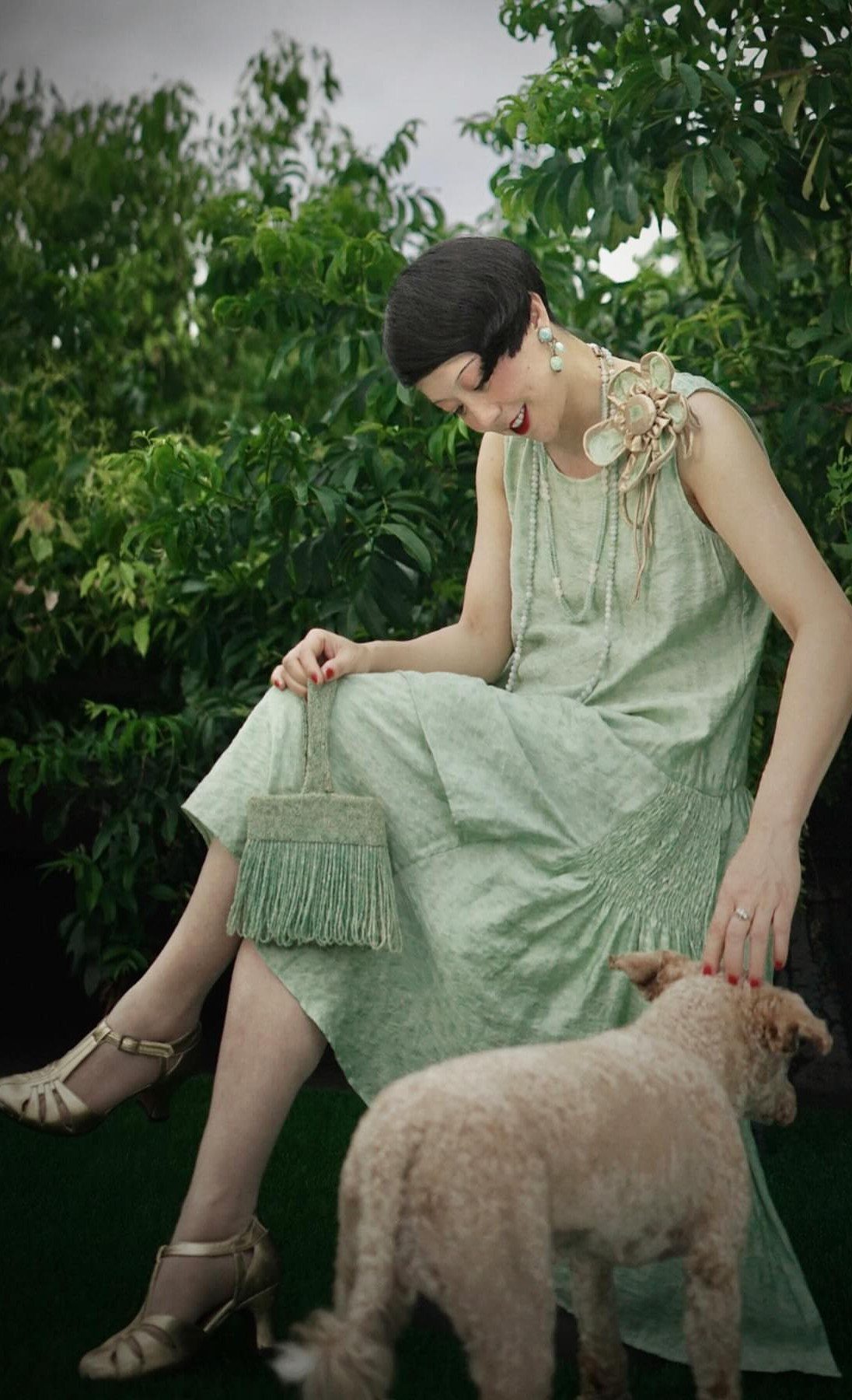
The gold T-strap heels and fringed purse push it toward evening, but the color and sleeveless cut keep it workable for a garden party or afternoon tea.
A bob haircut is doing period work that a longer style would need a headband to match.
If you are buying T-straps for this, look for a strap that crosses the instep rather than the toe; the 1920s originals favored the instep, and the difference is visible to anyone who has looked at period photos.
5. Black Fringed Dress with Long Gloves
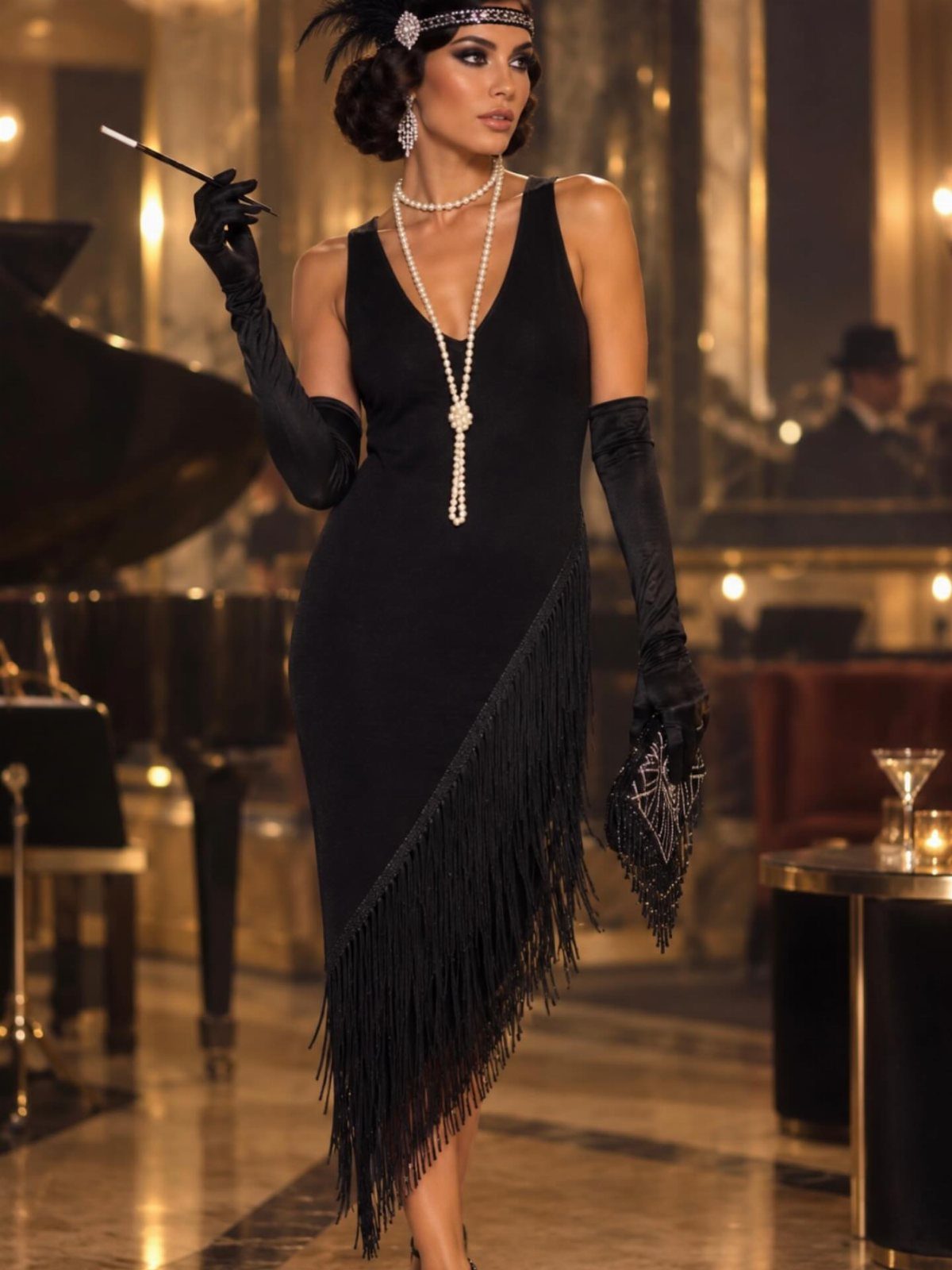
Long opera gloves with a fringed dress is the combination most people picture when they hear "flapper," and it works because the gloves add formality that the fringe alone can read as cheap.
A cigarette holder is a prop too far for most modern events, but the gloves, pearls and headband are a complete kit that needs nothing else.
Fringed dresses tangle in chair arms, car doors, and other people’s jewelry, so test your range of motion before you commit to a night of sitting and standing.
For a dancing event, I’d choose a hem with less fringe or none at all; the gloves and pearls still carry the look, and you will not spend the evening untangling yourself.
6. Black Sequined Dress with Wide-brim Hat
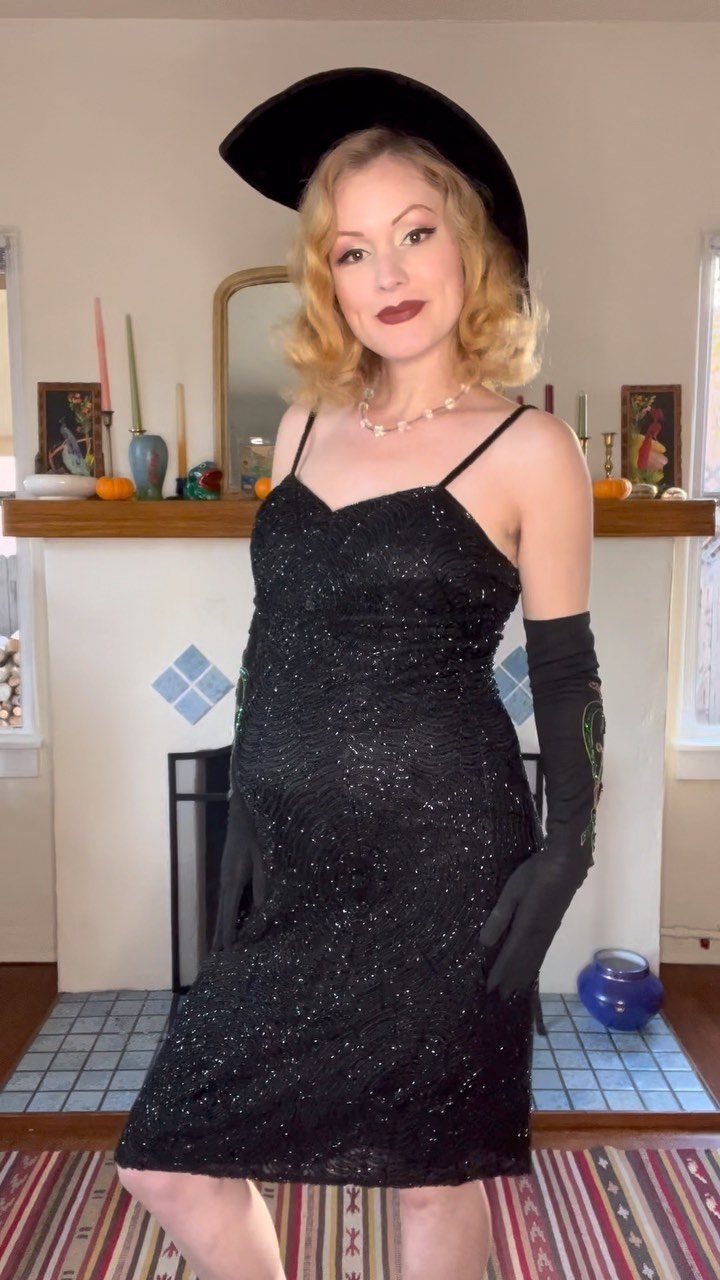
The wide-brimmed hat here is doing something unusual: it pulls a sequined evening dress into daylight territory, which is useful if your event starts in afternoon sun and runs into night.
The slip-dress cut is looser than a fitted flapper sheath, so it accommodates more body shapes without alteration, though the sequins add weight that can drag the neckline.
Long gloves and pearls are standard; the hat is the choice that matters.
I would wear this to a derby-adjacent garden party or an outdoor wedding where the dress code says "Gatsby" but the ground is grass and the sun is still up.
Check that the brim clears doorways and does not block the view of anyone seated behind you.
7. Fringed Sequin Dresses for Pairs
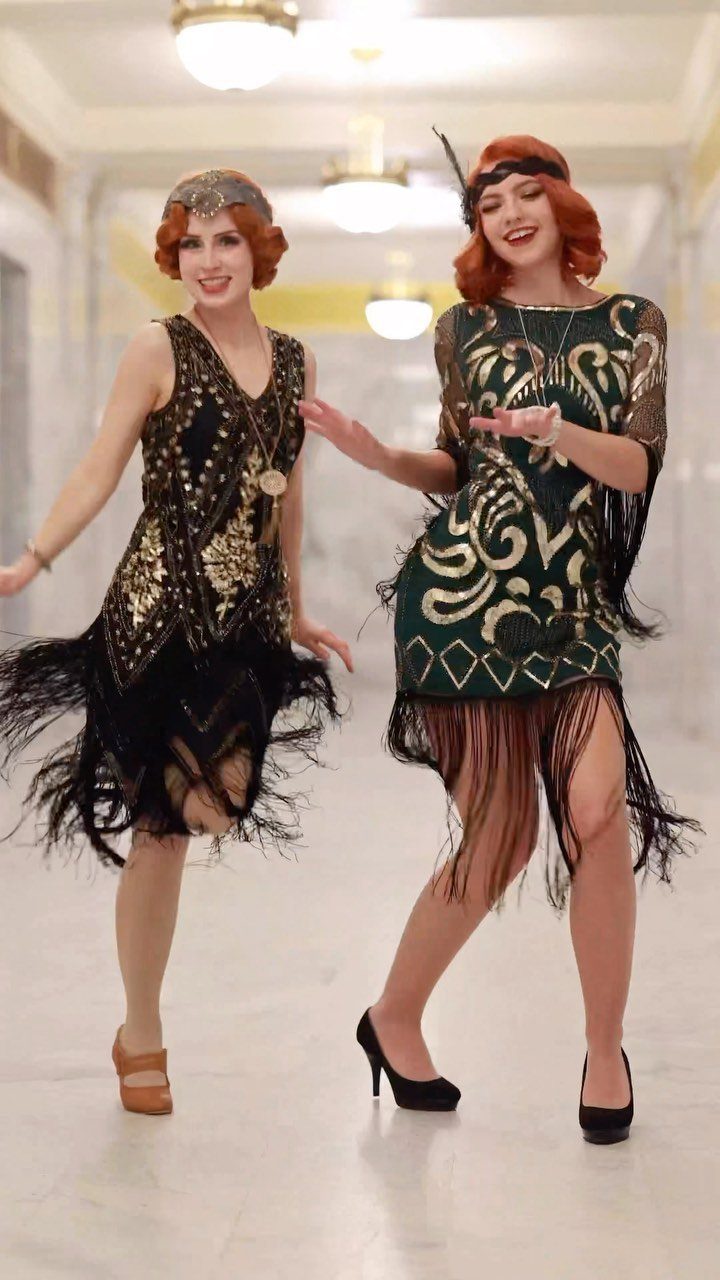
Coordinating with a friend multiplies the impact without multiplying the cost, since most 1920s accessories, headbands and gloves come in sets or packs that split between two.
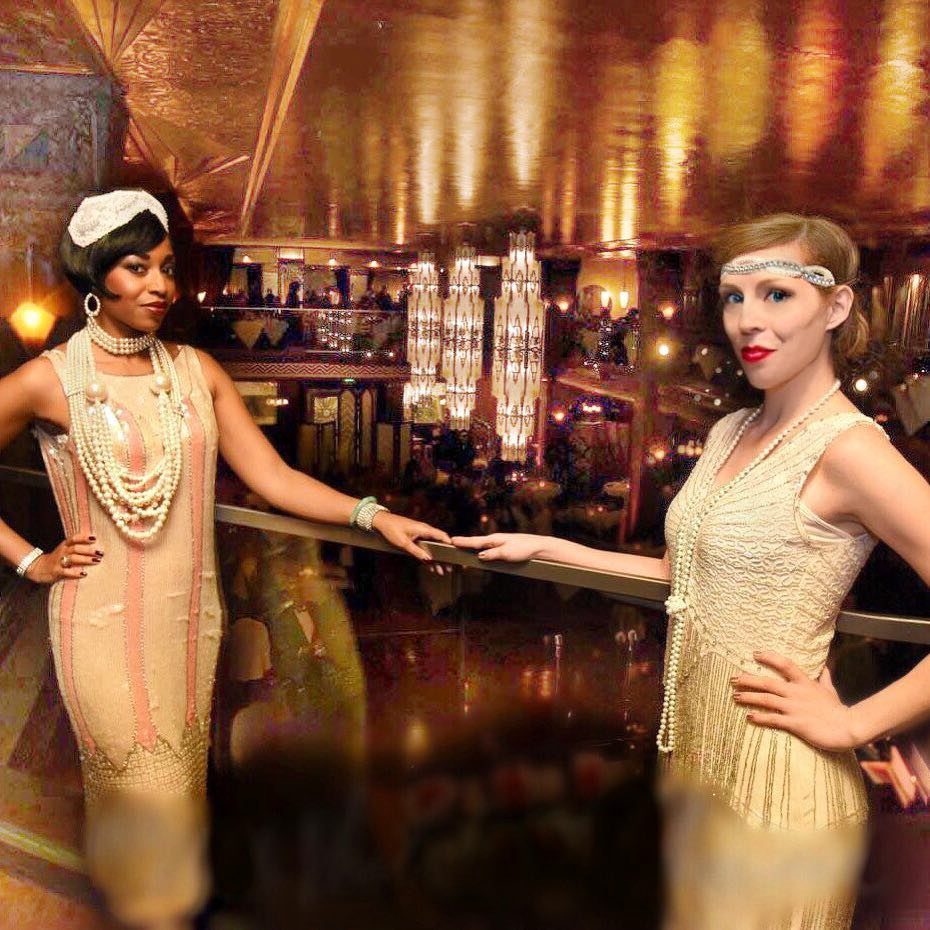
The sequined and fringed dresses here are near-matching rather than identical, which reads as planned rather than purchased from the same rack; one carries more fringe, the other more beadwork, and the difference lets each person move at her own pace.
Fringe tangles when you dance close together, so agree beforehand on how much arm motion the night will involve. Sequins shed onto each other’s dresses, which is fine for one event but worth checking if either dress is a rental.
For photos, stagger your poses rather than mirror them; 2 identical stances look stiff, while offset angles show the dresses in motion.
A matching headband is the minimum coordination; matching shoes is one step too far.
Flapper Dress History
The flapper dress arrived after World War I as women’s clothing shed its armor. Corsets went first, then hemlines rose to the knee, and the dropped waist erased the hourglass silhouette entirely.
The word "flapper" itself carried some risk: it described young women who smoked in public, drank cocktails, and danced until morning, behavior that read as prostitution to some ears and as freedom to others.
By the early 1920s it settled into something closer to a badge, worn by women who had won the vote and intended to use the rest of their lives as freely.
The dresses followed the politics: loose through the hip, light enough to move in, decorated enough to signal that you had somewhere worth going.
By 1920, Frances Marion released the film The Flapper, starring Olive Thomas and the rest was history. Every girl wanted to be a flapper.
— Vogue
Flapper Dance Culture
The Charleston shaped what flappers wore as much as any designer did. The dance demanded knees, arms, and torso all moving at speed, which made the boyish "la garconne" cut practical rather than merely fashionable.
Coco Chanel popularized the style, and its dropped waist and straight hip were forgiving across body types in ways that corseted silhouettes never were.
Fringe answered the same need: it caught the light and exaggerated every kick and turn without adding weight that would slow the dancer down.
For a modern event where you actually plan to dance, that original function still matters. A dress that moves with you beats one that merely looks correct in a still photo.
Flapper Fashion Legacy
The flapper silhouette surfaces in couture on a predictable cycle. Paco Rabanne and Elie Saab both drew on 1920s atmosphere for Spring 2018, though Saab’s sequined and feathered pieces abandoned the single dropped waistline that defined the original.
The borrowing is usually selective: designers keep the sparkle and the rebellion, lose the straight hip and low waist that made the look structurally distinctive.
For someone shopping now, that means off-the-rack "flapper" dresses often carry the decoration without the architecture.
Check where the waist sits. A true dropped waist falls at the hipbone or lower; an empire or natural waist dressed in beads reads as 1920s-themed rather than 1920s-built, which is fine if that is what you want, but different.
Frequently Asked Questions
Where can I buy a 1920s flapper dress?
Amazon carries the widest range of off-the-rack flapper dresses in every price bracket, from synthetic Halloween-grade costumes to beaded silk pieces that cost more but hold up through multiple events.
Thrift stores and vintage dealers are worth checking if you want something that reads as found rather than bought, though true 1920s dresses are too fragile to wear and later revivals are more common.
For a one-time party, rental services stock the sequined and fringed styles that photograph well without the closet space afterward.
What is a flapper girl outfit?
A flapper outfit starts with a loose, straight dress that hangs from the shoulders and drops to the knee or just below, with the waistline sitting at the hipbone rather than the natural waist.
The look needs at least one period signal: a feather or jeweled headband, long pearl strands, opera gloves, or a cigarette holder if the event tolerates props.
Finger waves or a bobbed hairstyle do more to place the look in the decade than any accessory, since without them the dress alone often scans as generic beaded cocktail attire.
What to wear for a 1920s party?
Match your outfit to the event’s setting and how much you will actually move. For dancing, I’d choose a hem with less fringe or none at all, since tangled fringe ruins the night faster than it impresses in still photos.
Did they wear long dresses in the 1920s?
The flapper standard hit at or just below the knee, with floor-length versions appearing only for formal evening wear and even then less often than modern costume makers suggest.
A modern off-the-rack flapper dress that brushes the ankle carries more fabric and sparkle than the original day-to-evening look, so treat it as a deliberate choice for a black-tie event rather than the default.