The list here runs from a cloche hat to a fully beaded flapper dress with fringe that swings at the knee, so the cost and effort swing widely from one entry to the next.
The rule that decides which one is yours is where you are going: the invitation sets the formality, and that sets how much beading, sequin, or costume detail you can carry.
A Gatsby ball calls for the fringe and the pearls, while a backyard tea needs the linen dress and the wide-brimmed straw hat, where heavy beading would feel out of place by mid-afternoon.
1. Flapper Dress
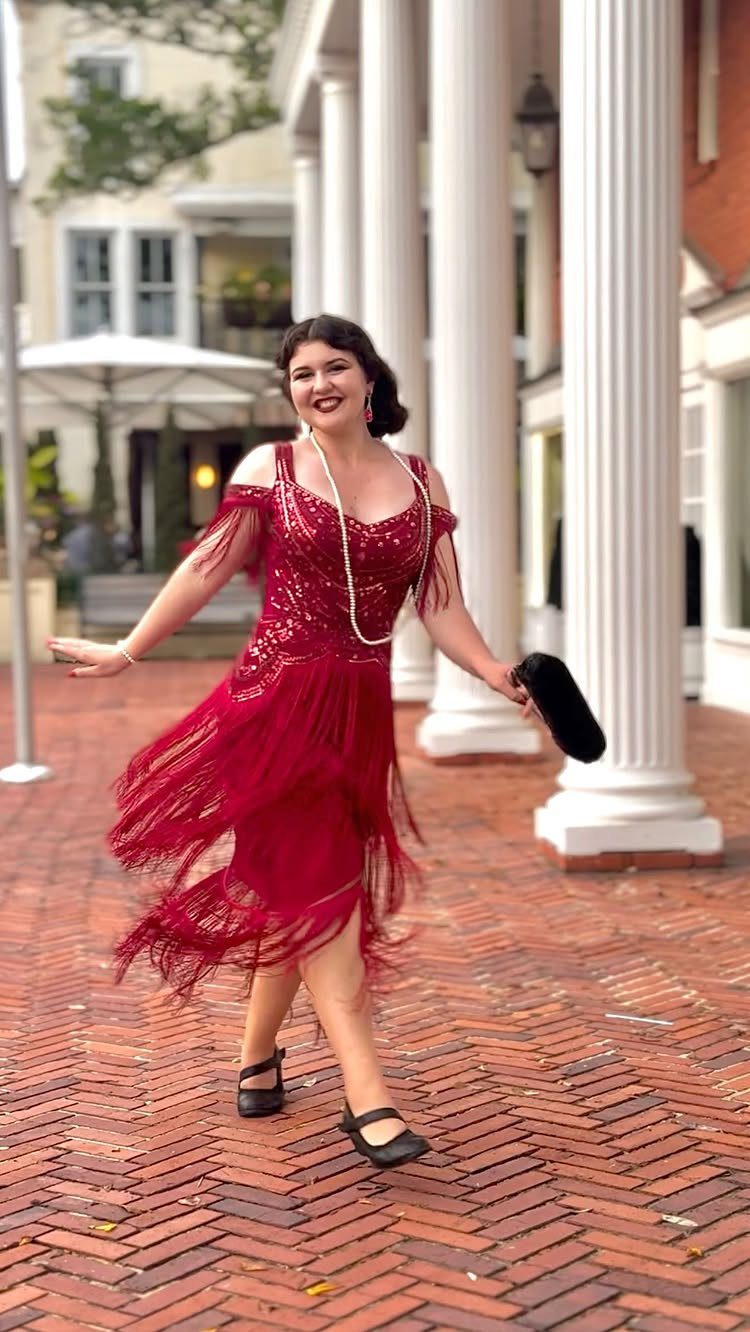
A fringed dress that moves when you do is the 1920s look most people picture first.
The red sequined version here does its work through the fringe, which swings at the knee with every turn. Keep the rest simple: a long strand of pearls and Mary Jane shoes finish the outfit without competing with the dress.
Choose a dress with fringe that hangs from the drop waist, not one with a few loose strands, so the movement reads from across a room.
2. Gangster Suit
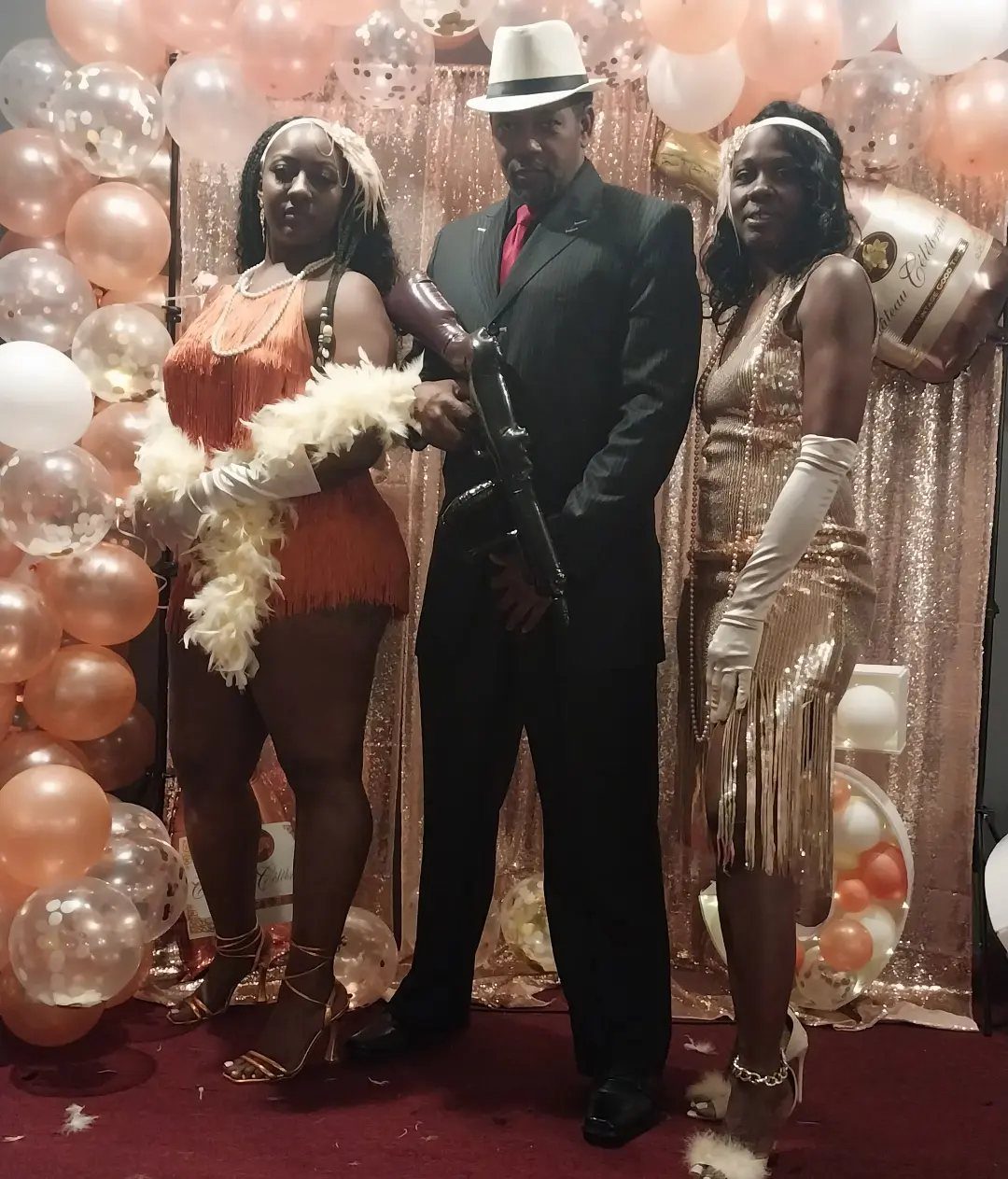
Dark pinstripes, a fedora, and a tie are the parts that make a men’s suit read as 1920s rather than as a generic costume.
A dark pinstripe suit is the version I would choose, because it looks like something a man might have actually worn to a dance or a club.
A prop Tommy gun is optional. It works in a photo, but it is awkward to carry all night, so most people will be happier leaving it at home.
3. Vintage Garden Party Dress
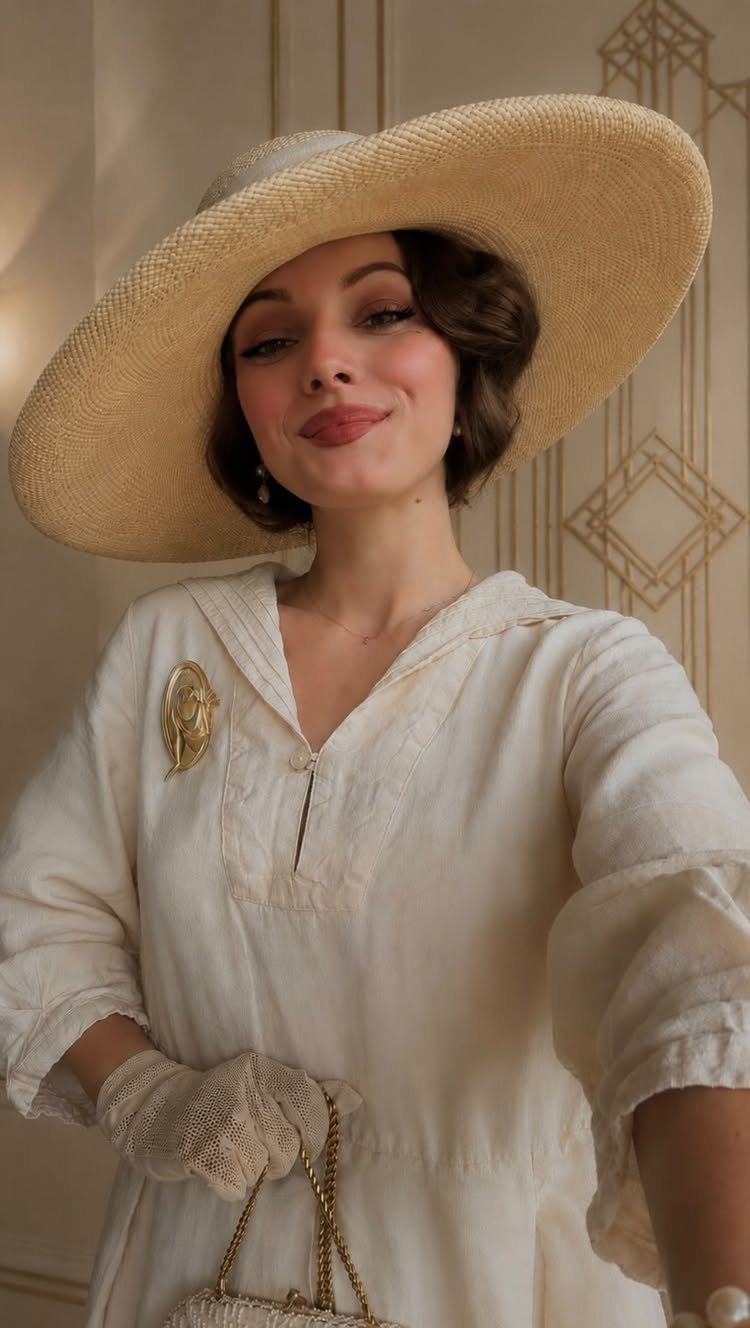
A white linen dress and a wide-brimmed straw hat do most of the work for a 1920s garden party. Linen is a good choice for warm weather because it breathes and holds a clean line through an afternoon.
Lace gloves and a small purse add the period detail without much cost. Pin a brooch at the neckline or waist, which is where a 1920s dress would have carried one.
Pick a hat with a brim wide enough to shade your face, since that is the part of the outfit people notice first.
4. Drop-Waist Day Dress
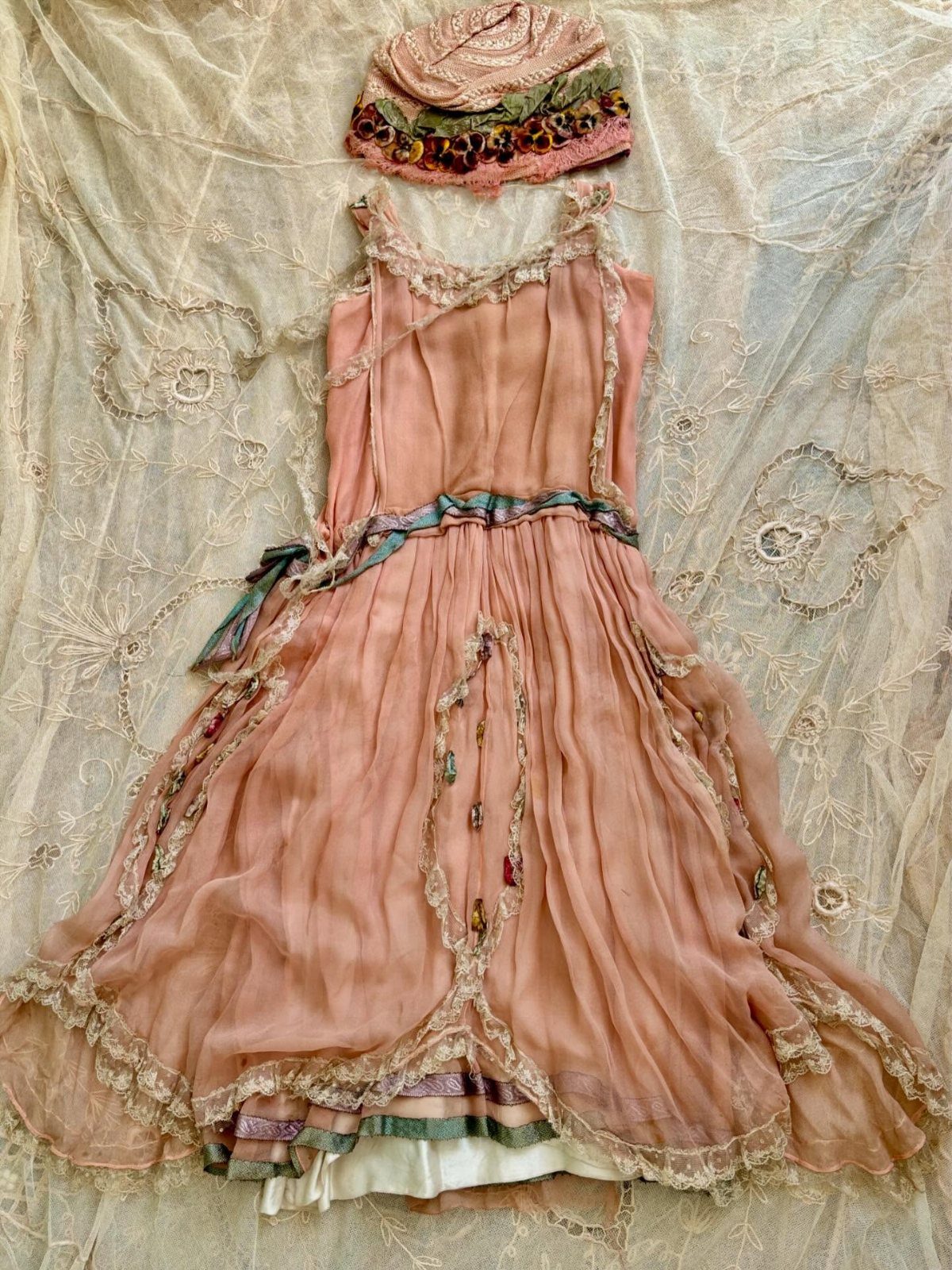
A drop-waist dress puts the seam at the hip, and that low waistline is what makes this entry look like the 1920s.
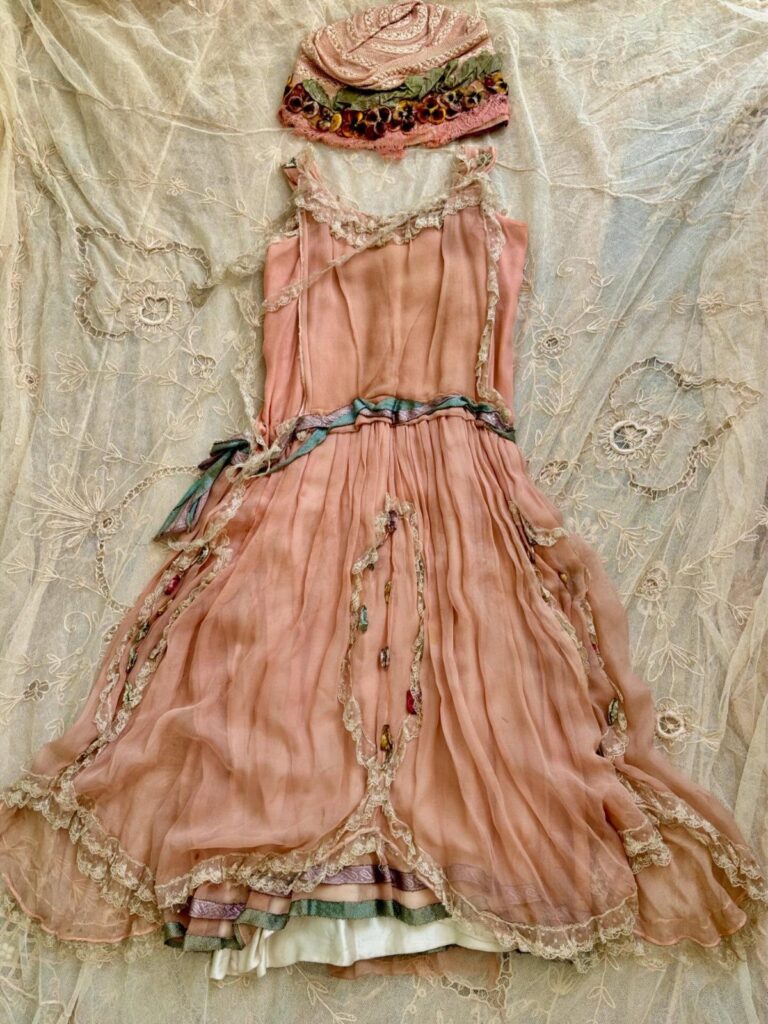
The peach version here has lace trim along the neckline and hem, with ribbon accents that tie the dress to its matching hat.
Look for a sleeveless shape and a straight, loose skirt, which is the standard cut for this silhouette. A cloche hat in the same color pulls the look together without much extra effort.
5. Finger Waves Hairstyle
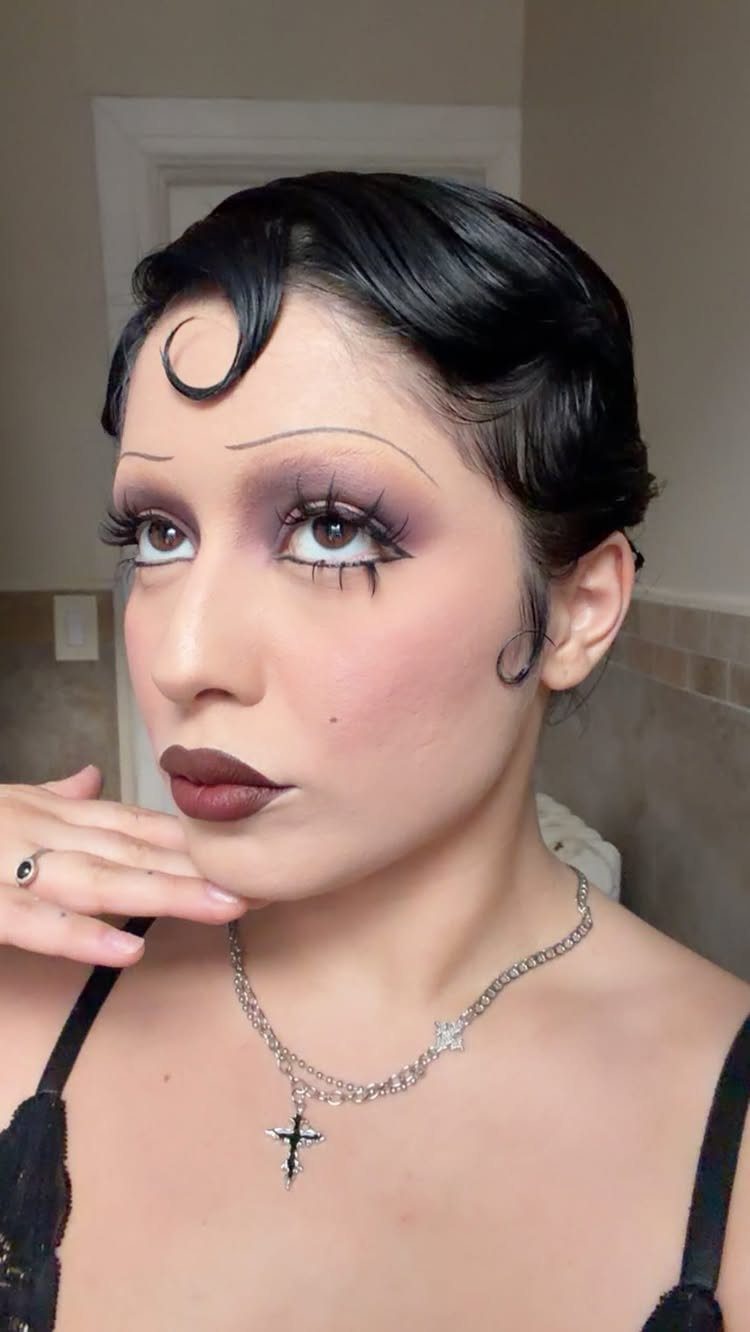
Finger waves are set flat against the head in ridges, and the look depends on a glossy, gelled base.
The hair here is shaped close to the head, with the waves running in tight, even lines. Pair them with thin, drawn-on eyebrows, dramatic dark eye makeup, and a dark lipstick to match the period.
A cross necklace suits the mood, though it is not required. Plan extra time for the setting, since waves take longer to hold than a simple curl.
6. 1920s Pleated Skirt Outfit
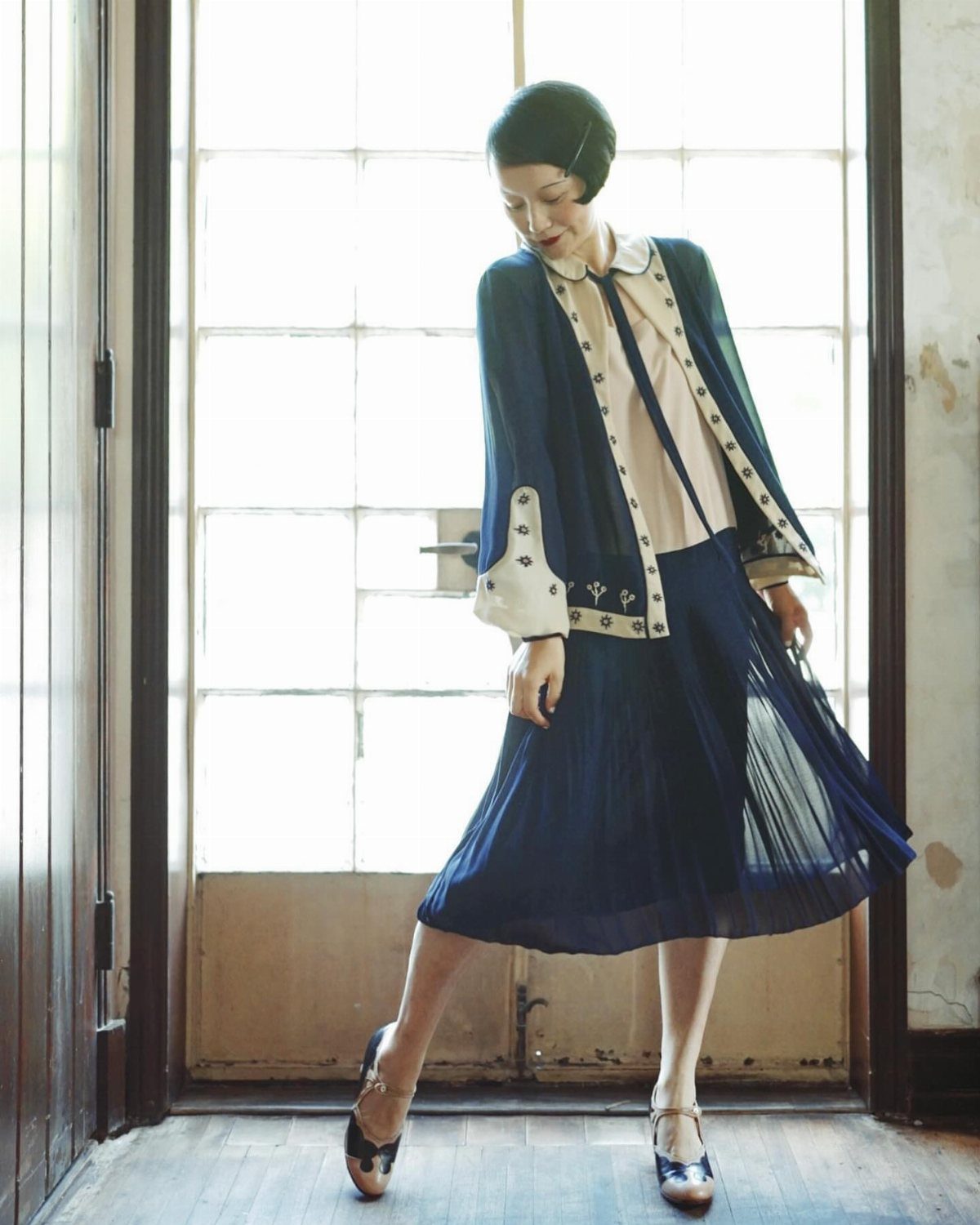
A navy pleated skirt with a matching jacket is a 1920s day look that also works for an evening out.
The knee-length skirt here has soft pleats, and the light blouse underneath keeps the top half from looking heavy. Retro two-tone heels finish the outfit, and a T-strap shoe is the easiest way to match the period.
Pick a skirt with pleats that hold their shape when you sit, since that is where the look is most likely to lose its crispness.
7. Smokey Eyes and Dark Lipstick
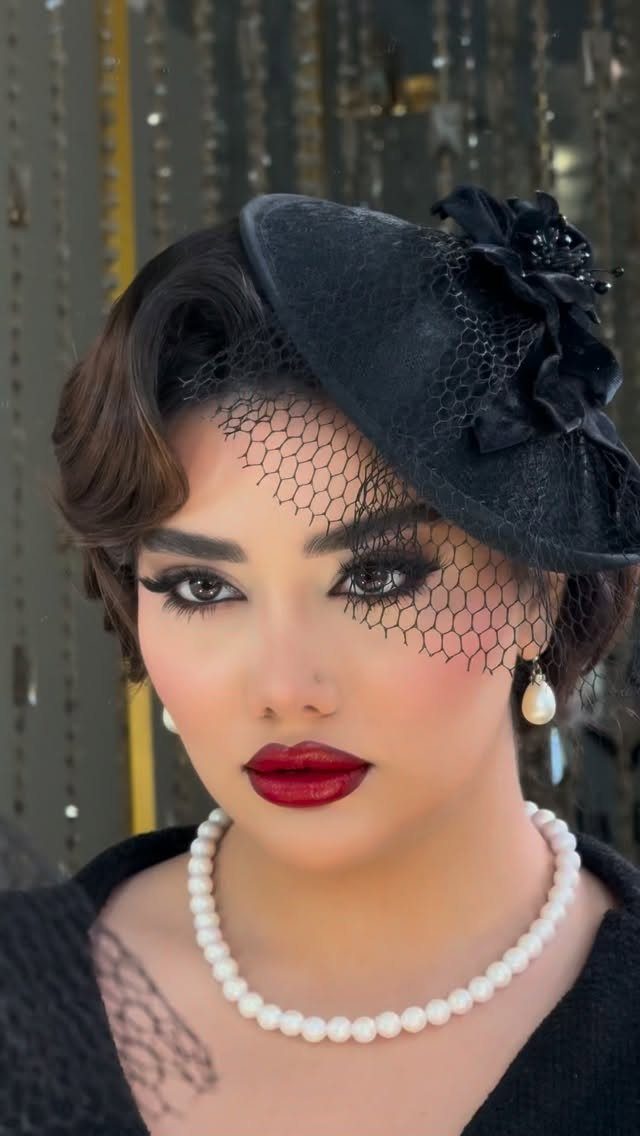
Dark shadow blended from the lash line up into the crease is what makes eyes read as 1920s from across a room.
The bold red lip here is the other half of the look, and it works best when the eyes stay dark and the lip is the only bright thing on the face. Keep everything else quiet.
Pearls and a netted black hat already carry the period, so the makeup does not need to add much more. Blend the shadow slowly with a small brush, since hard edges look more like a costume than a 1920s face.
8. Cloche Hat
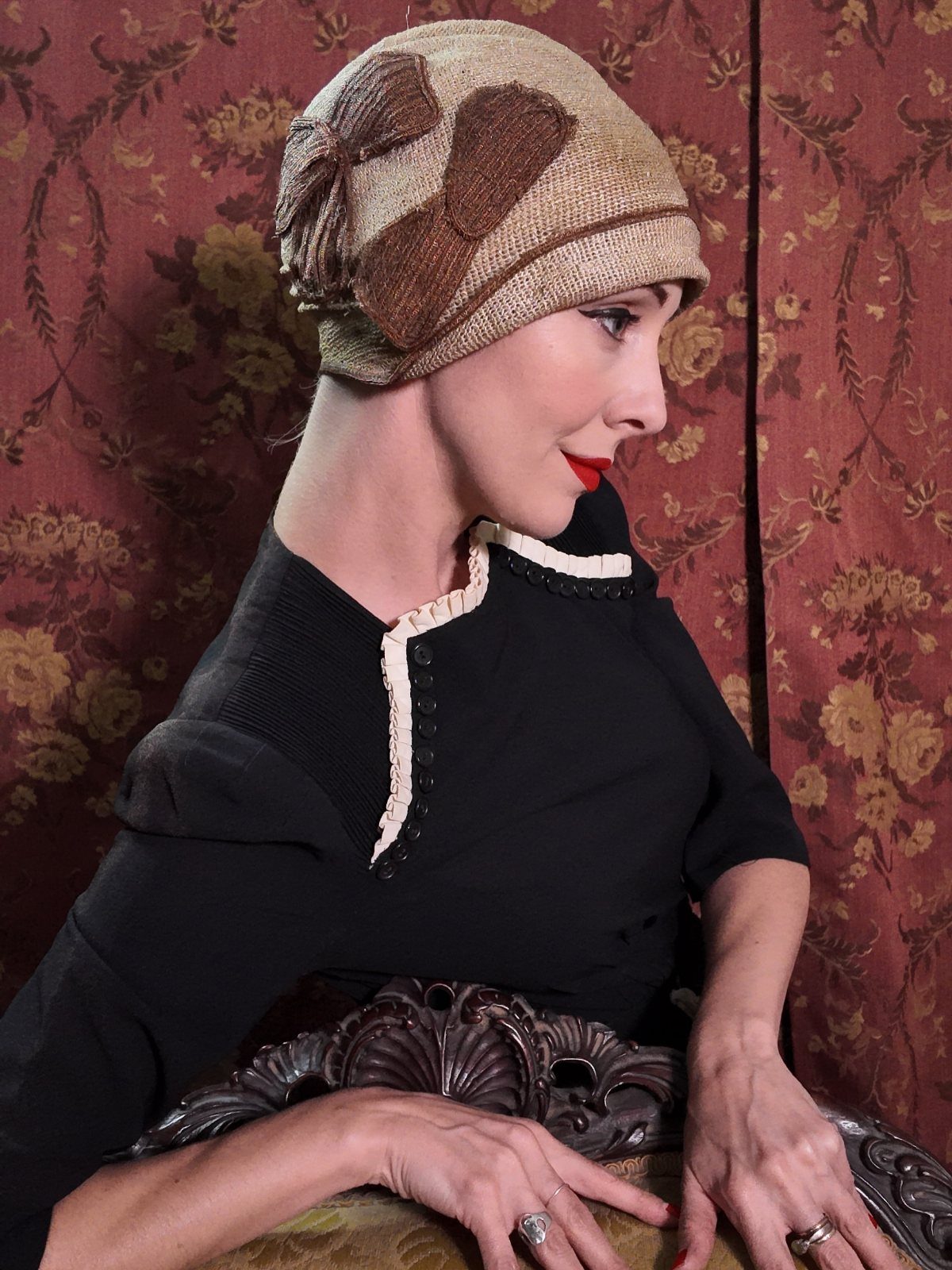
A cloche is a close-fitting hat that sits low over the brow, and that low line is what makes it read as 1920s.
The textured beige version here has a bow that adds a small detail without bulking up the crown.
I would choose a neutral like this over a bright color, because it sits well with black, navy, and brown and gets worn long after the party.
Pull it down to the brows with the hair kept close to the head underneath. A cloche needs a snug fit, so try it on before buying, since a loose one slides forward through the evening.
9. Feathered Headpieces
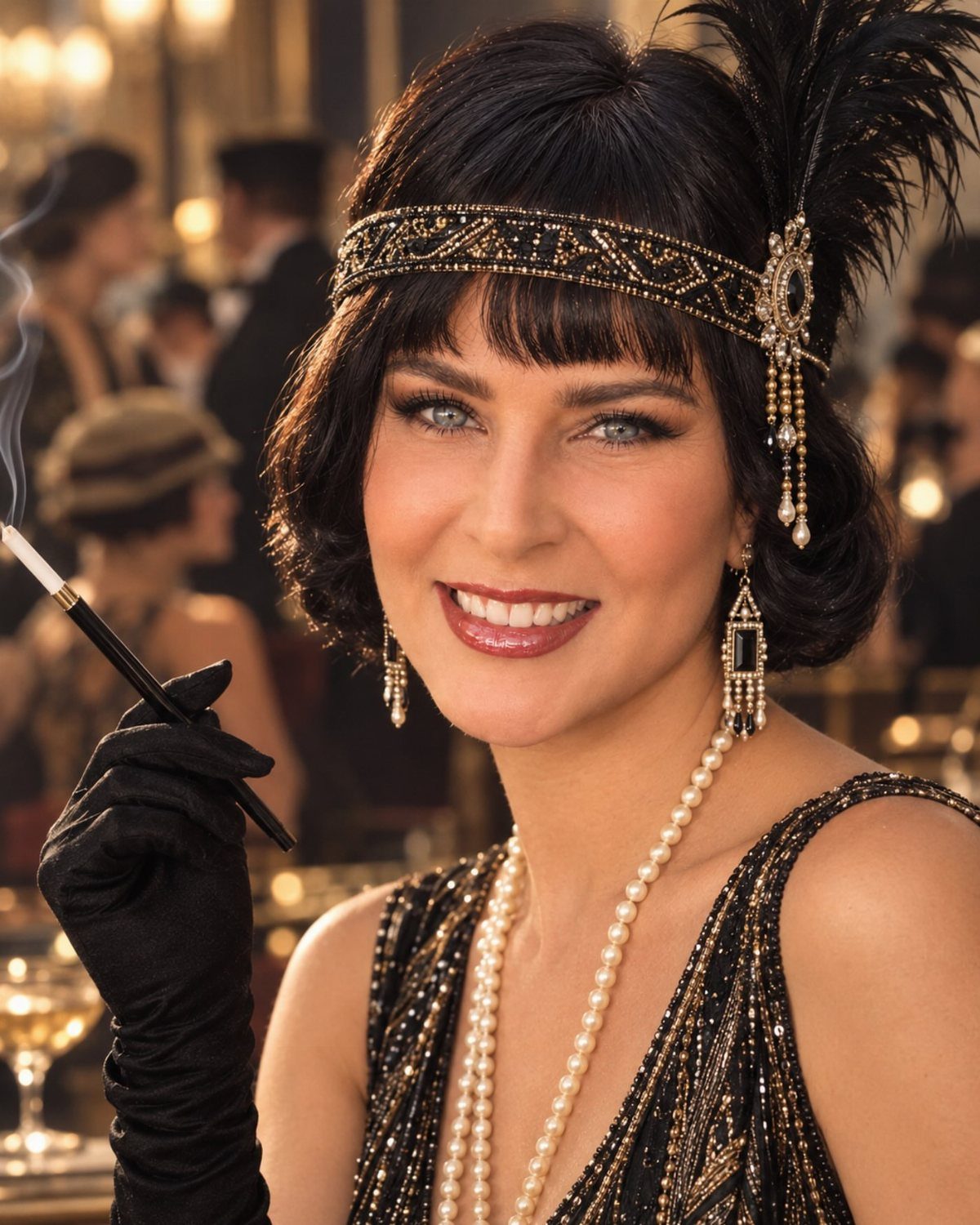
A beaded headband with one large feather puts height and movement into a 1920s look without much effort.
The black version here is the one I would pick over a cluster of plumes, because a single feather reads cleaner in a crowded room.
Set the band just above the ear, angled slightly back, and anchor it with bobby pins hidden in the hair.
Long pearls suit a feathered headpiece well, since both feel soft, vintage, and a little theatrical, so they repeat the same tone.
Choosing the Right Outfit
Start with the invitation. A Gatsby ball, a speakeasy night, and a Halloween party with a 1920s theme call for different levels of detail, and an outfit that suits one can look off at another.
Cheap costume fabric that shows its seams or pills after one wear is what makes a look seem like a costume rather than a choice. Check the seams, the lining, and the hem before you buy.
Durability matters more than most shoppers expect if you plan to dance.
A Charleston moves the whole body, so straps, fasteners, and fringe need to hold through a long night. Test the outfit by lifting your arms, bending at the knees, and sitting down in it before the party.
Authentic details help an outfit look like it belongs to the era, and they make it easier to wear with confidence.
Comfort counts as much as looks. If you cannot sit, breathe, or dance in an outfit, it will look stiff by the second hour.
Historical Context
The 1920s broke with the 1910s, when corsets and floor-length skirts shaped most women’s clothing.
Skirts climbed to knee length during the decade while the waist slid down to the hips, a shape that still reads as 1920s at a glance. Those 2 changes did more to define the decade’s look than any single trim.
Daytime and evening dressing split apart.
Daywear was a simple, loose shape with a modest waist, while evening dresses carried heavy beading and dramatic backs. Costume versions often push the evening side harder, with more sequins and lower necklines than a historical dress would show.
If you want a period-accurate look, choose the quieter version. Subtle beading and a conservative cut read as 1920s without looking like a stage prop.
Event Suitability
Match the outfit to the formality of the event.
For a formal evening, such as a black-tie or cocktail party, lean toward beading, sequins, and fuller coverage through the bodice. Those details carry well under evening lights and in photos.
For a backyard party, a tea, or a daytime outing, choose lighter fabric and a simpler cut.
Heavy beading can feel out of place in the sun, and a dress that clings or wrinkles quickly will cost you comfort by mid-afternoon.
When the invitation gives a dress code, follow it first. If the wording is vague, a useful rule of thumb is to dress one step more formal than the most casual guest you expect to see.
You can always loosen the look with fewer accessories, but it is harder to dress up a casual outfit at the last minute.
Frequently Asked Questions
Did women wear long dresses in the 1920s?
No. Skirts that swept the floor in the 1910s had climbed to the knee by the late ’20s.
Waistlines also dropped to the hips, so a dress that falls well below the knee with a natural waist will look dated for the period.
What can I wear to a 1920s themed party?
Nothing says Jazz Age faster than a beaded fringe dress, a long rope of pearls, and a pair of Mary Jane heels.
Men can wear a dark pinstripe suit with a tie and fedora. For a daytime garden party, a white linen dress with a wide-brimmed straw hat and lace gloves suits the era.
How did men dress in the 1920s?
Men wore sharp, tailored suits, often three-piece styles in pinstripes, finished with a tie and a fedora.
For a man’s costume, go with a dark pinstripe suit, since that’s the version closest to what men actually wore out to dances and clubs.