1920 speakeasy fashion runs from a thrifted suit and bowler hat to a fully beaded burgundy dress, and what decides your pick is how long you plan to be on your feet and how much you’ll move.
A heavy fringed dress like the Dancing Girl style rewards a night of Charleston only if the lining and stitching hold up, while the Tweed Skirt Suit with Fur stays comfortable well past 10 p.m. and gets worn again afterward.
1. Flapper Costume
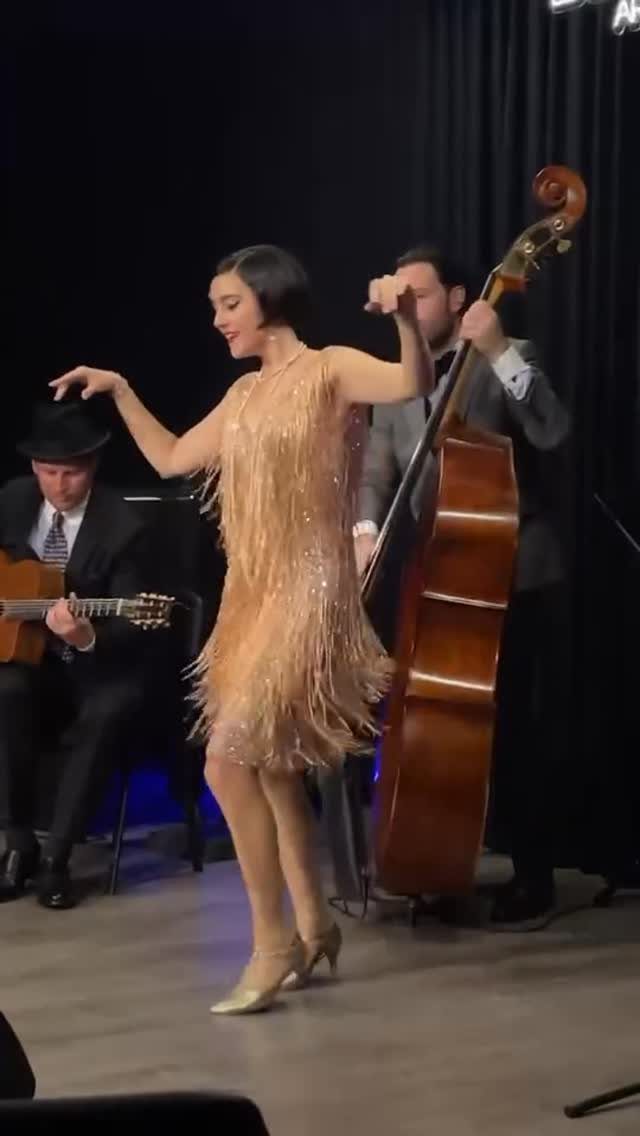
A gold fringe dress is the classic flapper choice, and fringe decides how it moves. On a dance floor it swings with every step, so try the dress in motion before you commit.
Check the length too.
Fringe that sits well above the knee needs comfortable heels you can dance in for hours. Gold also catches stage light, so I would keep the jewelry simple and let the dress do the work.
On a budget, a thrifted sheath with sewn-on fringe trim gets close.
2. Dramatic Sequined Dresses
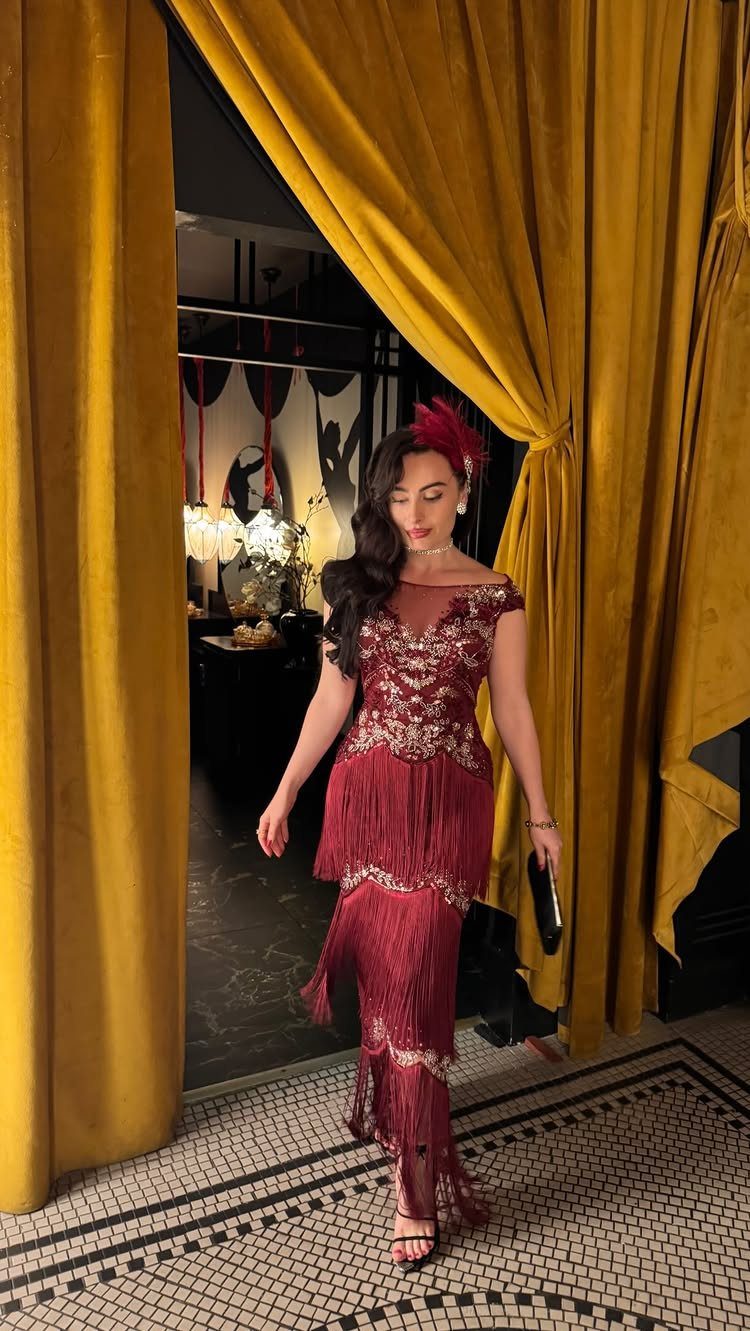
Burgundy beading, sequins and fringe on one dress is a heavy look, so I would keep everything else plain. A feather headpiece and heels are enough.
Check the weight before buying.
Dresses covered in beads and sequins can feel heavy and scratchy inside, so a lining matters if you plan to wear it for a full night. Dark, rich colors suit a candlelit speakeasy better than bright ones.
Skip layered necklaces here; the dress already carries the detail.
3. Men’s 1920s Gentleman Costume
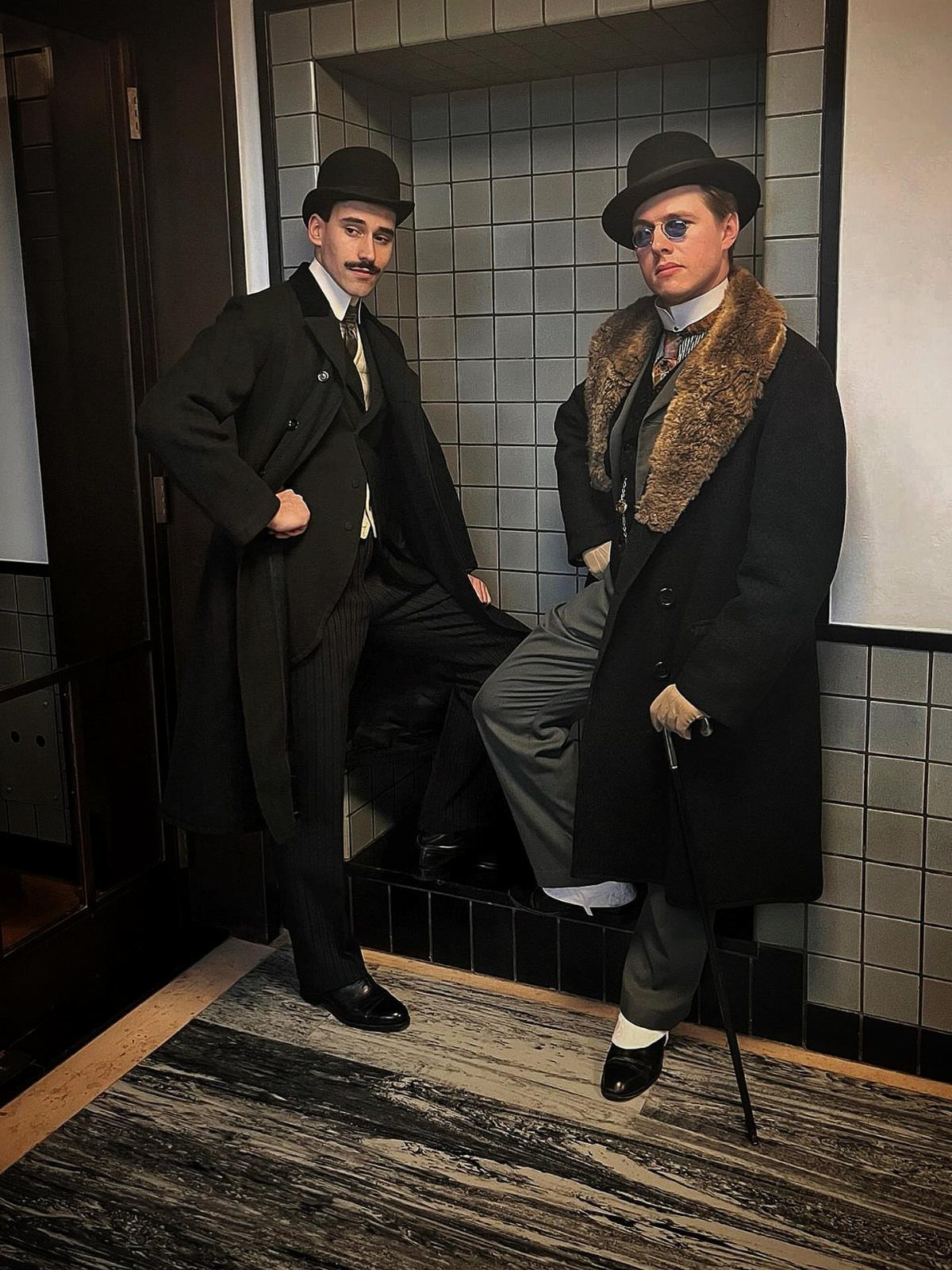
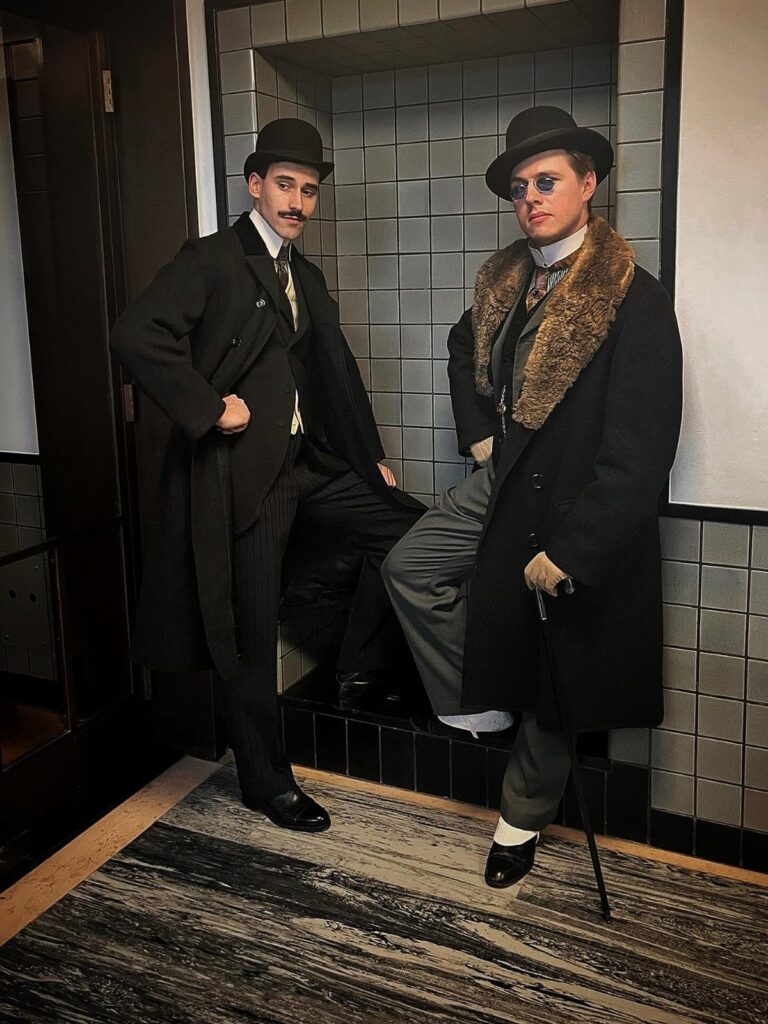
Men have the easier job: a suit, an overcoat and a bowler hat make the whole costume. The hat sets the era faster than anything else, so spend there first.
Thrift stores are the best source for a suit and coat, since you want a slightly roomy, old-fashioned cut rather than a slim modern one.
A narrow silk tie and a folded pocket square, ideally in a color that picks up the vest or a stripe in the shirt, finish the look better than any prop.
Gangster or gentleman is mostly a matter of attitude, so pick one and commit.
4. Dancing Girl Short Fringed Dress
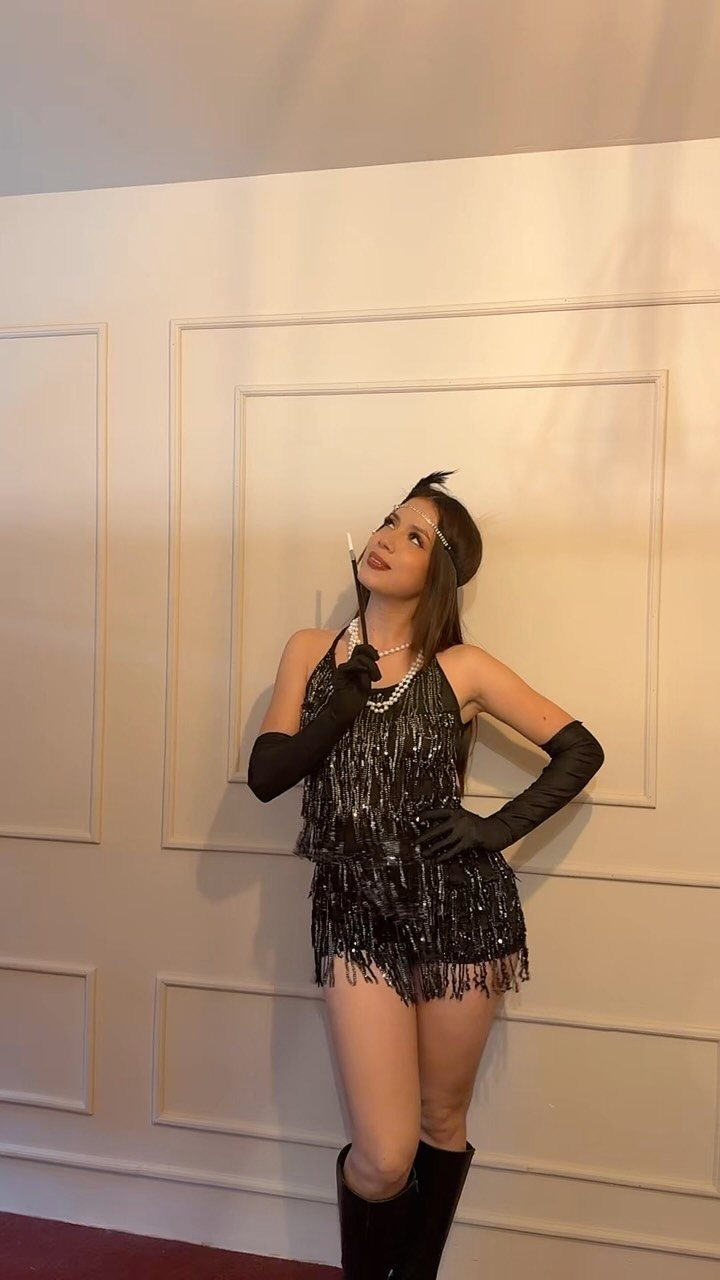
A short black fringed dress works as a dancing-girl look because the accessories do most of the styling. Long black gloves, pearls, a beaded feather headband and a cigarette holder turn a simple dress into a character.
Tall boots are a practical swap for heels if you plan to be on your feet. Black also hides wear, which helps with a secondhand dress.
I would pick one statement piece and keep the rest restrained: the pearls or the gloves, not a pile of both with extras.
5. Tweed Skirt Suit with Fur
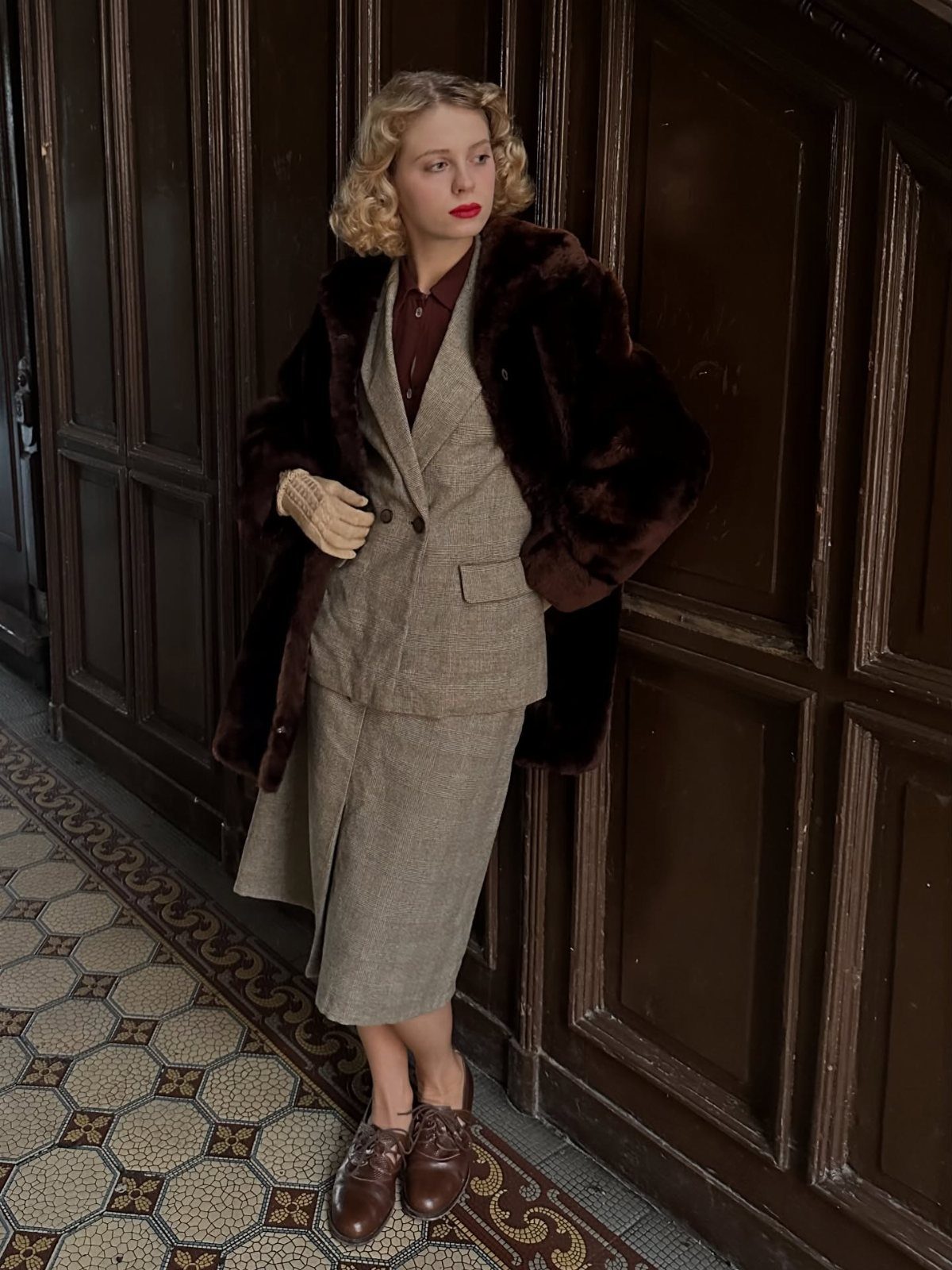
Not every 1920s outfit needs sequins. A grey tweed skirt suit with brown oxford shoes is a daytime look that suits a speakeasy crowd who want something quieter.
Finger wave curls finish it, and a dark fur coat over the top adds weight and warmth. Faux fur is the easy, affordable route.
Tweed suits are easy to find secondhand, and you can wear the pieces again long after the party, which is why I like this one for quality over quantity.
Choosing Authentic Costumes
Authentic 1920s looks help you stand out in a room full of party-store costumes, and recognizability matters as much as accuracy.
A historically perfect outfit isn’t required: a sharp suit, or a dress with a 1920s cut, plus two or three well-chosen accessories will say the era clearly enough.
Skip cheap, thin outfits that tear at the seams. A costume has to survive energetic dancing like the Charleston, so check the stitching and fabric before you pay.
Comfort decides how long you stay. If you can’t lift your arms or take a full stride, the costume will be off by 10 p.m.
Many looks can come from clothes already in your closet, with hats, pearls, braces or a feathered headband added on top.
Core Elements of 1920s Fashion
4 things build a 1920s look: silhouette, fabric, accessories and styling. The drop waist defines the women’s silhouette: the seam falls near the hips, not at the natural waist, so the dress hangs in a straight, tube-like line.
Fabric tells the rest of the story.
Beads, sequins, velvet and satin all picked up the light in dim rooms, and they swung nicely on a dance floor. Choose fabric with some heft, 125GSM or more, because it drapes better and looks richer under party lighting.
DIY Costume Tips
Start with what you own. A plain dress with a loose, straight line is the best base, and a suit and waistcoat cover the men’s side.
Then add accessories in order of impact: a feathered headband, a hat, a long strand of pearls, a pair of braces. Each costs little and changes the whole outfit.
Buy one new piece at most, and pick the one you will wear again.
Frequently Asked Questions
What was the dress code for ladies in the 1920s?
The defining shape was the drop waist: the seam falls around the hips, so the dress skims the body in a straight column and the hem stops somewhere near the knee.
Pearls and gloves were common finishing touches. Daywear stayed simple and modest, while evening dresses carried heavy beading and dramatic backs.
What were speakeasies in the 1920s?
Speakeasies were secret bars that operated during Prohibition, often with jazz music and dancing.
That dancing is why I would choose a costume you can move in, since a fringed or beaded dress has to survive energetic steps like the Charleston.
What did people wear to speakeasies?
Women wore glamorous flapper dresses, such as gold fringe or beaded and sequined styles, and men wore sharp suits.
For men, a bowler hat does more to place the era than any suit or tie. For women, a feathered headband and pearls say the period clearly without a full costume.